By Loïc, PADI dive instructor at Dune Penida · Updated July 2026
Becoming a PADI dive instructor is the step from guide to teacher — the level where you can certify your own students. Here’s how instructor training (the PADI IDC) works at the Dune Penida dive centre in Nusa Penida, Bali (opened in 2017 as Warnakali, now Dune Penida) — programs, prices and prerequisites — followed by the first-hand story of Loïc, who trained and became an instructor with us.
The instructor course (IDC) at a glance
- Prerequisite: be a certified PADI Divemaster (or a recognized equivalent), 18+, with a current EFR certification and 60+ logged dives.
- Programs: Bronze IDC (18 days), Silver IDC (28 days) or Gold IDC (12-week internship with accommodation).
- Price: from 23 million IDR (about €1,200) for the Bronze IDC.
- Level reached: PADI Open Water Scuba Instructor — you can teach and certify divers, then continue to MSDT.
Loïc joined the Dune Penida dive centre (called Warnakali at the time) in 2019 to prepare his dive instructor exam, then came back once certified. He tells us about his journey and his first steps as a scuba diving instructor in Bali — and more specifically in Nusa Penida, which is quite different, current-wise!
How I met the Dune Penida dive centre
It all started around a coconut shared on Sanur beach with my friend and course director Karl. He tells me we have to postpone my dive instructor training by a month. By chance, that same day I met Yann, the manager, who was having dinner with Karl as I was heading to the airport to greet my mother — and he told me to call him back.
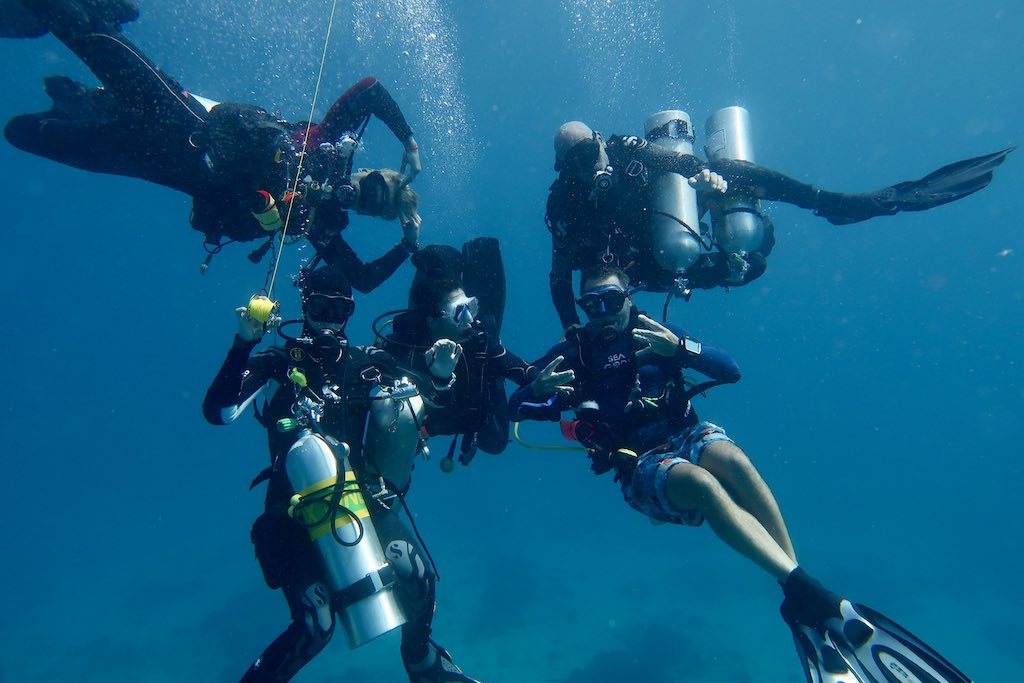
A few delicious days with my mother in Bali and a brief phone call with Yann later, here I am in Nusa Penida. The idea: spend a month with the team, to get back in the water but mainly to prepare for my dive instructor exam as best as possible.
Falling in love with Nusa Penida
I had heard of Nusa Penida and its currents. I’d also had the chance to dive there a few times during my Divemaster, almost always on the same sites (Manta Point, Crystal Bay and SD Point). Now I’m super motivated and excited to explore more of the archipelago and its other dive sites.
Yann told me that if the current flows well between us, a job opportunity could follow — but first I have to get my scuba diving instructor diploma. A golden opportunity. On land, I fell in love with the island, its beaches, its easy life and its people. On the sea side, I didn’t yet realize how much the waters of Nusa Penida, its reefs and its incredible underwater life have to be earned.
The hazing
From the second day of diving, I “crack the cherry” — in other words, I discover Nusa Penida’s currents. A supersonic drift dive in the channel; I think I even caught a few speeding flashes. It’s impressive — I didn’t think it was possible to go so fast underwater. Call it an initiation, or a hazing. This is the environment I have to tame, and the mission promises to be tough.
After that surprising first, I realize my lack of experience and reference points in the current. But I follow the wise advice of Yann and Célia, another instructor at the centre. Day after day I improve my technique and begin to understand the currents, to read them. It takes time, and at the slightest excess of confidence, the ocean calls me to order — it makes very clear who’s the boss. Dive after dive, I feel better and better. It takes time to progress and gain experience.
How a dive centre works
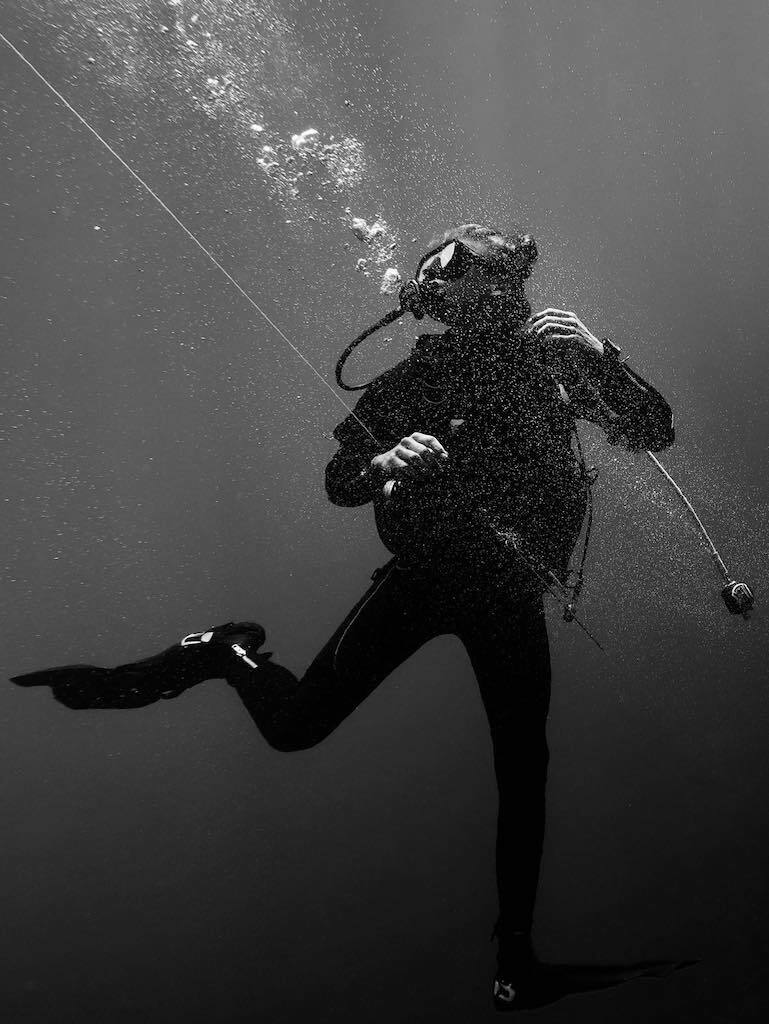
I also spend a lot of time understanding how the dive centre works — the excellence of the service and the constant search for maximum diver satisfaction. It’s a duty, a moral act: everyone getting on the boat comes here to spend a moment of happiness.
It’s an environment where I feel good. Each day brings a different adventure and lesson. Muhyddin and Imam, captain and second mate, teach me to analyze the currents from the surface. I’m amazed how well they read the sea’s surface to predict the course of a dive — they know their sea and its hazards by heart, as if they’d cracked the well-kept secret of Nusa Penida’s currents.
More and more comfortable in the water, I start to guide. The challenge I took on a month earlier becomes rewarding. But one question remains: would I be able to teach in this environment — as splendid as it is demanding, where hesitation has no place? A new, even more exciting challenge, and one that will take a lot of effort. As Gandhi said: “Satisfaction lies in the effort, not in the attainment — full effort is full victory.” So here I am, facing one of the most thrilling experiences of my life. Thanks to Yann and the whole team for preparing me for the dive instructor exam.
Becoming a dive instructor
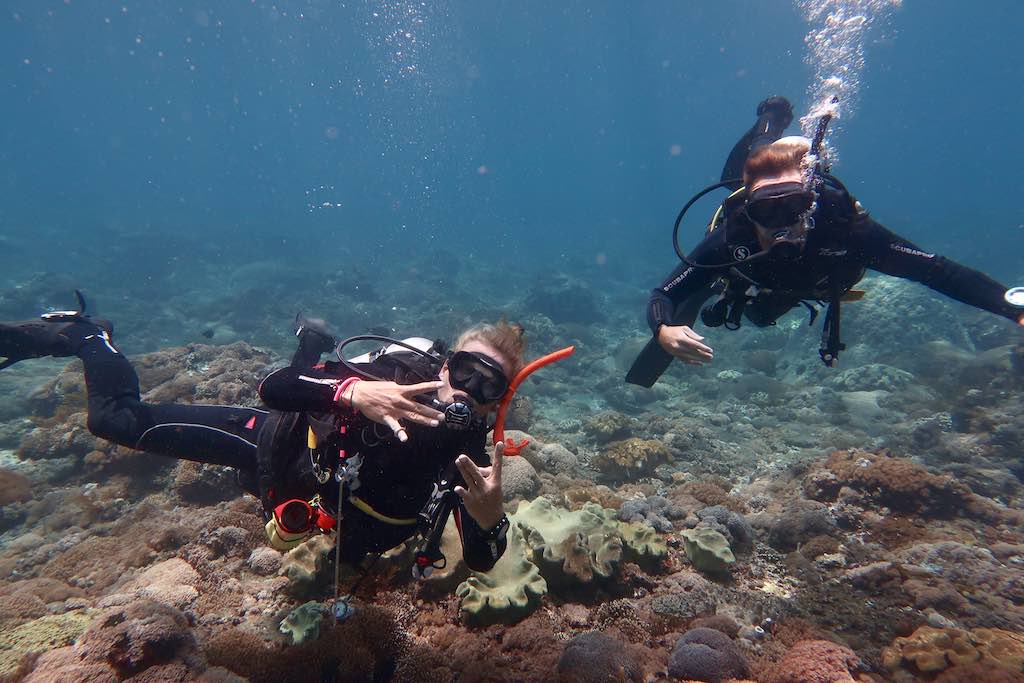
Here I am back at the centre, freshly certified as a scuba diving instructor. I feel ready for my first steps, to take up the challenge. After a few fun dives as a reward for the certification, the new adventure begins — first up, a discovery dive to teach. The aim here is to offer the best experience to all divers, whatever their level, and I can only thrive in such a complete environment. The theory session and the pool go wonderfully.
Under the charm of my new job
Once at sea, I realize the huge difference between diving in the current and guiding, and between guiding in the current and teaching. That’s when I really fell in love with the job, in the heat of the moment: bringing people into this environment, bringing them back safe, and above all with the feeling of having experienced something exceptional. Here, “extreme sport” takes on its full meaning, which makes it even richer. Between discovery dives and deeper courses, what a joy to go with the flow of the currents, surrounded by a multitude of colours, shapes and countless species. If diving is a hobby for some, here in Nusa Penida it becomes, for me, an art.
On-the-job instructor experience
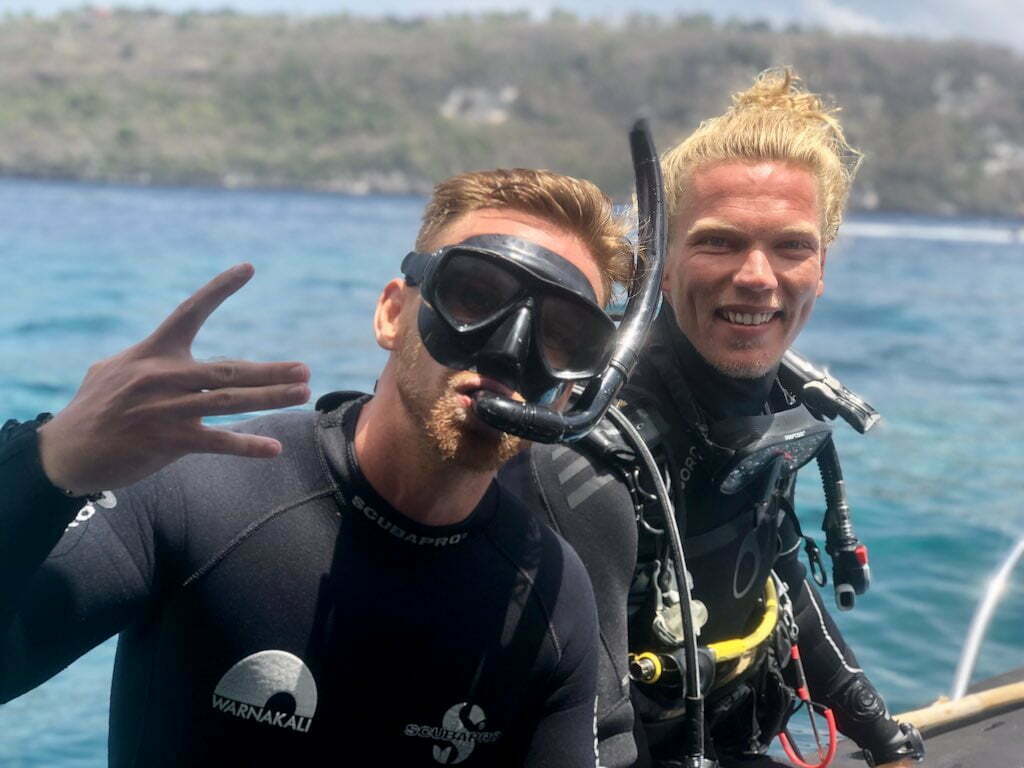
The big advantage of teaching scuba diving rather than quantum physics is that students are there by choice, with their own motivation — a focused audience eager to learn. Teaching in this context is a real source of motivation.
A mentor/padawan relationship
Under these conditions the mentor/padawan relationship is obvious, and the search for excellence comes naturally. However comfortable new students are in the water, there’s a different way to reach the required standard for each of them. While respecting PADI’s standards, you can always find a method to get there. Adapting to each person is something very dear to me. Having water in your mask can be scary for a budding diver; but with good reassurance and the necessary time, you gradually get the student swimming without a mask underwater. The apprehension at the start becomes pride at having done it. It’s by building acquired skills that we build the diver’s confidence, ease and happiness on their future dives.
Nusa Penida’s currents
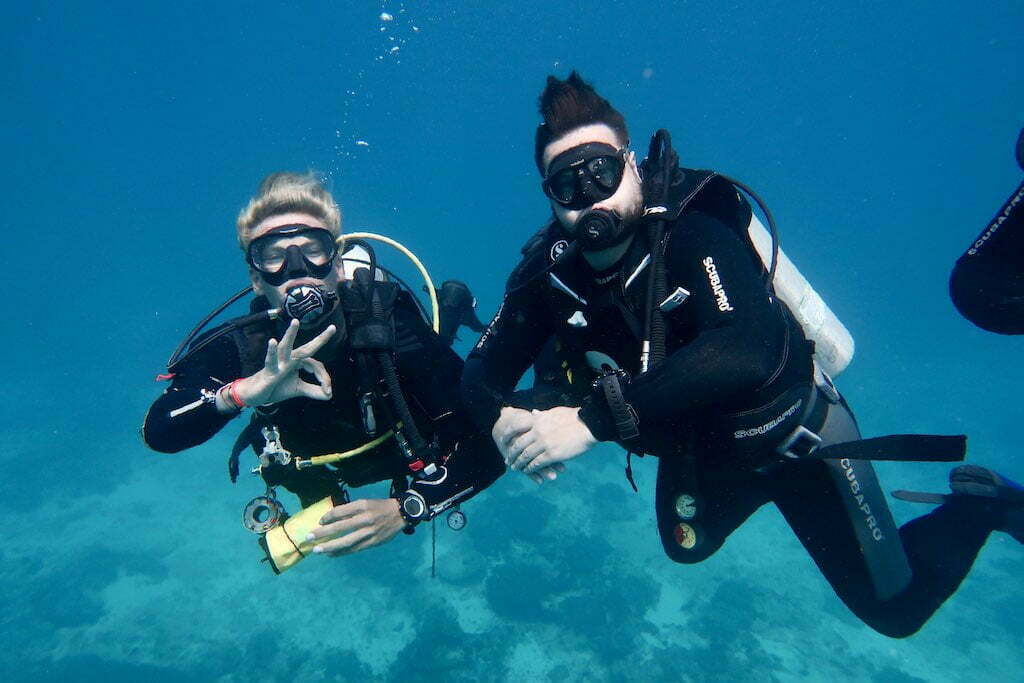
In Nusa Penida there’s another factor to reckon with: the currents. At first glance they can be a source of anxiety. But when divers realize they can take pleasure in these challenging conditions, it’s a new victory. That’s why, as an instructor, I’m so satisfied to know that divers trained in Nusa Penida can go anywhere in the world, in any conditions, and enjoy their new passion. And the current is life — it’s what makes the charm and quality of diving in Nusa Penida. “Would I be able to teach in this environment?” No more doubt today: I say it loud and proud — yes!
The PADI IDC in Nusa Penida: programs and prices
Instructor training at Dune Penida runs through the Dune Pro Diving team, in Nusa Penida — an ocean-view classroom, an infinity pool, a dedicated boat and a full-time course director. To become a PADI Open Water Scuba Instructor you first need to be a certified Divemaster. There are three pathways:
| Program | Duration | Price (IDR) |
|---|---|---|
| Bronze IDC — core instructor course | 18 days | from 23,000,000 |
| Silver IDC — extra prep + instructor specialties | 28 days | from 42,000,000 |
| Gold IDC — internship + accommodation, job-ready | 12 weeks | from 78,400,000 |
Specialties (Deep, Drift, Nitrox, Sidemount, Self-Reliant, Wreck and more) can be added to any IDC, and you can continue to MSDT (Master Scuba Diver Trainer) afterwards. See the full options and dates on the Dune Pro Diving IDC programs page.
Plan your instructor training with Roy
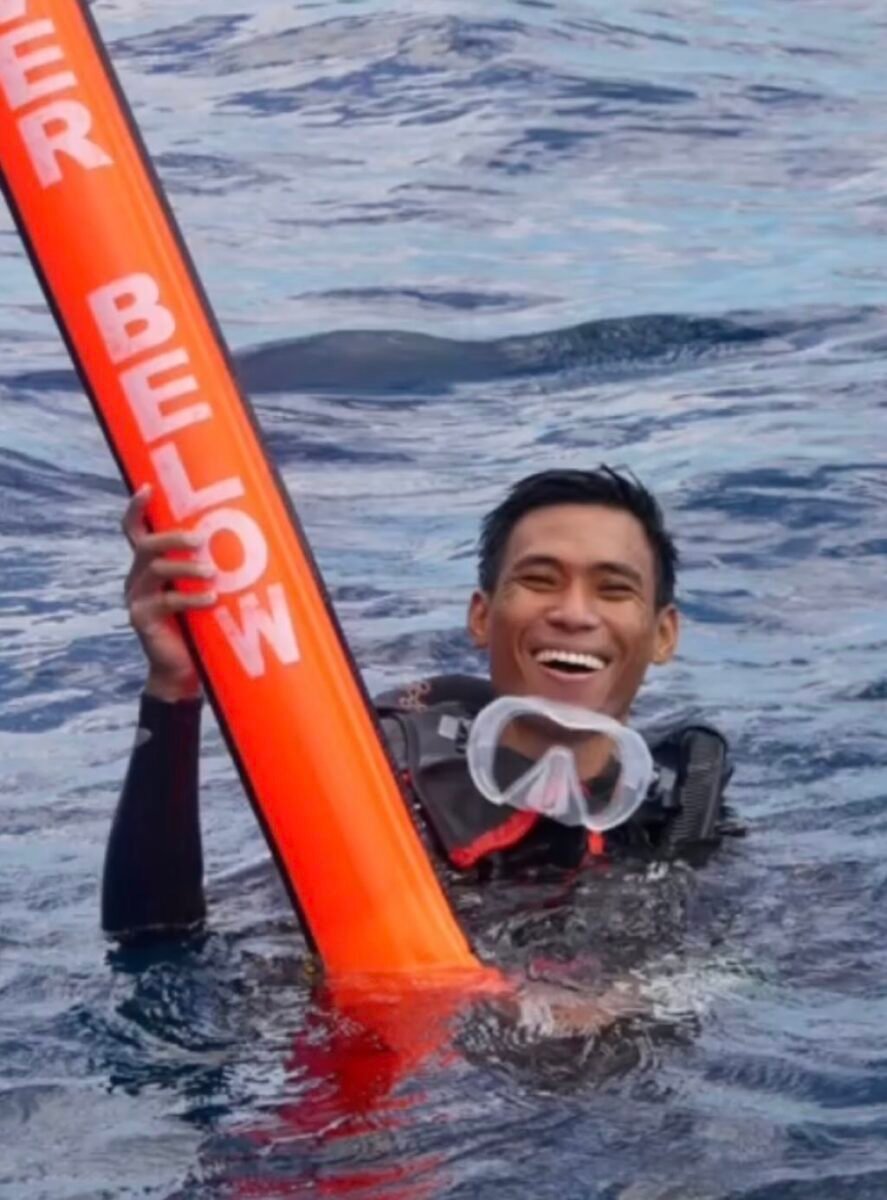
Not sure which IDC pathway fits your experience and schedule? Message Roy at Dune Penida with your current level and dates — he’ll point you to the right program and help you plan your training and stay on the island.
Ask Roy about the IDC
Roy is a PADI dive instructor at Dune Penida. Tell him your certification level and how much time you have, and he’ll help you choose between the Bronze, Silver and Gold IDC and plan your path to teaching in Nusa Penida.
FAQ — becoming a dive instructor in Nusa Penida
What are the prerequisites to become a PADI instructor?
You need to be a certified PADI Divemaster (or a recognized equivalent), 18 or older, with a current EFR certification and at least 60 logged dives to start the IDC.
How long does instructor training take?
From an 18-day Bronze IDC to a 28-day Silver IDC, up to a 12-week Gold IDC that includes an internship and accommodation.
How much does the IDC cost in Nusa Penida?
From 23 million IDR (about €1,200) for the Bronze IDC, 42 million for the Silver, and 78.4 million for the Gold IDC with internship and accommodation.
Why train as an instructor in Nusa Penida?
Nusa Penida’s currents make it one of the most demanding places to learn to teach — once you can instruct here, you can teach almost anywhere in the world. You also train on world-class sites with manta rays and, in season, the Mola Mola.
What comes after the IDC?
Once you’re an Open Water Scuba Instructor, you can add instructor specialties and progress to MSDT (Master Scuba Diver Trainer). Not a Divemaster yet? Start with the PADI Divemaster course.
About this guide
This first-hand account was written by Loïc, who trained for his instructor exam and worked as a PADI dive instructor at Dune Penida (the dive centre founded in 2017 as Warnakali) in Nusa Penida. The centre was opened by Blaise Jaeger, a PADI Master Scuba Diver with more than 700 logged dives, who founded Nusa Penida’s first PADI dive centre. Our goal is to give you an honest, first-hand picture of what it’s like to become — and work as — a dive instructor in Nusa Penida.