
By Blaise Jaeger — PADI Master Scuba Diver based in Nusa Penida, diving Ceningan Wall since 2017 · Updated on July 2, 2026
Ceningan Wall is one of the most spectacular dive sites in the Nusa Penida archipelago. Set on the south coast of Nusa Ceningan, right in front of Crystal Bay, this vertiginous wall drops into the blue of the channel that separates Nusa Penida from the islands of Ceningan and Lembongan.
You descend along a face entirely dressed in corals, sponges and gorgonians, in an explosion of colour and marine life. Bigeye trevallies, tunas, batfish, eagle rays, rare nudibranchs and — sometimes — the famous Mola Mola: Ceningan Wall always has surprises in store for the divers who dare venture here.
I’ve been diving Ceningan Wall regularly since 2017, and here I share everything you need to know about the site: conditions, currents and the best route for your level. 👉 To discover every spot in the archipelago, see our complete guide to the best dive sites in Bali & Nusa Penida.
Ceningan Wall at a Glance
| Type of diving | Wall, drift, macro |
| Level | Intermediate to experienced |
| Depth | 5–40 m |
| Highlights | Vertical wall, corals, nudibranchs, Mola Mola |
| Current | Moderate to strong, sometimes unpredictable |
| Water temperature | 18–28°C |
| Visibility | 15–30 m |
| Best time | Year-round (Mola Mola July–October) |
| Time from Toyapakeh | ~15 minutes by boat |
What Level to Dive Ceningan Wall?
Ceningan Wall is not a site for beginners. Its position out in the channel exposes the face to sustained — sometimes down — currents that demand good buoyancy and drift skills.
Intermediate divers with a PADI Advanced Open Water certification enjoy it when conditions are calm: you follow the wall between 15 and 25 meters at an easy pace, without trying to go deep. Experienced divers can explore the deeper part of the wall, down to 40 meters, and make the most of the drift — it’s also at these depths that the chances of spotting a Mola Mola or a squadron of eagle rays increase. If you’re starting out or want to build up first, I’d recommend a discovery dive or a PADI course on the archipelago’s more sheltered sites before tackling Ceningan. Whatever your level, always dive Ceningan Wall with a guide who knows the site perfectly.
The Wall of Ceningan
The Ceningan Wall is a true anthology of Nusa Penida’s underwater life. You enter the water above a shallow plateau rocked by the swell, where coral outcrops already shelter fusiliers, moorish idols and clownfish.
Heading toward the blue, you drop quickly onto a vertiginous face entirely carpeted with hard and soft corals, sponges and gorgonians. The wall falls almost vertically to 40 meters and beyond, creating a striking visual effect. Its position in the channel between Nusa Penida and Nusa Ceningan makes it a demanding but exceptionally rich site: the currents constantly bring nutrients and primary production, which explains the density and diversity of marine life you observe here.
Mola Mola & Pelagics at Ceningan Wall
Ceningan Wall shares with Crystal Bay the privilege of being a prime spot to see the Mola Mola between July and October. During this period, cold-water upwellings draw the sunfish into the depths of the wall along the channel.
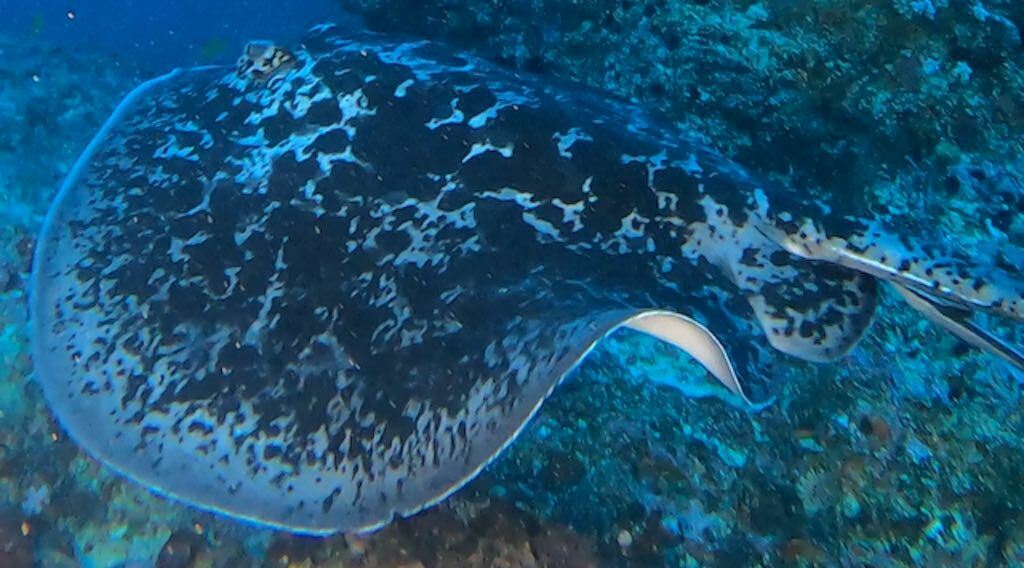
But the blue of Ceningan holds other surprises. You regularly cross paths with schools of bigeye trevallies, tunas and batfish and, with a bit of luck, families of eagle rays passing in formation along the face. A marble ray resting on a coral ledge is also a great classic of the site.
Marine Life at Ceningan Wall
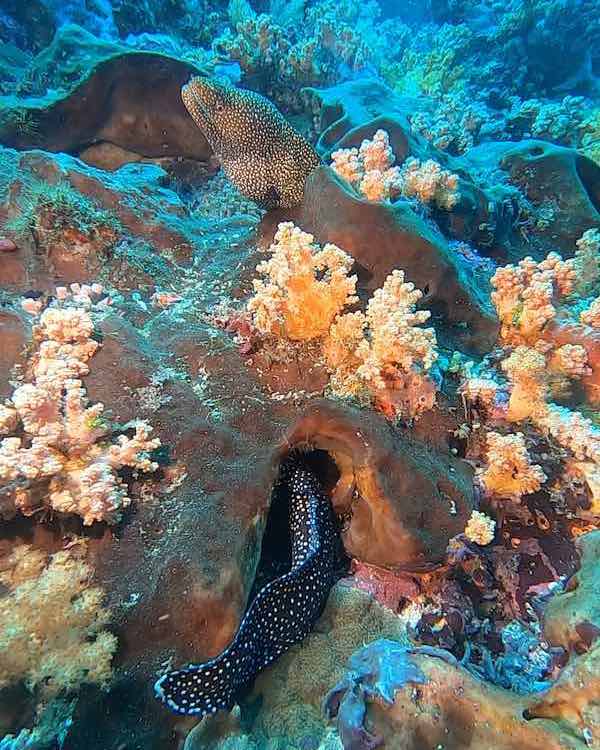
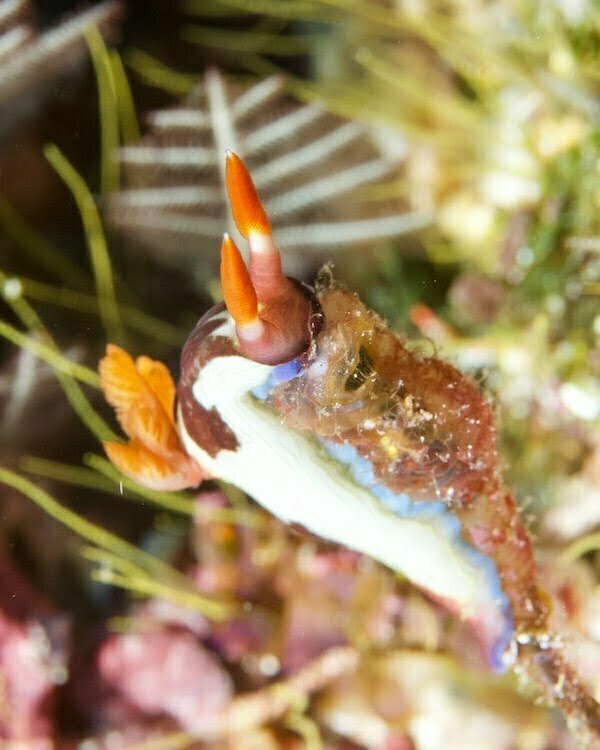
Ceningan Wall is a paradise for macro lovers. You observe many nudibranch species — Nembrotha, Chromodoris, Flabellina — often impossible to find elsewhere in the archipelago. Zanzibar shrimps and pygmy seahorses hide in the gorgonians, while Thor shrimps and porcelain crabs populate the anemones.
Along the face, you meet various moray eels, scorpionfish and perfectly camouflaged stonefish. The overhangs and crevices shelter lobsters and sometimes a few sleeping bamboo sharks. Looking up into the blue, you catch the silver schools of barracudas, the trevallies and, more rarely, eagle rays or the Mola Mola. The density of life on this wall is one of the most impressive in Nusa Penida.
How to Dive Ceningan Wall
Ceningan Wall is dived almost exclusively as a drift. Depending on the day’s currents, your guide chooses the entry point and the direction of the dive. The descent is quick, above the plateau, to reach the top of the wall between 5 and 15 meters.
The currents can be intense and sometimes downward. The golden rule at Ceningan: stay very close to the wall, within arm’s reach — this protects you from the channel currents and keeps you from being swept out to sea. Constant visual contact with the face also gives you the best view of the macro and the coral detail. Your guide keeps the group in tight formation and you ascend gradually along the wall, up to the plateau, where you finish your safety stop sheltered from the current. Good SMB skills are essential, as the exit is often in open blue water. To prepare properly for this kind of technical dive, consider a PADI Advanced or Drift Diver course before tackling the wall.
Dive Ceningan Wall with Roy
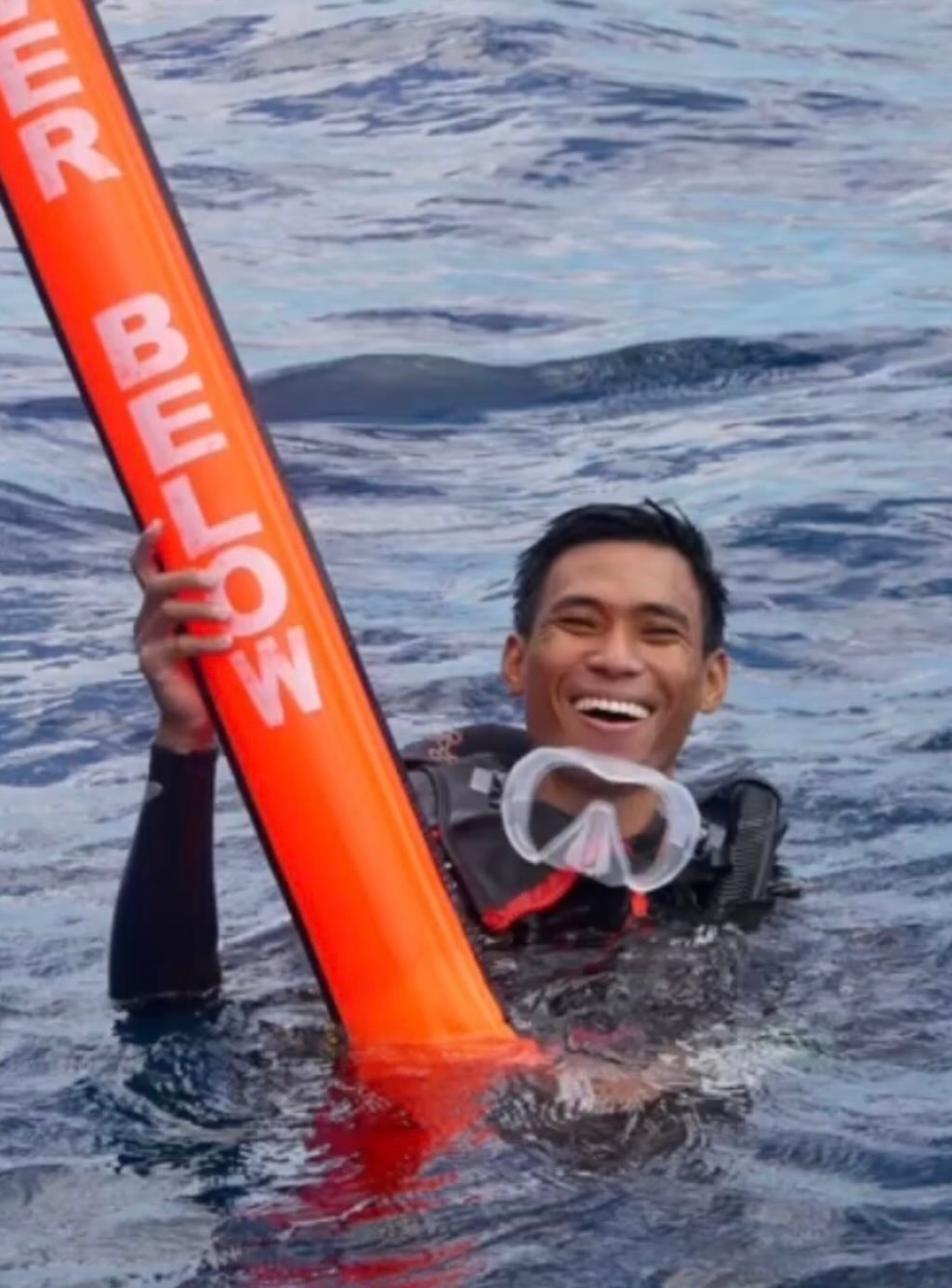
Roy is a dive instructor at Dune Penida who reads Ceningan’s channel currents like a book. This is a technical drift, so timing and guiding matter: message Roy directly and he’ll tell you honestly whether the conditions suit your level, choose the right entry point and keep you close to the wall where the macro — and the safety — are.
Words from Our Divers at Ceningan Wall
During my holidays in Nusa Penida I’d already dived a few sites when Yann started talking about Ceningan Wall — a simple description was enough to hook me completely. The next morning he said the conditions were great to dive the famous wall that very day. A solid briefing and off we went! The visibility was stunning, and I soon saw the silver flash of a school of barracudas — a good start. The magic really kicked in when I faced that vertiginous wall: the colours were unbelievable, and I spotted nudibranch species I’d never seen before. Beyond the beauty of the site, I loved being able to work on my drift-diving skills under Yann’s supervision.
Marion, October 2019
Ceningan Wall inspired an extravagance I like to use to describe it: Picasso came here with his palette, brush and tin of paint, and left everything behind. That’s how a “colourised Guernica” was born. Like every instructor, I dive the same spots often, with a soft spot for some — and here the life is so rich and dense that I never get bored. Certain conditions are required to jump in: the sea, of course, but also the group I’m guiding, who have to fully trust me, because it can be challenging and conditions change fast. I often keep Ceningan for a special occasion — a last dive after days, weeks or months with my students, from Open Water to Divemaster. That handshake before surfacing, like a “see you soon” to these waters, and their smiles back on the boat talking about the colours: that’s the magic of this job.
Yann, PADI IDCS
Why Dive Ceningan Wall?
Ceningan Wall is one of the most spectacular and most demanding sites in Nusa Penida. Between its vertiginous wall, its exceptional macro, its pelagic encounters and its technical currents, every dive is different and every immersion leaves a lasting impression. Reserved for intermediate and experienced divers, it remains — for divers and instructors alike — the favourite of Nusa Ceningan.
Ceningan Wall Diving FAQ
What level do you need to dive Ceningan Wall?
An intermediate level (PADI Advanced Open Water minimum) is recommended, because of the sustained currents and the depth of the wall.
Can you see Mola Mola at Ceningan Wall?
Yes, mainly between July and October, when the cold channel waters rise along the wall.
What is the current like at Ceningan Wall?
The current is moderate to strong, sometimes downward. You always stay glued to the face to remain safe.
How deep is Ceningan Wall?
The dive profile ranges from 5 to 40 meters depending on your level, with a wall that drops far beyond.
How long does it take to reach Ceningan Wall from Toyapakeh?
About 15 minutes by boat from Toyapakeh.
Can you do a discovery dive at Ceningan Wall?
No, the site is not suited to first dives. Choose Crystal Bay or Manta Point for a discovery dive.
What is the best season for Ceningan Wall?
The site can be dived all year, but July to October is ideal to combine the wall, the macro and encounters with the Mola Mola.
Plan your trip to Nusa Penida
If Ceningan Wall has sparked your curiosity, take a deeper look at everything the island offers. Plan your stay with our complete travel guide to Nusa Penida, and for divers our Nusa Penida diving guide covers seasons, temperatures, currents and certifications. You can dive Ceningan Wall and many other exceptional sites with Dune Penida Dive Center, a PADI 5★ center based on Nusa Penida. Choosing where to dive next? Our guide to the best dive sites in Bali — including Crystal Bay, Toyapakeh, Gamat Bay, Manta Point and Blue Corner — breaks down each site by level, conditions and marine life.
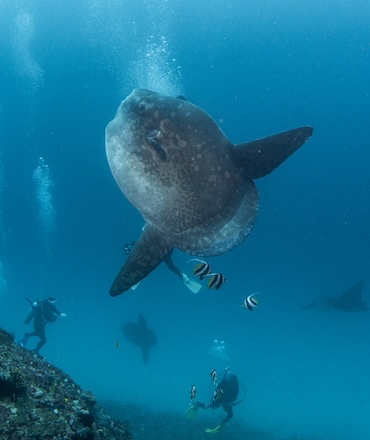
Dive with Mola Mola
Dive with Mola Mola in Nusa Penida : sunfish season, cleaning stations, thermoclines, dive depth and how to safely encounter these ocean giants.
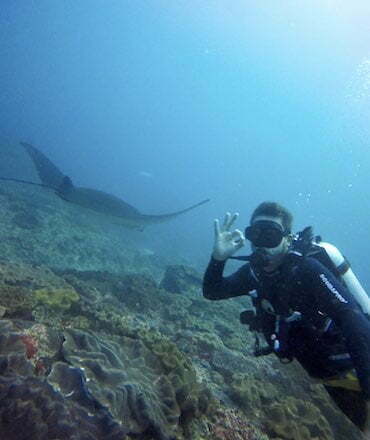
Best dive sites in Bali
20 best dive sites in Bali around Nusa Penida, Padang Bai and North Bali : manta rays, oceanic sunfish, sharks, drift dives and vibrant coral reefs.
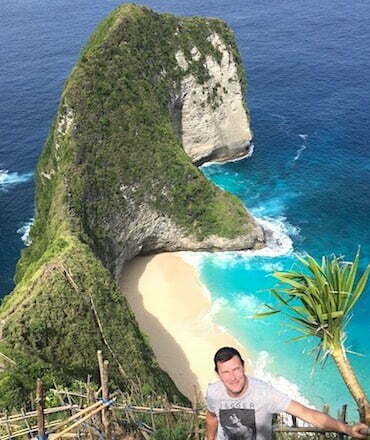
Nusa Penida travel guide
Complete Nusa Penida Travel Guide : how to get there, where to stay, best beaches, temples, viewpoints and practical tips to plan your island adventure.
About the author
Blaise Jaeger opened Nusa Penida’s first PADI dive centre in 2017 and has dived Ceningan Wall and the channel walls countless times. A PADI Master Scuba Diver based on the island, he shares first-hand, safety-first guides to diving Nusa Penida.