By Blaise Jaeger · PADI Master Scuba Diver · Opened Nusa Penida’s first PADI dive center in 2017 · Updated 20 September 2026
Most divers arrive in Nusa Penida with one goal in mind: seeing manta rays or the legendary Mola Mola. They soon discover something unexpected — there isn’t one single “best” dive site.
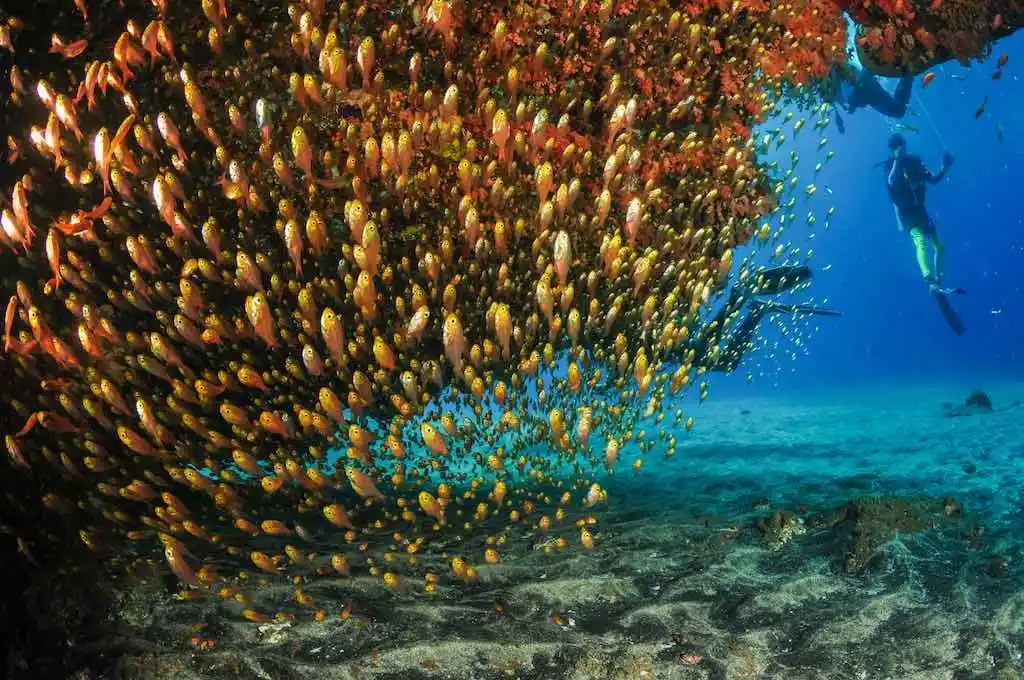
Some dives are famous for pelagic encounters. Others are known for spectacular drift dives, colorful coral gardens, strong currents or surprisingly rich macro life. Visibility, currents and marine life can also change dramatically from one side of the island to the other.
This guide is not designed to describe every dive site in detail — you’ll find dedicated guides for each location throughout this website. Instead, it helps you answer one simple question: which dive sites should you actually choose for your experience level, your travel dates and your diving goals?
Everyone rushes to Crystal Bay to see the Mola Mola. After hundreds of dives here, I’ll let you in on a secret: they are all around the island — you just need to know where to look, when to go, and how to dive the conditions safely. That’s exactly why Toyapakeh is often overlooked.
Not sure where to start?
Choose your goal first. The best dive site is not always the most famous one — it is the one that fits your level, the tide, the season and what you hope to see.
- 🐠 First time diving in Nusa Penida
- 🪽 You came for manta rays
- ❄️ You came for Mola Mola
- 🌊 You love drift diving
- 📷 You are a macro photographer
- 🦈 You are looking for sharks
- ☀️ You only have one or two days
Compare Nusa Penida’s best dive sites at a glance
Conditions always decide the final plan, but this table is the fastest way to narrow down your choices. Scan the level, current and best for columns first — they matter more than anything else when you pick a site.
| Dive site | Level | Typical current | Best for | Best season | Boat time | Depth |
|---|---|---|---|---|---|---|
| Manta Point | Beginner to advanced | Mild to moderate, occasional surge | Manta rays (~95%), bamboo sharks | Year-round | 45 min | 10 m (cleaning station) to 40 m (wall) |
| Crystal Bay | Beginner in the bay / advanced at the corner | Calm in the bay, strong at the corner | Mola Mola, visibility, photography | Jul–Oct for Mola | 15 min | 10 m (bay) to 40 m (wall) |
| Toyapakeh | All levels when calm | Mild to moderate drift | Everything: coral, macro, schools, Mola station (~40 m) | Year-round | 5 min | 20 m |
| SD Point | Beginner to advanced | Moderate, can reverse | Coral, schooling fish, turtles | Year-round | 15 min | 20 m |
| Ped | Intermediate to advanced | Moderate to strong drift | Big stuff in the blue, turtles | Year-round | 15 min | 20 m |
| Sental | Beginner to intermediate | Gentle to moderate drift | Turtles, relaxed reef cruising | Year-round | 20 min | 20 m |
| Buyuk | Intermediate | Moderate drift | Reef drift, schooling fish | Year-round | 20 min | 20 m |
| Tugu | Intermediate to advanced | Moderate to strong | Fast drift, larger fish in the blue | Year-round | 20 min | 20 m |
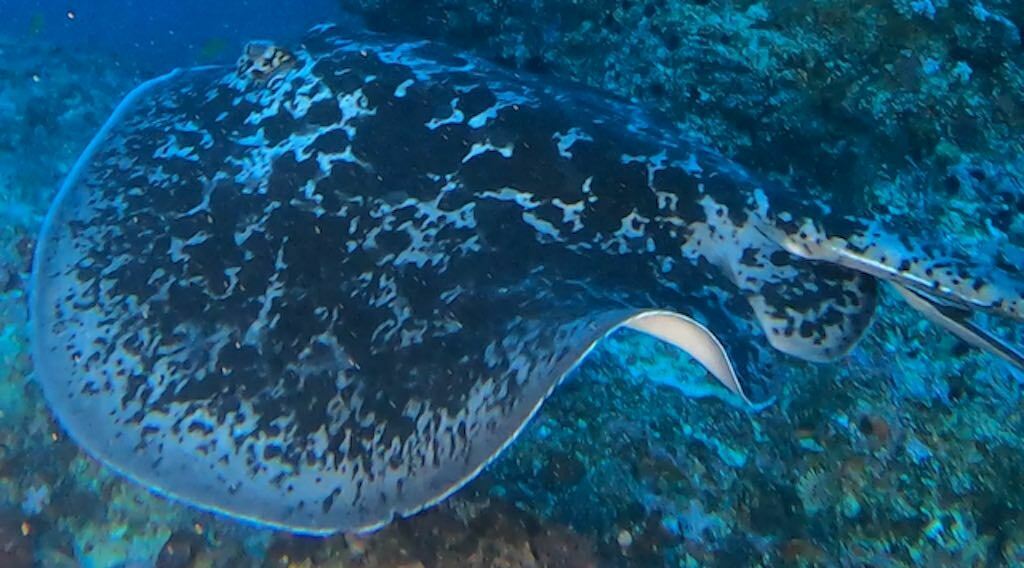
| Gamat Bay | Intermediate to advanced | Moderate, can funnel | Macro, nudibranchs, marbled rays, Mola | Year-round (Mola Jul–Oct) | 10 min | 8 m (bay) to 40 m (wall) |
| Malibu | Intermediate to advanced | Moderate to strong, sheltered creek option | Wall, macro, pelagic chance | Year-round | 40 min | 10 m (bay) to 40 m (wall) |
| Karang Sari | Intermediate | Mild to moderate | Colorful wall, macro | Year-round | 35 min | 20 m |
| Ceningan Wall | Advanced | Strong channel current | Color wall, macro, pelagics in the blue | Year-round | 15 min | 25 m |
| Mangrove | Beginner to intermediate | Gentle drift | Reef fish, turtles, relaxed drift | Year-round | 15 min | 18 m |
| Blue Corner | Advanced only | Very strong, negative entry | Sharks, eagle rays, pelagics, Mola | Year-round, often sunrise | 20 min | 30 m |
| Batu Bolong | Advanced only | Strongest, fully exposed | Pelagics, sharks, rays, Mola | Year-round | 30 min | 30 m |
| Amok | Advanced / technical | Strong | Color, diverse fauna, channel action | Year-round | 10 min | 20 m |
| Gili Tepekong | Advanced recommended | Strong, cold | Canyon, walls, sharks, Mola chance | Jul–Oct best | 35 min | 25 m |
| Gili Mimpang | Advanced recommended | Strong, cold | Mola Mola, sharks, reef action | Jul–Oct best | 40 min | 25 m |
| Gili Biaha | Advanced recommended | Strong, cold | White-tip reef sharks, cave, walls | Jul–Oct best | 45 min | 25 m |
| Manta Bay | Snorkeling / conditions dependent | Variable surface conditions | Occasional manta encounters, mainly snorkeling | Year-round | 25 min | 18 m |
Nusa Penida dive sites map
The map below helps you understand the main logic of diving around Nusa Penida: Manta Point lies on the south-west coast, Crystal Bay and the channel sites sit between Penida, Ceningan and Lembongan, the north coast is the classic drift-diving area, and Padang Bai’s small Gilis are the natural advanced extension for a longer trip.
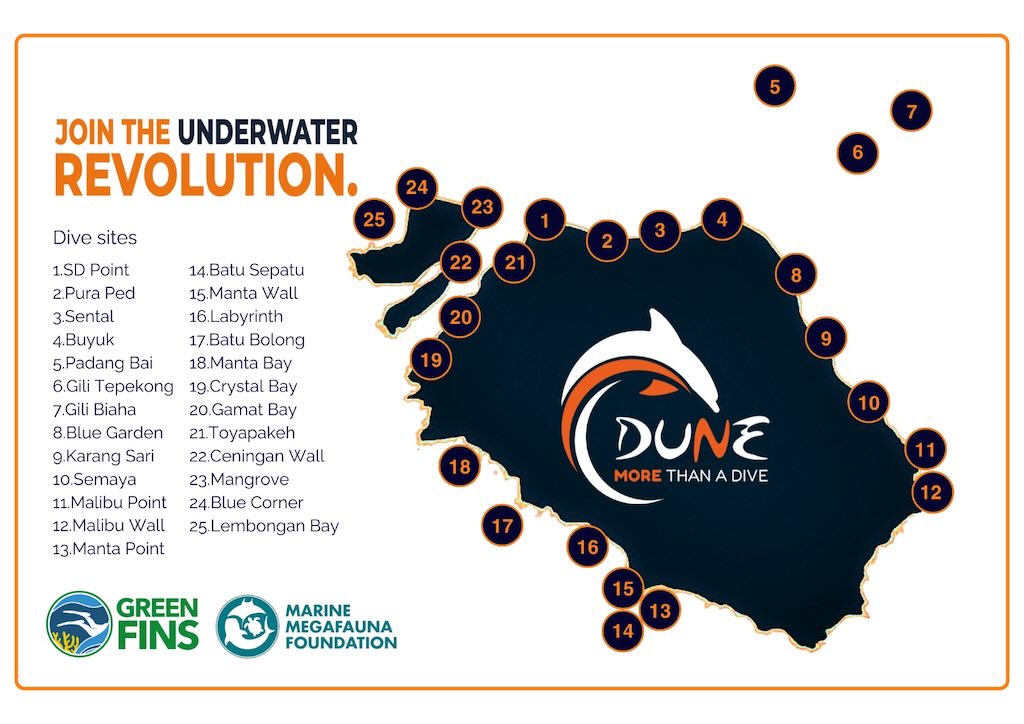
This guide focuses on the dive sites of Nusa Penida, Nusa Ceningan and Nusa Lembongan, plus the Padang Bai Gilis as their natural extension. If you are looking at the rest of the island — Tulamben and the USAT Liberty wreck, Menjangan, Amed or the north coast — that is covered in our dedicated guide to diving in Bali.
Which dive sites are right for you?
It’s your first time diving in Nusa Penida
If this is your first visit, don’t try to see everything. A simple combination gives you the best possible first impression of the island without spending every dive fighting the current:
- Manta Point — to see the manta rays
- SD Point — a drift dive along a beautifully preserved coral reef, with an impressive amount of coral and fish
- Toyapakeh — where you can see almost everything, from pygmy seahorses to the chance of Mola Mola in season
The classic beginner mistake is insisting on diving Crystal Bay at all costs — when there are so many other sites that will give you a richer first day in the water.
You came for manta rays
Recommended site: Manta Point ★★★★★
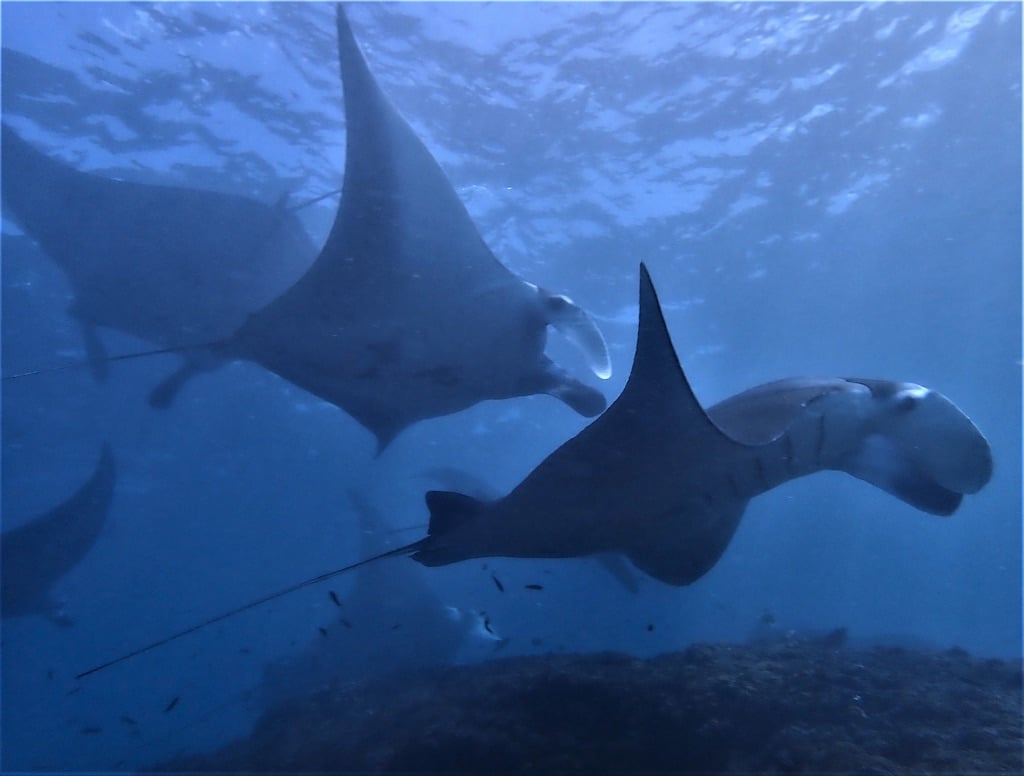
Manta rays are seen at Manta Point essentially year-round, with a real encounter rate of around 95% at this site. It sits about 45 minutes by boat from the port of Toyapakeh, and the sea can be rough, so a proper briefing before departure matters.
Stay calm and never try to swim after them — it is a lost cause, they are faster than you and it only scares them off. Mantas are highly intelligent, curious animals: they usually come to you, and often pass right overhead if you give off calm, positive energy.
For seasons, behavior and how these encounters work, see our dedicated Nusa Penida manta ray guide.
You came for the Mola Mola
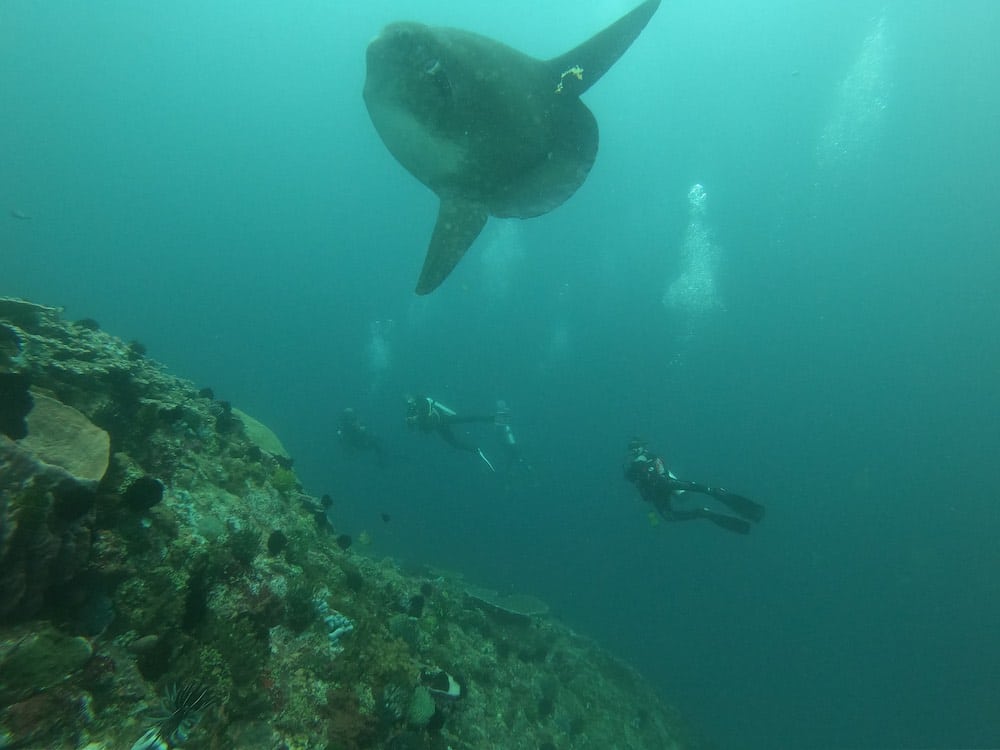
Everyone associates the Mola Mola with Crystal Bay, but the truth is they can turn up almost anywhere around the island: Crystal Bay, Toyapakeh, Gamat Bay, Ceningan Wall, Ped, Malibu, Blue Corner, Gili Tepekong and Gili Mimpang. The two conditions that really matter are being able to go deep and being a little sheltered from the current.
Why July to October? These are the months when cooler upwellings bring deep water closer to the reefs. The Mola generally stay near the thermocline — sometimes around 25–40 m — and recreational diving is limited to 40 m. Cold water raises your chances, but there are never guarantees.
My favorite Mola site is actually Toyapakeh — there is a Mola cleaning station at around 40 m, right in front of the hotel and the dive center. And they do not only show up in cold, deep water: I once saw a Mola at just 5 m in 29°C water. My record is 14 Mola Mola on a single dive at Gamat Bay.
Full seasonality and behavior in our Mola Mola guide.
You love drift diving
Recommended sites: SD Point, Ped, Sental, Blue Corner
The north coast is one long coral plateau you cover with the current, from shallow to deep. Negative entries are rare in Nusa Penida — we only use them when we have to reach a specific entry point, such as Batu Bolong, or when the current can be very powerful, like at Blue Corner.
What makes drift diving here so addictive is that the fish swim against the current, so you end up facing hundreds of fish all swimming towards you. Anything can happen — it is thrilling — even if extreme conditions sometimes cut a dive short.
Safety in the current: always follow your guide at the same depth and stay behind them. Your guide knows how far is too far, and when to turn around or start ascending. For example, when the current reverses at SD Point, it can mean the “washing machines” are not far: two opposing flows meeting.
You prefer colorful reefs
Recommended sites: Toyapakeh, Mangrove, Gamat Bay, Karang Sari
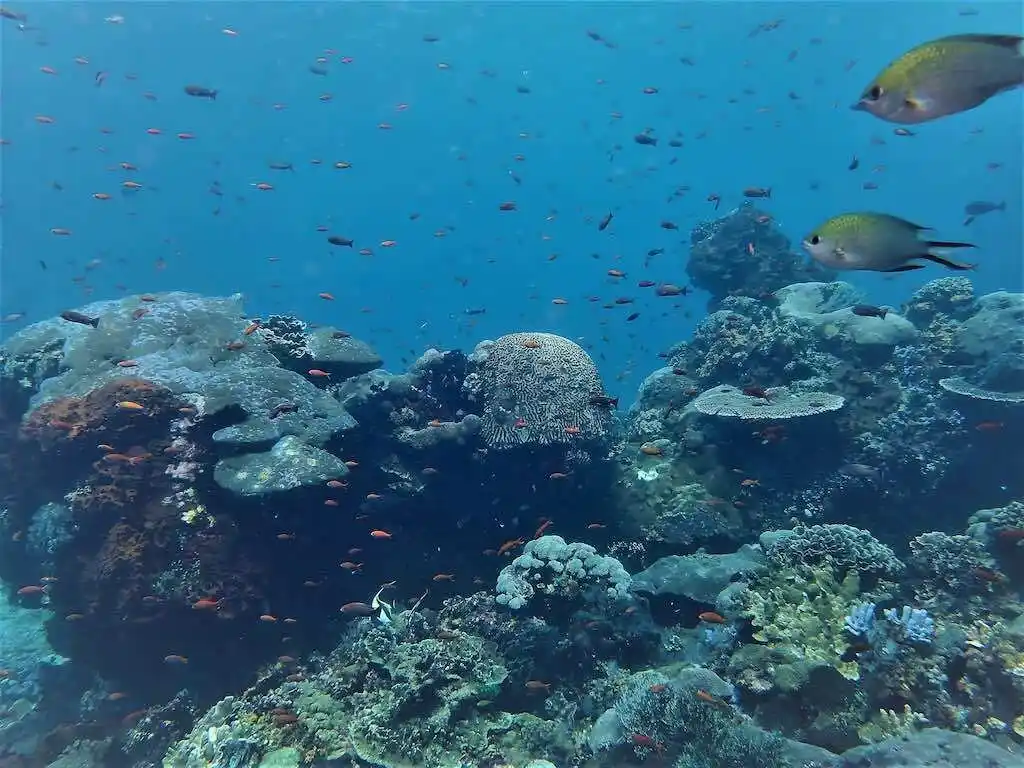
The channel and the north coast hold dense, healthy coral and constant schooling fish. If you want color without heavy current, this is where to look.
The one site that still makes me look up after hundreds of dives is Toyapakeh — every single dive there is different.
You’re a macro photographer
Recommended sites: Karang Sari, Gamat Bay, Toyapakeh, Malibu, Ceningan Wall
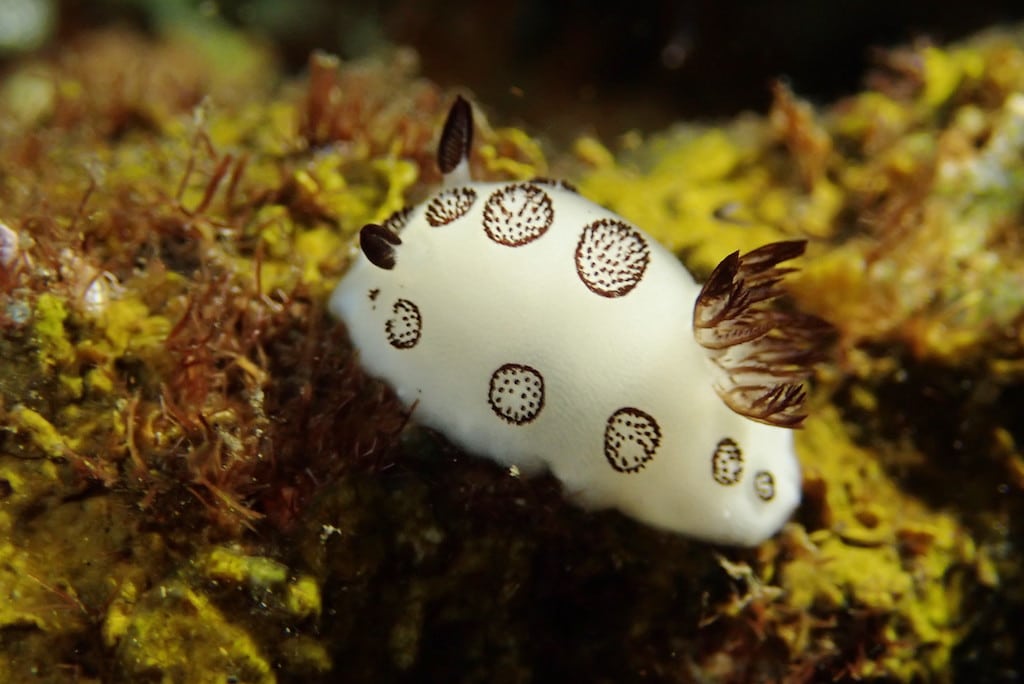
Nusa Penida holds an incredible variety of nudibranchs, alongside crabs, shrimps and other critters that keep macro photographers busy for entire dives. See our nudibranch guide for what to look for.
Looking for sharks?
Recommended sites: Gili Biaha, Blue Corner, Batu Bolong, plus the north and east coasts
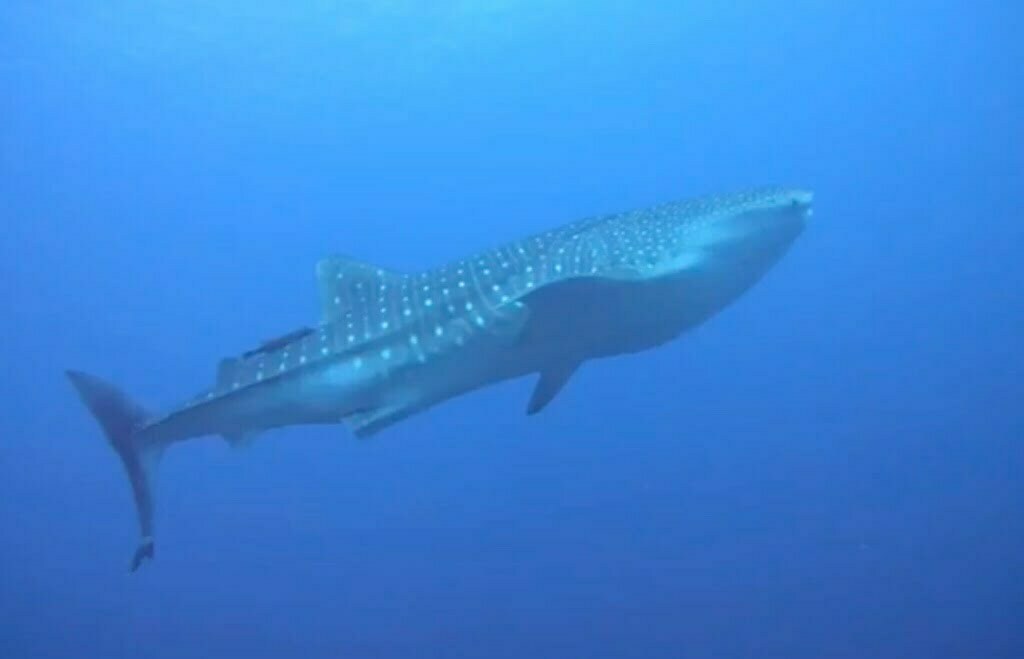
Honestly, Nusa Penida and Bali are not the best places in the world for sharks — I would rather tell you straight. Bamboo sharks are fairly common at Manta Point, and you can find reef sharks at Gili Biaha. On the north and east coasts, with luck, a whale shark, thresher or even a hammerhead can pass in the blue — but objectively that is very rare.
For a realistic species-by-species picture, read our sharks of Nusa Penida guide.
Best dive sites by experience level
| Beginner | Intermediate | Advanced |
|---|---|---|
| Manta Point | Toyapakeh | Crystal Bay corner |
| Crystal Bay inside the bay | SD Point | Blue Corner |
| Mangrove | Ped | Batu Bolong |
| Sental | Gamat Bay | Ceningan Wall |
| Toyapakeh when calm | Karang Sari / Malibu | Gili Tepekong / Mimpang / Biaha |
Best dive sites by marine life
| You want to see… | Best sites |
|---|---|
| Manta rays | Manta Point (~95%, year-round) |
| Mola Mola | Toyapakeh, Gamat Bay, Crystal Bay, Ped, Ceningan Wall, Malibu, Blue Corner, Gili Tepekong / Mimpang |
| Sharks | Gili Biaha, Manta Point (bamboo sharks), Blue Corner, Batu Bolong, north and east coast surprises |
| Turtles | SD Point, Ped, Sental, Mangrove |
| Macro & nudibranchs | Karang Sari, Gamat Bay, Toyapakeh, Malibu, Ceningan Wall |
| Coral gardens | Toyapakeh, SD Point, Mangrove, Karang Sari, Ceningan Wall |
My favorite dive combinations
If you only have a short stay, choosing a smart combination is more useful than chasing a long list of sites. Here are the combinations I would usually consider first, depending on your goal and the conditions.
| Goal | Best combination | Why it works |
|---|---|---|
| Maximum first-day impact | Manta Point + SD Point or Toyapakeh | Mantas plus reef color and fish life |
| Manta + coral | Manta Point + Toyapakeh | Big animals first, then one of the richest reefs |
| Mola season | Crystal Bay + Toyapakeh or Gamat Bay | Famous site plus less obvious Mola possibilities |
| Drift diving | SD Point + Ped + Sental | Classic north-coast plateau progression |
| Macro + reef color | Karang Sari + Gamat Bay | Good critter hunting without losing reef scenery |
| Advanced adventure | Blue Corner + Ceningan Wall or Batu Bolong | Only for the right divers, tide and conditions |
If you have three days
My suggested rhythm, adapted to conditions on the day:
- Day 1 — Manta Point + the north coast: mantas, then a relaxed reef drift.
- Day 2 — the east coast + the channel: Malibu if you’re experienced, otherwise Karang Sari or Gamat Bay.
- Day 3 — Crystal Bay + Mangrove or Toyapakeh: a Mola chance in season, then color and reef life.
- Got a 4th day? Head to the Gili of Padang Bai.
If I had one week
With a full week, I would not try to repeat the same famous sites every day. I would mix reliable highlights with exploratory or condition-dependent dives:
- 2 days for the classics: Manta Point, Toyapakeh, SD / Ped / Sental, Crystal Bay in season.
- 1 day for the channel: Gamat Bay, Ceningan Wall or Blue Corner depending on level and tide.
- 1 day for the east coast: Malibu and Karang Sari if the sea allows it.
- 1 day for Padang Bai: Gili Tepekong, Mimpang or Biaha for advanced divers.
- 1 flexible day: repeat the site that delivered best, or follow the conditions toward something unexpected.
My personal top 10
This is not a universal ranking. It is my personal order of priority if I were guiding an experienced diver who wanted the best possible overview of Nusa Penida and nearby Padang Bai.
1. Manta Point
Because the encounter is reliable, powerful and accessible even to supervised beginners. It is not always the most beautiful reef, but the feeling of being surrounded by manta rays is unforgettable and defines Nusa Penida for many divers.
2. Toyapakeh
If I had to choose one site for variety, I would choose Toyapakeh. Coral, macro, schooling fish, blue-water surprises and a Mola cleaning station deep below the reef — it is one of the most complete dives around the island.
3. SD Point
For the coral and the fish. When the current is right, SD Point is the classic Nusa Penida drift dive: easy movement, healthy reef and fish facing you in the current for most of the dive.
4. Crystal Bay
Crystal Bay is famous for a reason, especially in Mola season. But I would not force it in bad conditions. The bay can be easy, while the corner can be deep, cold and serious — choose it when the timing is right.
5. Gamat Bay
Gamat Bay has variety: plateau, wall, macro, rays and real Mola potential in season. It is one of those sites where a guide who knows the reef can completely change the dive.
6. Malibu
Malibu is less famous but very rewarding: a beautiful wall, a protected creek option and the possibility of larger visitors from the blue. It is one of the sites that shows how much remains under-dived on the east coast.
7. Ceningan Wall
An incredible wall with every color on the palette, exposed to the channel current. You dive it for the wall itself, but you keep one eye in the blue because anything can appear there.
8. Blue Corner
Only for very experienced divers, and only in the right conditions. It can involve powerful current and a negative entry, but when it works, it is one of the most exciting pelagic dives around Lembongan.
9. Batu Bolong
A rock in the open sea, fully exposed to the currents. Batu Bolong is not a site to tick off casually; it is a site to dive when the guide, tide and group all say yes.
10. Gili Biaha or Gili Tepekong
If you extend your trip to Padang Bai, these small Gilis add a different energy: colder water, walls, reef sharks and the famous Tepekong canyon. They are not Nusa Penida, but they pair very naturally with it for advanced divers.
When I would avoid a site
Choosing a dive site is also about knowing when not to dive it. These are the kinds of conditions where I would choose another site instead.
| Site | I would avoid it when… | Better alternative |
|---|---|---|
| Crystal Bay corner | The current is strong or the group is not experienced enough for a deep profile | Toyapakeh, Gamat Bay or Crystal inside the bay |
| Manta Point | The south coast is too rough or the boat ride would be uncomfortable | Toyapakeh, SD Point or north-coast reef dives |
| Blue Corner | The group is not advanced, or current timing is not right | Mangrove or SD Point for easier drift diving |
| Batu Bolong | There is any doubt about current, swell or group level | Ceningan Wall or Malibu for advanced-but-more-manageable adventure |
| Gamat Bay | The current is funneling too strongly through the bay | Toyapakeh or Mangrove |
| Padang Bai Gilis | Divers are not comfortable with cold water, walls or current | Nusa Penida north coast and Toyapakeh |
Frequently asked questions
Which dive site has the strongest current?
Batu Bolong. It is a rock in the open sea, fully exposed, so it gets some of the most powerful currents around Nusa Penida — an advanced-only site where a dive can be cut short by the conditions.
Where are the manta rays?
Manta Point, on the south-west coast, with cleaning stations where mantas gather almost year-round and an encounter rate of around 95%. It is about 45 minutes by boat from Toyapakeh.
Can beginners dive Crystal Bay?
Yes — as long as you stay inside the bay and conditions are calm. The advanced part is the corner, where currents can be strong and the profile deep; that is where you go looking for the Mola Mola.
Which sites have turtles?
The north-coast drift dives — SD Point, Ped and Sental — plus Mangrove on Nusa Lembongan are among the most reliable spots for sea turtles.
Can I see Mola Mola in November?
It is possible but rare. The reliable season is July to October, when the cold upwelling brings them up. Outside that window sightings happen occasionally, but you should not count on it.
Are Mola Mola only found at Crystal Bay?
No — that is the most common myth about diving Nusa Penida. Mola Mola turn up all around the island: Toyapakeh, Gamat Bay, Ceningan Wall, Ped, Malibu and more. Crystal Bay is simply the most famous spot, not the only one.
Which dive sites are best for photographers?
For wide angle: Manta Point, Crystal Bay and Ceningan Wall. For macro: Karang Sari, Gamat Bay, Toyapakeh and Malibu, where the variety of nudibranchs is exceptional.
Not sure which sites suit your level?
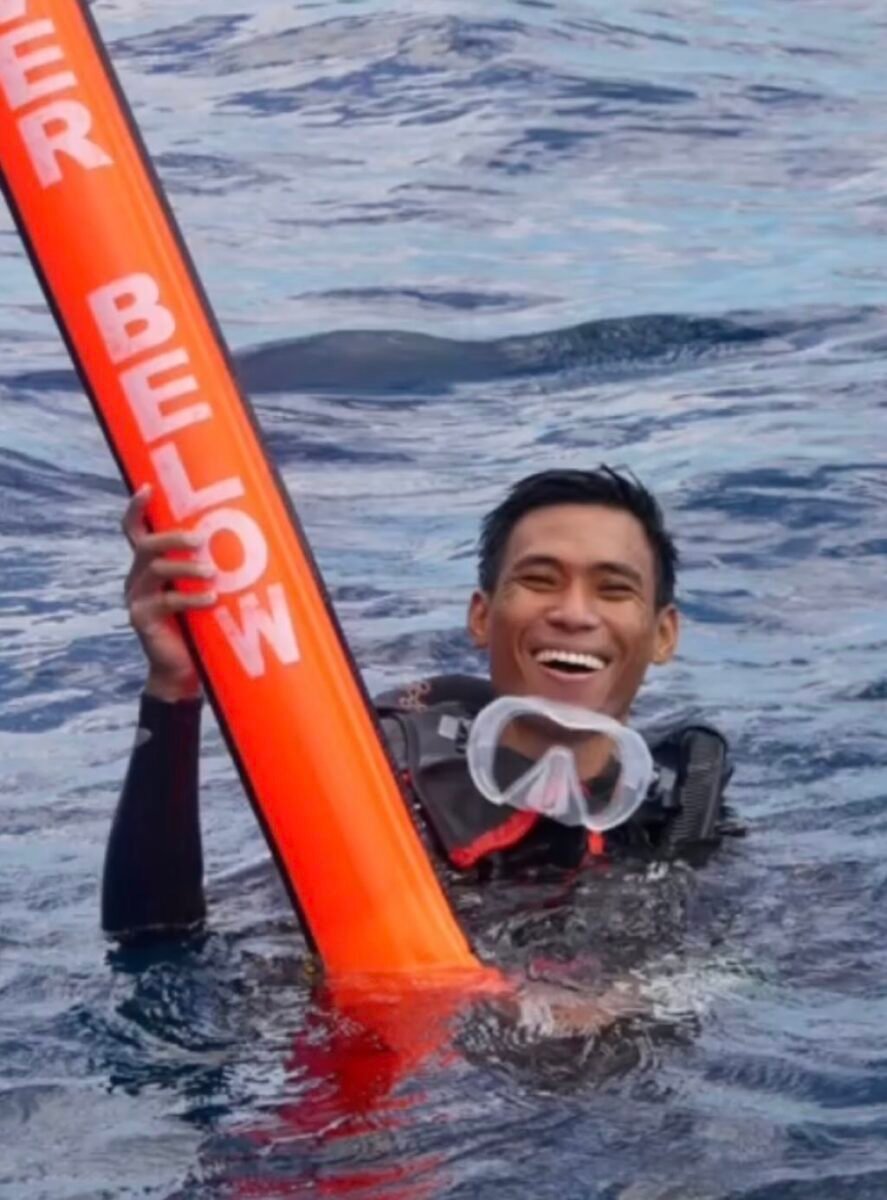
Roy is an Indonesian dive instructor at Dune Penida who knows the daily conditions, currents and marine life around Nusa Penida. Tell him your certification level, experience and dates, and he will help you choose the right sites.
About this guide
This guide was created by Blaise Jaeger together with Roy, dive instructor at Dune Penida and underwater photographer. Blaise is a PADI Master Scuba Diver with more than 700 logged dives, including hundreds around Nusa Penida since first discovering the island in 2015 and opening Nusa Penida’s first PADI dive center in 2017.
Roy has been diving around Nusa Penida for many years and contributes local knowledge, seasonal observations and underwater photography to many of the guides published on this website. He also contributed many of the photographs featured in this article.
Together, our goal is simple: to provide accurate, experience-based information that helps divers safely discover the exceptional marine life and dive sites of Nusa Penida.
Continue planning your diving trip
- Complete Nusa Penida diving guide — marine life, seasons, conditions, courses and how to book.
- Manta ray guide
- Mola Mola guide
- Sharks of Nusa Penida
- Nudibranchs of Bali
- Where to stay in Nusa Penida
- Complete Nusa Penida travel guide
- Diving in Bali — Tulamben, Menjangan, Amed and the rest of the island.
hi
Hello, how can I help you about diving in Bali ?