By Blaise Jaeger — PADI Master Scuba Diver based in Nusa Penida, diving SD Point since 2017 · Updated on July 1, 2026
I have been diving SD Point since 2017, and it is probably the site on Nusa Penida’s north coast that surprises me the most. It’s the first wall you reach heading north-east from Toyapakeh, and it owes its name to the two Sekolah Dasar (elementary schools in Indonesian) that sit on either side of the site, right along the coast.
Here you dive as a drift along a huge coral plateau that tips over into a dramatic wall. The current carries you and you simply enjoy the show: fields of hard coral, green turtles, schools of trevallies and sergeant majors, and sometimes even a Mola Mola passing through out of season.
What really sets SD Point apart is its macro diversity. A big black frogfish lives on the reef, paperfish sway in the current, and underwater photographers can spend whole dives here without ever getting bored. In this guide I share everything you need to know to dive SD Point: level required, currents, signature marine life, conditions and a FAQ.
👉 To see every spot in the archipelago, browse our complete guide to the best dive sites in Bali & Nusa Penida.
SD Point Dive Site at a Glance
| Type of diving | Drift, wall, photography, macro |
| Level | All levels (Open Water minimum recommended) |
| Depth | 5–40 m (ideal 18–25 m) |
| Highlights | Turtles, fish schools, rare macro, occasional Mola Mola |
| Current | Mild to moderate, sometimes strong |
| Water temperature | 22–29°C (down to 18°C in Mola Mola season) |
| Visibility | 20–30 m |
| Best time | Year-round (Mola Mola: July–October) |
| Time from Toyapakeh | 10–15 minutes by boat |
What Level Do You Need to Dive SD Point?
SD Point is accessible to Open Water divers straight after certification, as long as conditions are calm. For beginners, I favour an entry along the edge of the plateau, in shallow water, without dropping onto the wall.
Intermediate divers (Advanced Open Water) get the most out of the site between 18 and 25 meters, where the marine life is densest. Experienced divers (Deep, Drift, Nitrox) can follow the wall down to 40 meters, explore its crevices and hope for a Mola Mola in season. If you want to progress, I recommend a PADI Advanced Open Water course before diving deep here.
Currents at SD Point
Current is the signature of SD Point: it’s what makes the dive so effortless, but it’s also what demands attention. Most of the time you glide along the reef as a drift, carried by a steady horizontal current with almost no finning to do.
Stay alert to two things:
- Down-currents can quickly pull a diver toward the bottom along the wall.
- “Washing machines” create turbulence at the end of the plateau.
If the current suddenly changes direction during the dive, it’s often the warning sign of a down-current. When that happens, stay close to the reef, avoid drifting into open water, and begin a controlled ascent when your guide advises. Always dive SD Point with a local guide who knows the site inside out.
Turtles & Schooling Fish at SD Point
SD Point is a playground for green and hawksbill turtles. You meet them on almost every dive, resting on the reef or grazing on sponges. Keep a respectful distance and never touch them — they tolerate your presence perfectly well if you hover calmly.
Around the turtles, marine life is often very dense. Large schools of sergeant majors, fusiliers, trevallies and sometimes barracudas regularly join the drift along the reef, while napoleons, surgeonfish and batfish are common over the coral plateau. When visibility is excellent, it’s not unusual to see tunas or giant trevallies cruising in the blue off the wall — SD Point offers a beautifully balanced mix of tropical reef, drift diving and pelagic encounters.
Macro at SD Point: Frogfish, Paperfish & Hidden Life
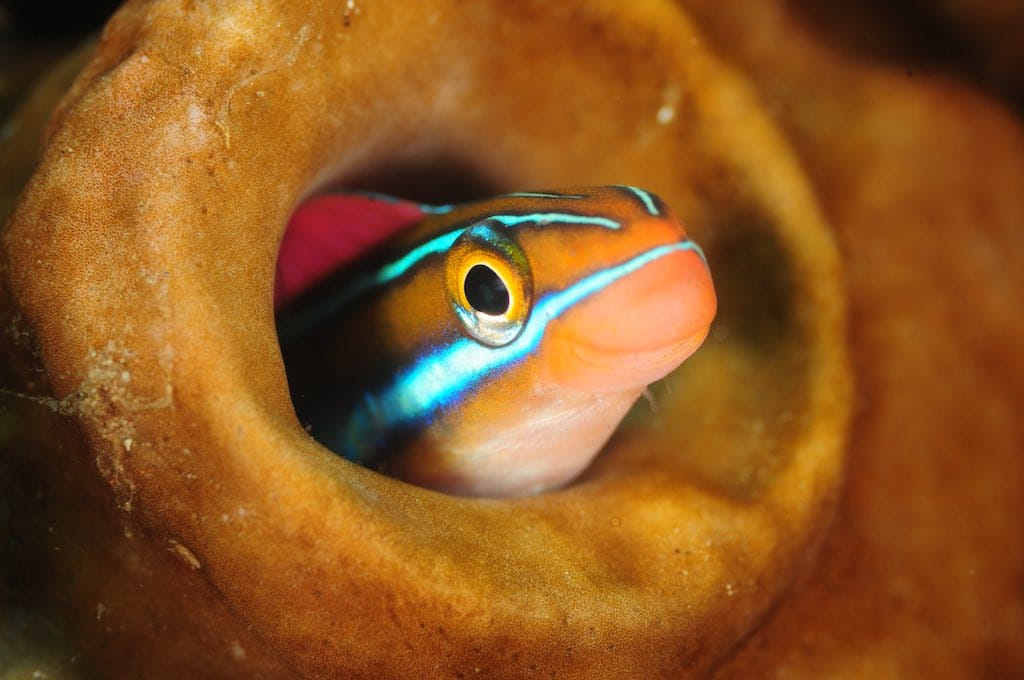
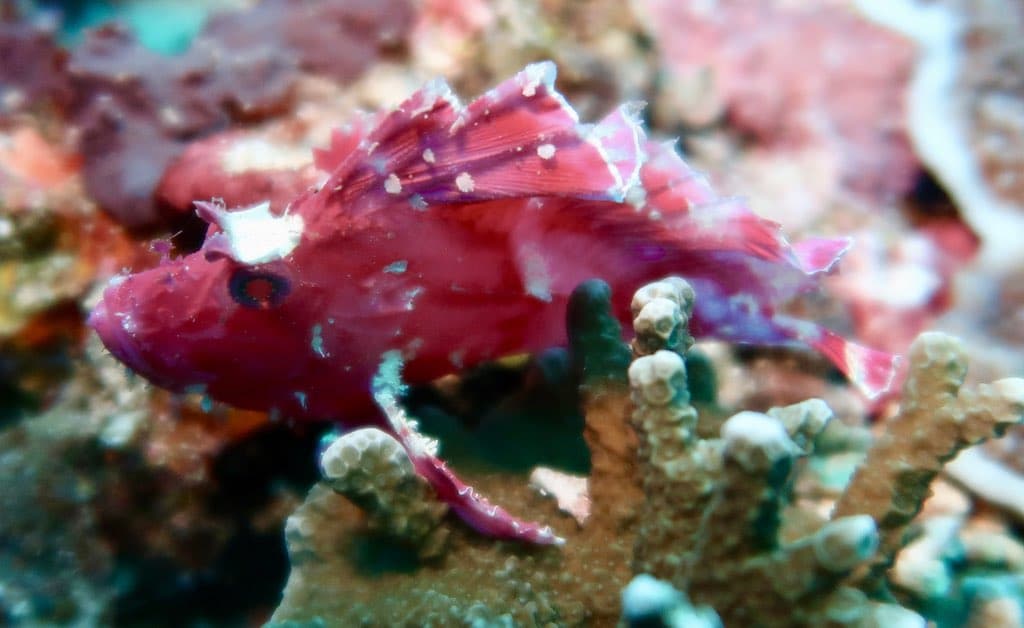
Even though SD Point is best known for its drift dives and fish schools, it’s also one of the best macro dive sites in Nusa Penida. Slow the pace down, look closely at the reef, and a discreet but fascinating world appears.
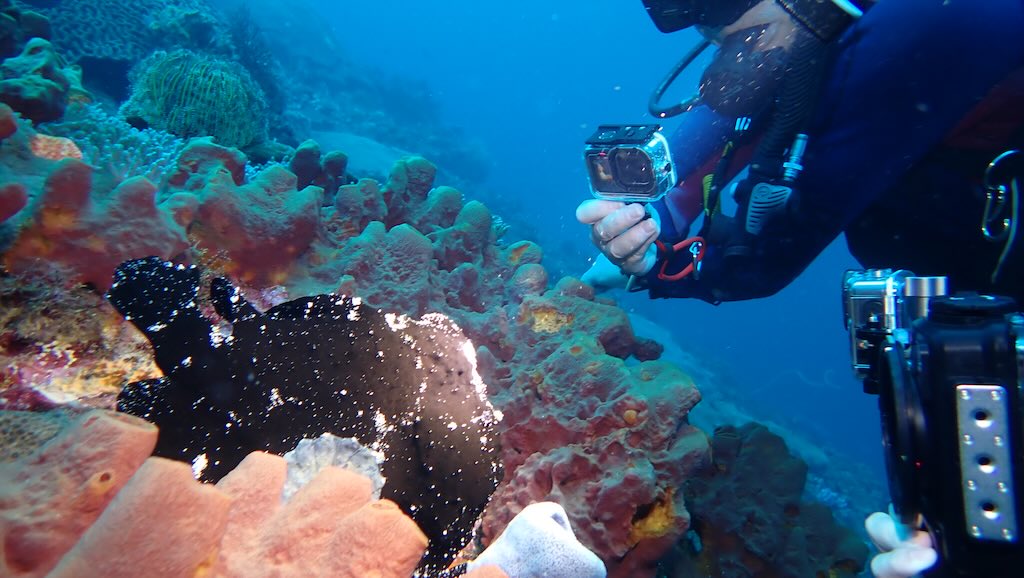
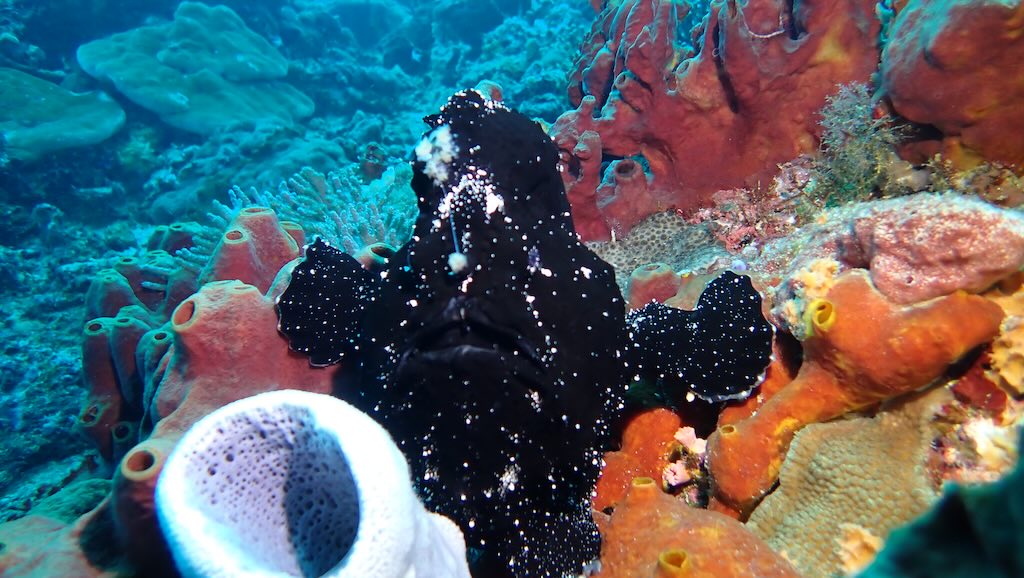
The site is home to several frogfish, including a big black specimen that has become almost legendary among local guides and photographers. With their perfect camouflage and impressive stillness, they often go completely unnoticed. You can also find paperfish, nudibranchs, shrimps, orangutan crabs and, occasionally, ghost fish tucked into the gorgonians and soft corals.
Diving the same site again and again turns into a treasure hunt. At SD Point, one of our favourite challenges has been tracking down that large black frogfish that has made the reef its home. In the photo below, taken by my friend Roy, you can really appreciate its size next to me while I’m filming with my GoPro — and, as usual, Roy’s photo turned out far better than my video 😉
Can You See Mola Mola at SD Point?
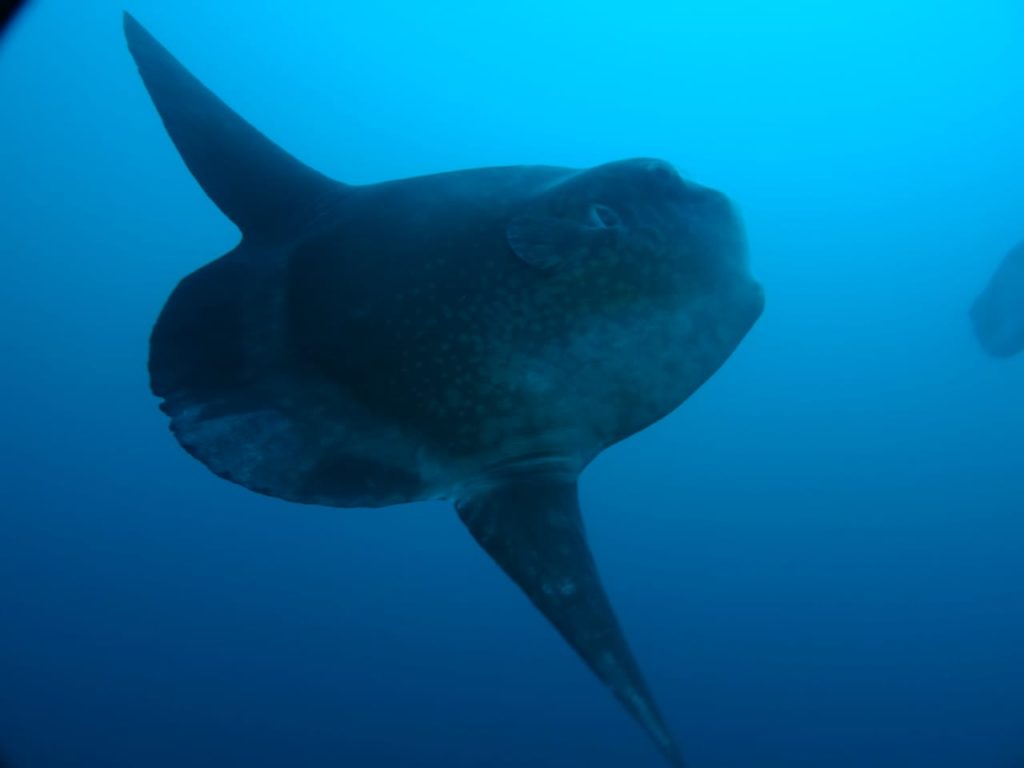
During the cold season, usually between July and October, it’s not unusual to spot a Mola Mola along SD Point’s deep wall. Even though Crystal Bay and Ped remain more famous for the sunfish in Nusa Penida, SD Point delivers some beautiful surprises when cold upwellings reach the north coast. Encounters are unpredictable, but some dives offer stunning sightings in the deep blue.
Diving Conditions at SD Point
SD Point usually offers excellent visibility, often between 20 and 30 meters. The site can be dived all year, with especially pleasant conditions during the dry season. Dives are mainly drift dives along the reef and, depending on the strength of the current, it’s sometimes possible to cross several zones of the site in a single dive. Thanks to its huge coral plateau and biodiversity, SD Point suits fans of big fish schools just as well as underwater photographers and macro lovers.
Dive SD Point with Roy
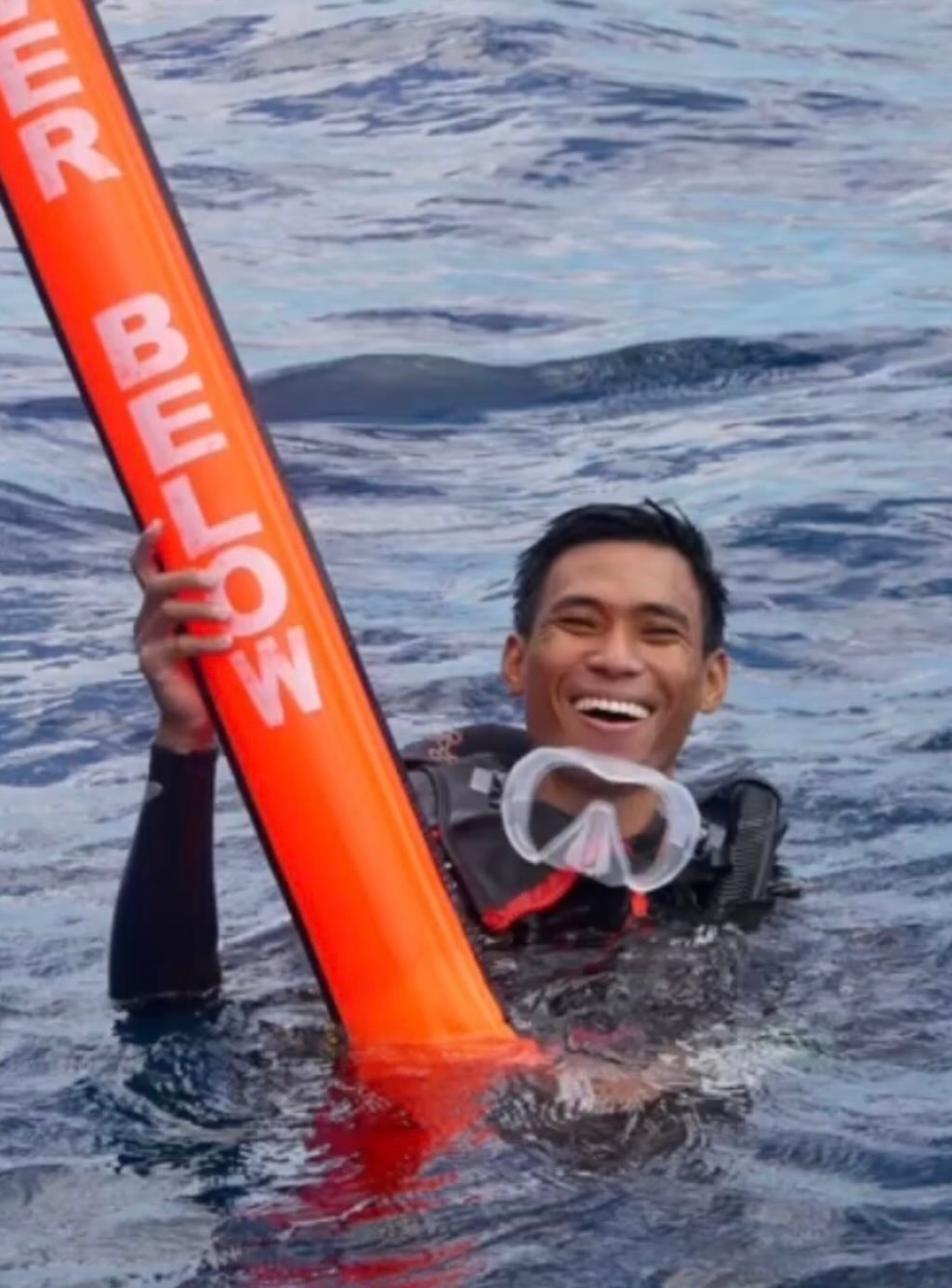
Roy is a dive instructor at Dune Penida who dives SD Point all year and knows its currents and its resident frogfish by heart. Want to drift this wall safely, or maximise your macro and turtle sightings? Message Roy directly — he’ll pick the right day, the right depth and guide you through it.
Other North-Coast Dive Sites
SD Point is part of a long chain of drift dives running along the north coast of Nusa Penida. Depending on conditions and current, a single dive can sometimes cross several of these sites.
Ped
An accessible, marine-life-rich site famous for turtles, blue-water encounters and some of the best Mola Mola sightings on the north coast. Read our full guide to diving Ped.
Sental
A very well-preserved site, loved for macro, nudibranchs and training dives thanks to its shallow plateau.
Buyuk
A superb drift site blending coral reef, macro and possible pelagic encounters.
👉 Discover all the dive sites of Nusa Penida.
SD Point Diving FAQ
What level do you need to dive SD Point?
SD Point is accessible from Open Water level when conditions are calm, but Advanced divers get more out of the wall and the deeper zones. Beginners simply stay along the shallow plateau without dropping onto the drop-off.
Can you see turtles at SD Point?
Yes — turtles are very common at SD Point, and it’s rare to make a dive here without seeing at least one over the sandy plateau.
Can you see Mola Mola at SD Point?
Yes, especially between July and October, although sightings are less frequent than at Crystal Bay or Ped. They happen along the deep wall when cold upwellings reach the north coast.
Is there current at SD Point?
Yes — SD Point is a drift dive with a generally moderate current, sometimes stronger depending on the tides. Watch for down-currents and “washing-machine” turbulence at the end of the plateau, and dive with a local guide.
Is SD Point good for macro?
Yes — the site is known for its frogfish, nudibranchs, paperfish and many small creatures hidden in the reef, making it a favourite for underwater photographers.
How deep is SD Point?
Dives generally take place between 5 and 40 meters, with an ideal zone between 18 and 25 meters.
Plan your trip to Nusa Penida
If SD Point Dive Site has sparked your curiosity, it’s worth taking a deeper look at everything the island has to offer—both above and below the surface. To help you plan the perfect stay, explore our complete travel guide to Nusa Penida, covering how to get there, where to stay, the best beaches, viewpoints, and practical tips for getting around the island.
For divers, don’t miss our Nusa Penida diving guide, which explains seasons, water temperatures, currents, certifications, and what to expect when diving in these uniquely dynamic waters. You can also dive SD Point and many other exceptional sites with Dune Penida Dive Center, a PADI 5★ center based on Nusa Penida, known for its experienced guides and strong focus on safety and local knowledge. You can also dive deeper into the incredible marine life of the region with our dedicated pages on manta rays, mola mola (ocean sunfish), sharks, and nudibranchs, all commonly encountered around Bali and Nusa Penida.
And if you’re choosing where to dive next, our in-depth guide to the best dive sites in Bali breaks down each site by level, conditions, and marine life—so you can build a dive plan that perfectly matches your experience, your comfort level, and your sense of adventure.
Dive with Mola Mola
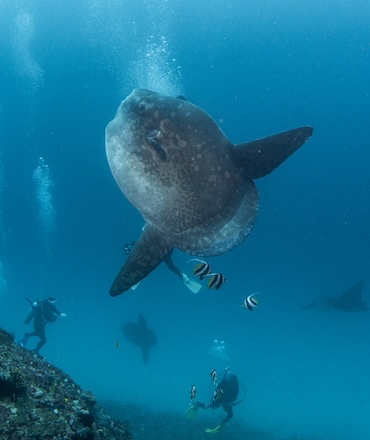
Dive with Mola Mola in Nusa Penida : learn about sunfish season, cleaning stations, thermoclines, dive depth and how to safely encounter these ocean giants.
Best dive sites in Bali
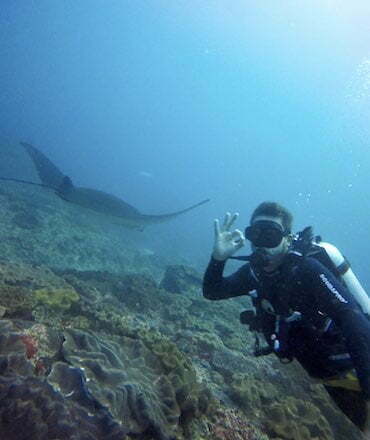
20 best dive sites in Bali around Nusa Penida, Padang Bai and North Bali : discover manta rays, oceanic sunfish, sharks, drift dives and vibrant coral reefs.
Nusa Penida travel guide
Complete Nusa Penida Travel Guide : how to get there, where to stay, best beaches, temples, viewpoints and practical tips to plan your island adventure.
About the author
Blaise Jaeger opened Nusa Penida’s first PADI dive centre in 2017 and has dived SD Point and the north-coast walls hundreds of times. A PADI Master Scuba Diver based on the island, he shares first-hand, safety-first guides to diving Nusa Penida.