By Blaise Jaeger — PADI Master Scuba Diver based in Nusa Penida, diving Ped since 2017 · Updated on July 1, 2026
I have been diving Ped regularly since 2017, and it’s probably one of the most unpredictable sites on Nusa Penida’s north coast. Located between SD Point and Sental, the site takes its name from the village of Ped and the famous Pura Dalem Ped temple, visible from the sea. According to local belief, this temple once housed a powerful demon said to have brought devastation to Bali on Nyepi day, giving the area strong cultural and spiritual significance.
Unlike SD Point, which is better known for its drift dives and macro, Ped is a site where you have to keep an eye on the blue at all times. Turtles, barracudas, tunas, thresher sharks and sometimes even Mola Mola can appear at any moment along the wall.
The site combines a huge coral plateau accessible to all levels with a deep wall where pelagic encounters become more frequent when conditions line up. In this guide I share everything you need to know to dive Ped: level required, currents, Mola Mola season, exceptional encounters and tips to make the most of this iconic Nusa Penida site.
👉 To see every spot in the archipelago, browse our complete guide to the best dive sites in Bali & Nusa Penida.
Ped Dive Site at a Glance
| Type of diving | Drift, wall, pelagics, macro |
| Level | All levels |
| Depth | 5–40 m (ideal 18–25 m) |
| Highlights | Mola Mola, turtles, barracudas, deep wall |
| Current | Moderate, sometimes strong |
| Water temperature | 22–29°C (down to 18–22°C in Mola Mola season) |
| Visibility | 20–30 m |
| Best time | Year-round (Mola Mola: July–October) |
| Time from Toyapakeh | 10–15 minutes by boat |
What Level to Dive Ped?
Ped is one of the most versatile sites on the north coast of Nusa Penida. The shallow plateau makes it possible to run dives accessible to beginners, and even discovery dives when conditions are calm.
Open Water divers generally stay between 10 and 18 meters over the coral plateau, while Advanced Open Water divers get more out of the wall between 20 and 30 meters. When the current picks up or swell arrives from offshore, Ped becomes more technical and the deeper dives call for solid drift-diving experience.
Currents at Ped
At Ped, current is part of the experience. Most dives are drifts along the reef with a fairly comfortable horizontal current. But unlike some other north-coast sites, Ped can occasionally come alive when the water masses accelerate along the wall: sudden changes of direction or down-currents can appear, especially during the cold season. The site is still generally more accessible than Crystal Bay or Blue Corner.
👉 Always dive with a local guide who knows the day’s exact conditions.
The Coral Plateau & Turtles at Ped
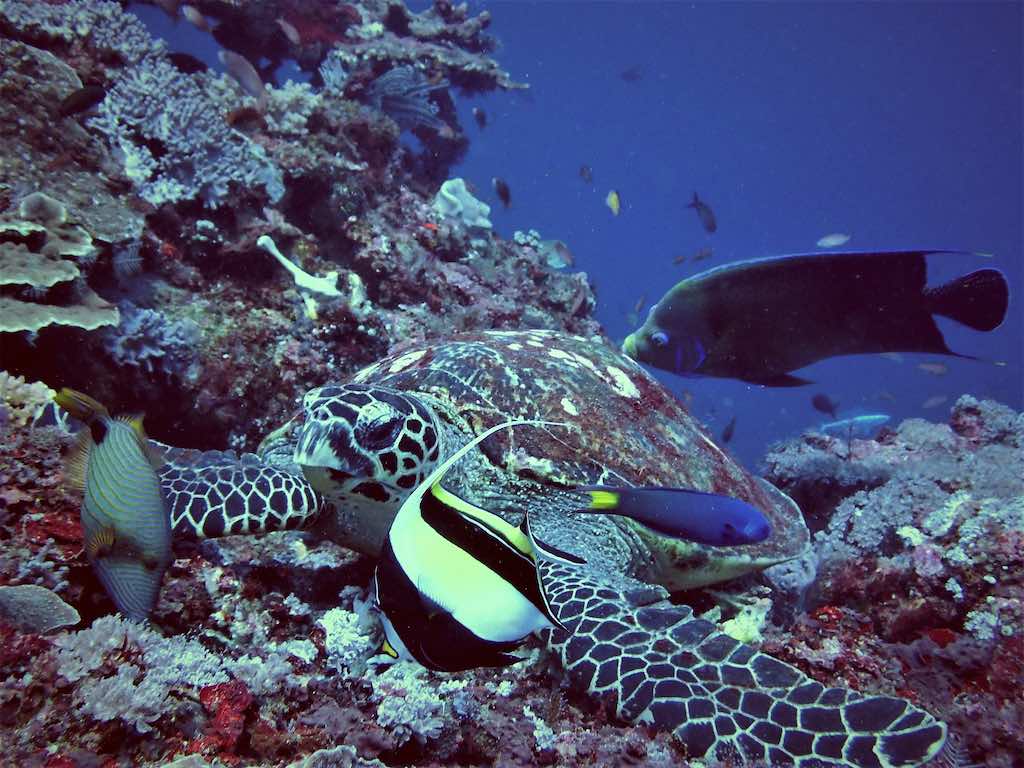
The dive usually starts over a wide, shallow coral plateau that is remarkably rich in marine life. Green and hawksbill turtles are very common here, and it’s not unusual to meet several on a single dive.
The reef also hosts schools of fusiliers, sergeant majors, surgeonfish, batfish, napoleons and many tropical species typical of Nusa Penida. This first part of the dive is often very calm — a gentle contrast with the deep blue lining the wall.
Keep an Eye on the Blue at Ped
This is probably what makes Ped so special: at any moment, the blue can come alive. Barracudas, tunas, giant trevallies and sometimes thresher sharks regularly appear along the wall when conditions are right. Ped is one of those sites where you often start a quiet dive on the reef… before suddenly living a completely unexpected encounter. Even after hundreds of dives in Nusa Penida, Ped is still one of the rare sites where I constantly watch the open water hoping for a surprise.
Can You See Mola Mola at Ped?
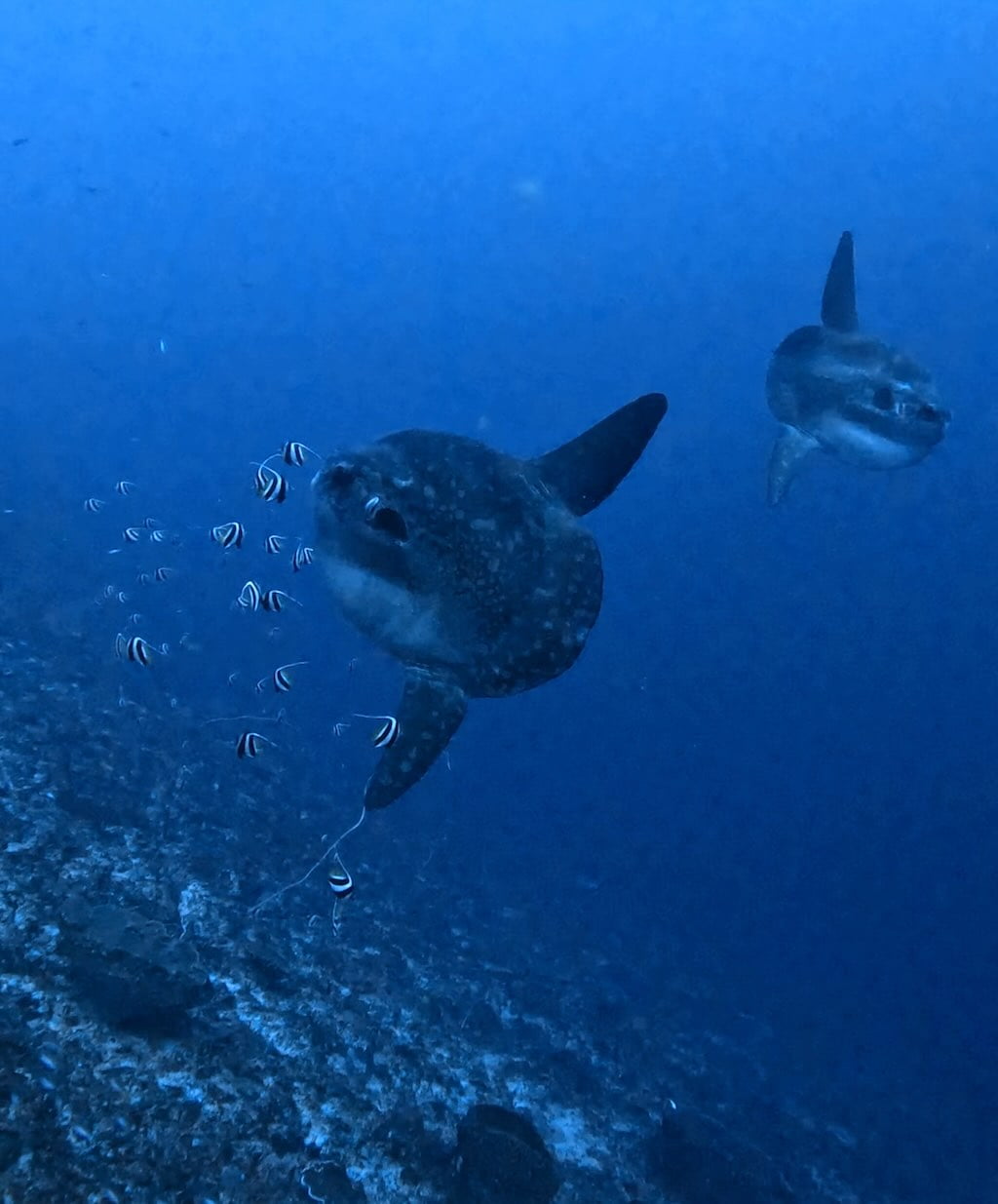
Yes — Ped is clearly one of the good sites to see the Mola Mola in Nusa Penida during the cold season, usually between July and October. Encounters happen along the deep wall when cold upwellings draw the sunfish around the north coast, and some years sightings even continue into November.
One of my most unforgettable dives at Ped wasn’t just about seeing a single Mola Mola, but three of them swimming silently in a line, one after another. Meeting one up close is already a powerful moment; witnessing three together in perfect formation was truly magical and exceptionally rare — a memory etched in my mind. And while Crystal Bay remains the most famous sunfish site in Bali, encounters at Ped are often quieter and far less crowded.
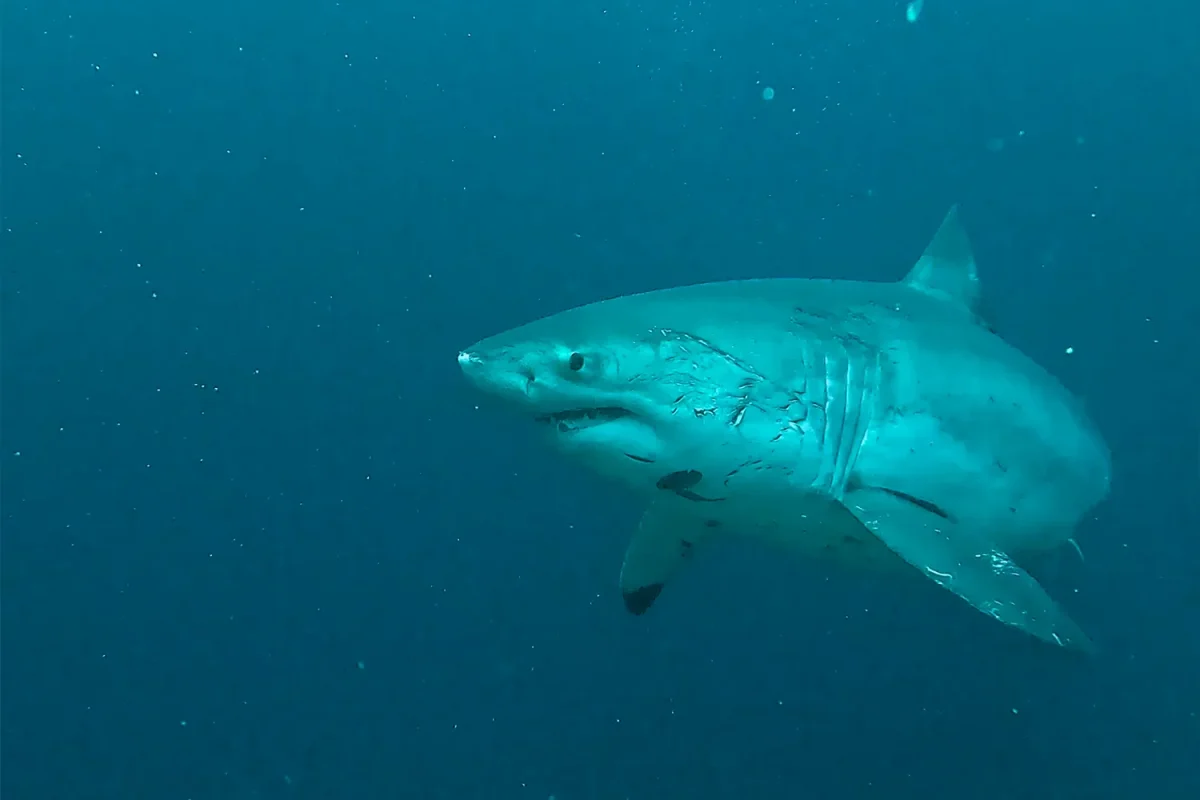
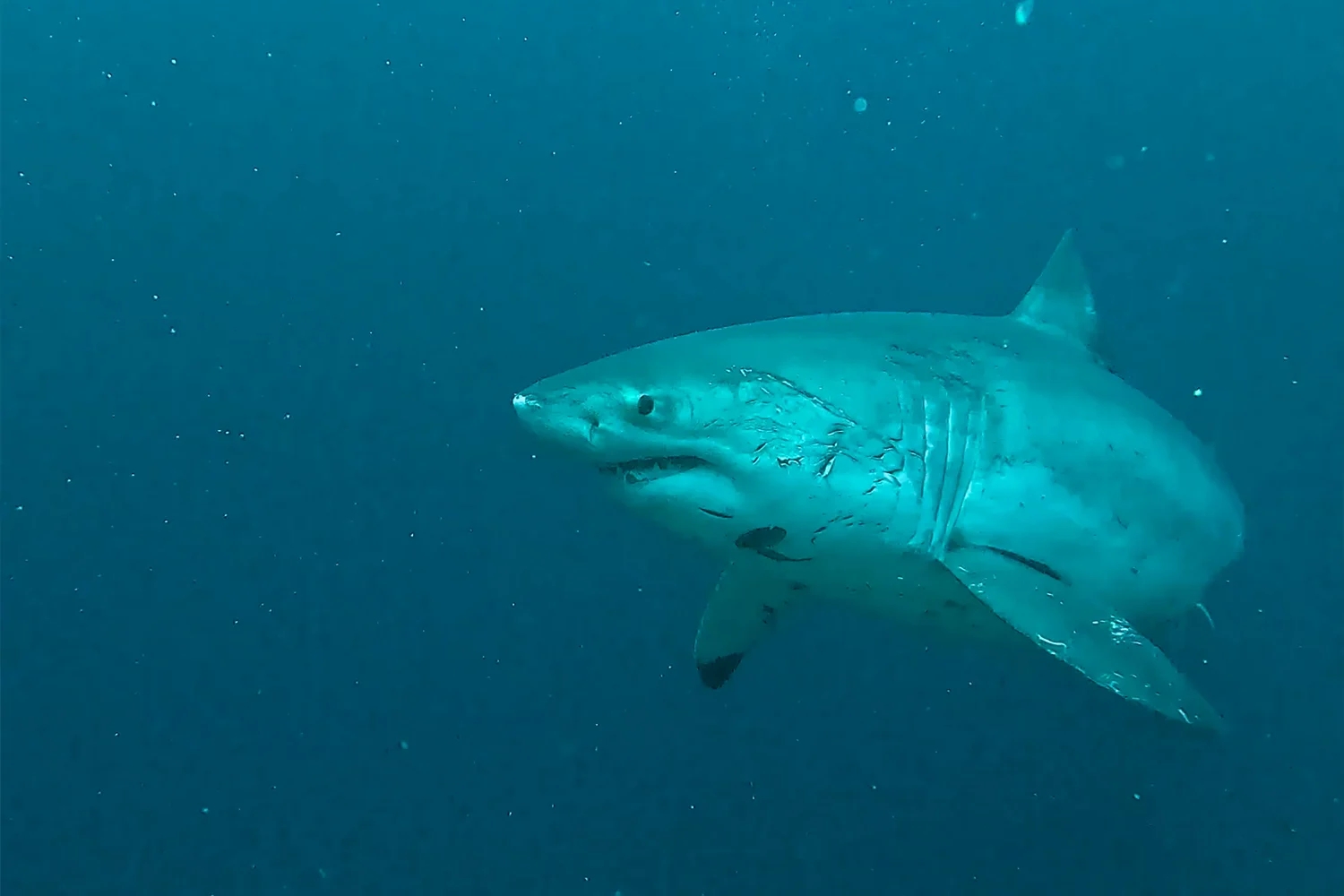
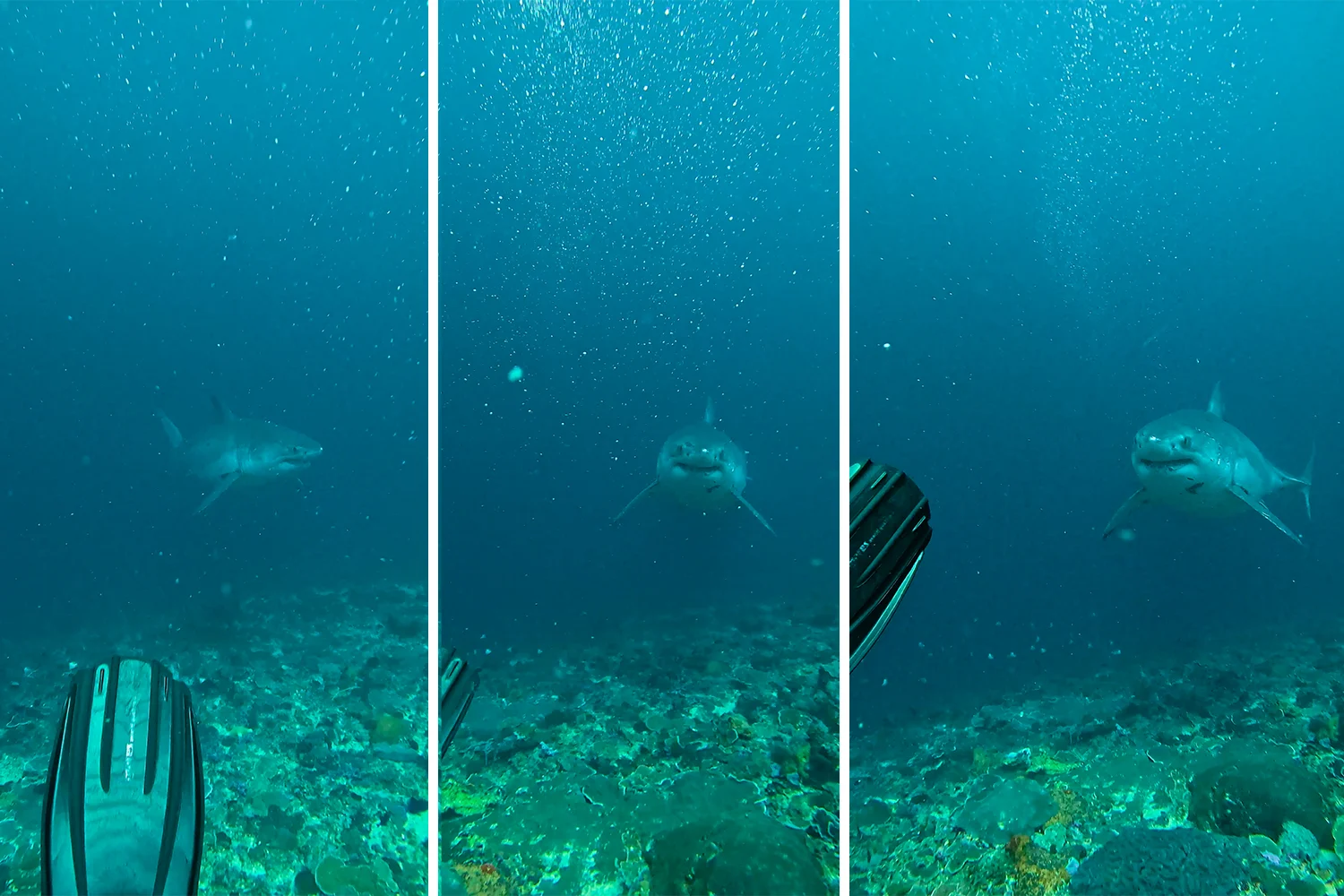
A Great White Shark at Ped (March 12, 2025)
On March 12, 2025, a group of divers at the Ped dive site experienced an extraordinary and extremely rare encounter when a five-meter-long great white shark glided past them at a depth of 22 meters.
The encounter began when Divemaster Fabian Clinton noticed a large, dark silhouette emerging from the deep blue. Realizing almost instantly that it was a great white shark, he calmly signaled the rest of the group. As the shark slowly turned toward him, Clinton maintained eye contact, staying composed and ready to gently deflect it with his fin if needed. Just moments before any interaction, the shark changed direction and disappeared back into the blue.
The divers surfaced in disbelief, unanimously calling it the “perfect dive.” Clinton later described the moment as being “beyond the holy grail of diving.” The shark is believed to have been a pregnant female, making the sighting even more exceptional. Such encounters are almost unheard of in tropical waters and are a powerful reminder of how vulnerable great white sharks are, their populations having declined sharply due to overfishing and bycatch. A video of the encounter can be viewed on @foffo4’s Instagram, and the full report was covered by Yahoo News Australia.
While sightings like this are exceptionally rare, divers in Nusa Penida may also, on very special occasions, encounter other large pelagic sharks such as whale sharks or thresher sharks passing through deeper blue water.
An Instructor’s Best Dive at Ped
The underwater world is often outstanding, sometimes breathtaking. A beautiful dive becomes unbelievable. That is what happened while diving Ped that day. I was taking care of some guests during a discovery dive. The conditions were perfect: crystal-clear water and a tiny bit of current that made the dive even easier. We didn’t know it yet, but the next 45 minutes would stay in our memory forever.
A Mola Mola appeared, and my guests were a bit confused as I hadn’t mentioned in my briefing that a massive sunfish could show up. Screams of joy in our regulators. He followed us; we just admired and enjoyed his presence. Once he decided to go back deep, I felt something unusual, different. Here came a thresher shark, followed by a school of barracudas. Do you want some more? A second Mola Mola showed up, with its natural grace, and decided to rise to the surface right in front of us. Magical. Time just stopped for a few seconds. There we were, stars in our eyes, feeling like we’d just lived a dream.
Loïc, PADI OWSI
Macro & Underwater Photography at Ped
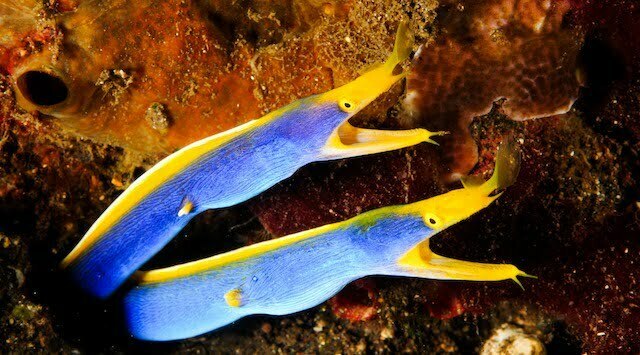
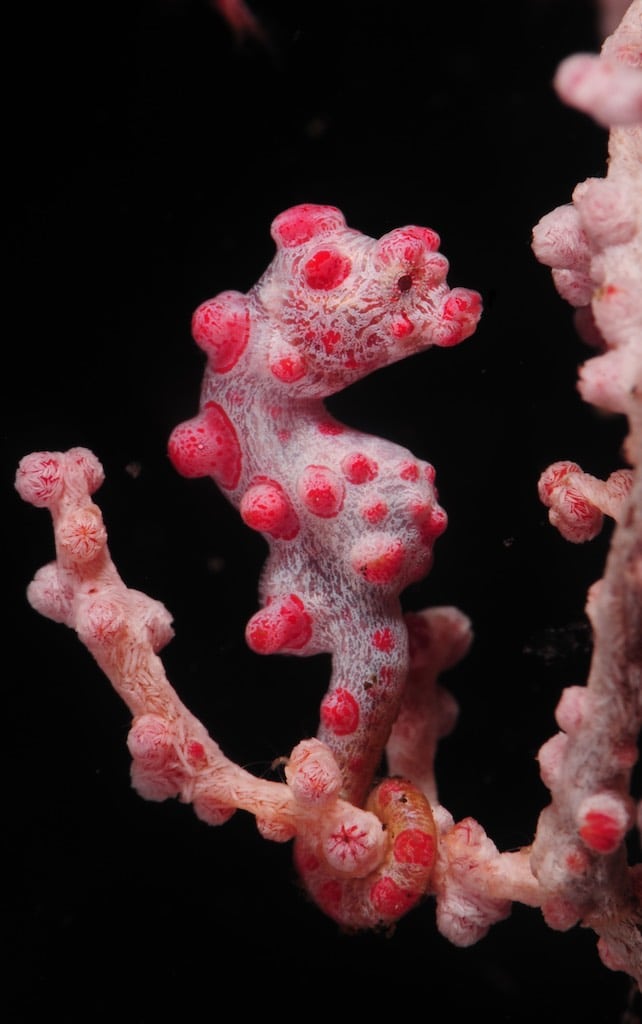
Even though Ped is best known for its pelagics and drift dives, the site also offers beautiful macro diversity. Guides regularly spot nudibranchs, shrimps, crabs, ghost fish, frogfish and various paperfish species. The combination of colourful reef, deep wall and excellent visibility makes it a very good site for underwater photography in Nusa Penida.
Diving Conditions at Ped
Ped generally offers visibility between 20 and 30 meters, pleasant temperatures for most of the year and relatively smooth drift dives. During Mola Mola season, however, the temperature can drop to around 18–22°C at depth. The site can be dived all year and suits beginners, photographers and experienced divers looking for blue-water encounters alike.
Dive Ped with Roy
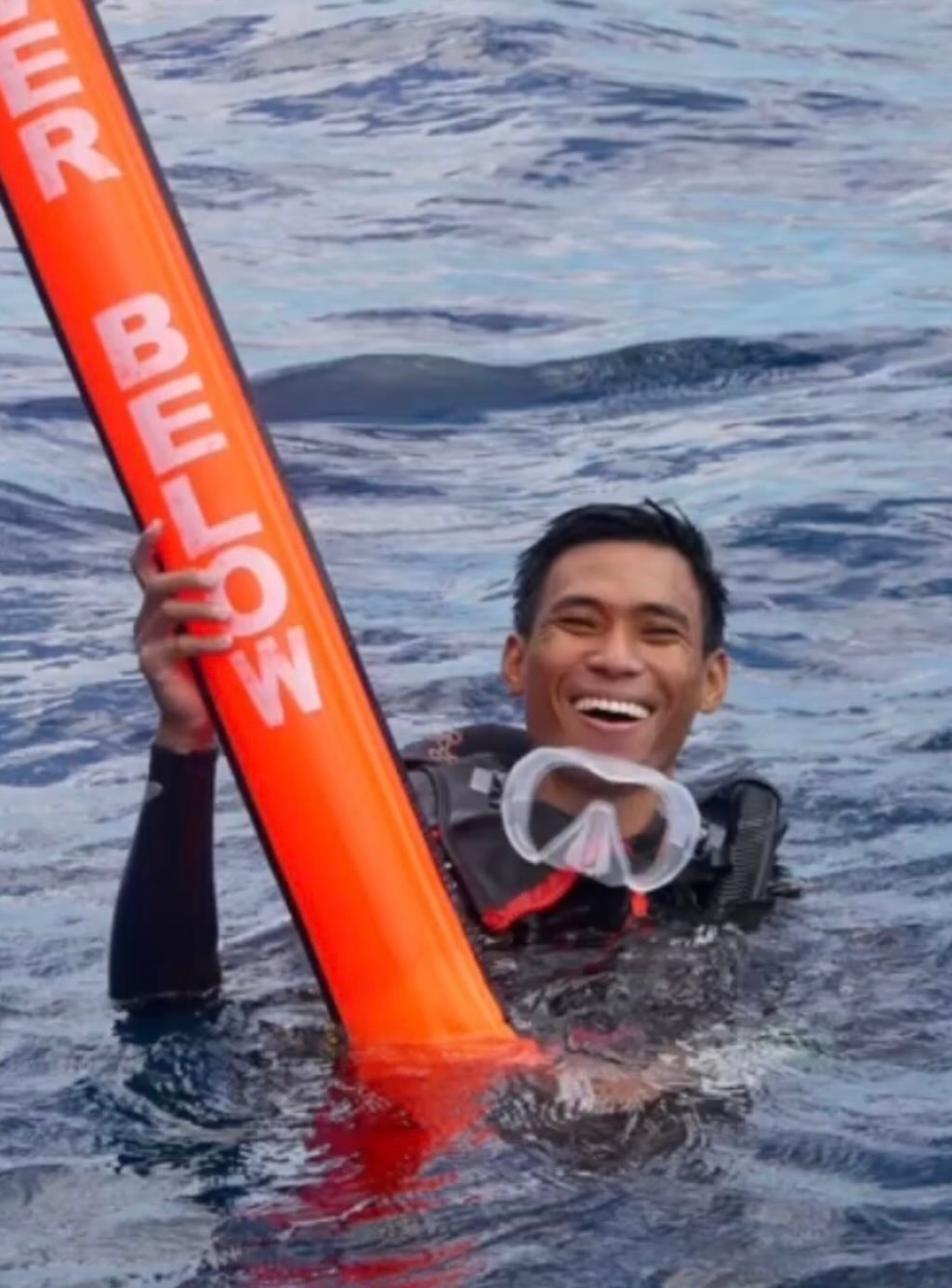
Roy is a dive instructor at Dune Penida who dives Ped all year and knows exactly when the blue is likely to come alive. Want the best shot at turtles, Mola Mola or a pelagic surprise while staying safe in the current? Message Roy directly — he’ll pick the right day and guide you along the wall.
Other North-Coast Dive Sites
Ped is part of a long chain of drift dives running along the north coast of Nusa Penida. Depending on conditions and current, a single dive can sometimes cross several of these sites.
SD Point
A huge wall famous for its turtles, fish schools and rare macro such as the resident black frogfish. Read our full guide to diving SD Point.
Sental
Between SD Point and Buyuk you’ll find the Sental dive site. Exceptionally well preserved, it’s marked by the high-voltage submarine cables running from Bali. Like the other north-coast sites, Sental is a drift dive: you let the current carry you along the wall and simply watch the “movie” unfold in front of you. The plateau above the wall makes it ideal for a PADI discovery dive or a training dive. Your guide will show you the macro here — the many nudibranch species, crabs and even ghost fish. It’s a real treasure hunt, but you need good buoyancy to spot the macro: one careless fin kick and you’ll miss what your guide is pointing at. Patience helps too — you rarely find a ghost fish on the first anemone!
Buyuk
The Buyuk dive site continues on from Sental, just before Tugu. Diving Buyuk starts close to the beach, with an entry point just above a very shallow plateau. The coral formations already stand out from the white sand; we descend along a gentle slope and drift with the current. Sponges, sea fans, corals and anemones surround us as far as the eye can see. We make the most of the “movie” by tracking down orangutan crabs, nudibranchs and Thor shrimps — but we always keep an eye on the blue too, because Mola Mola or thresher sharks can surprise us, and more rarely a whale shark may silently observe us. Some dive instructors have told me there’s a thresher shark cleaning station at Buyuk, 50 meters deep — but I’ve never seen it myself.
Words from our guests diving Buyuk: “On the morning of December 31 in Nusa Penida, I was very excited to dive Buyuk, well known for its marine life — really my favourite type of diving. The ocean was calm, a small current quietly pushing Yann and me along. We were the only ones diving there that day. Then I suddenly heard him knock on his tank to get my attention. I turned around and, to my surprise, saw a fabulous whale shark less than two meters in front of me, swimming peacefully. This amazing animal let us admire him for a little while before continuing on his way. What a captivating moment — certainly the greatest New Year’s gift of my life, a dive that will remain forever engraved in my memory.” — Stéphanie, December 31, 2019
Tugu
On the north coast, close to the ferry port of Sampalan, Tugu marks the eastern end of the north-coast dives, just after the Buyuk wall. We drift-dive here as on the sites above, and the wall shows off a great diversity of fauna and flora. Because it’s so close to the ferry line, you must be extremely careful not to surface in its path — your guide will make sure you don’t. I once even saw a small Mola Mola jump out of the sea at Tugu — though I can’t promise we’ll see another!
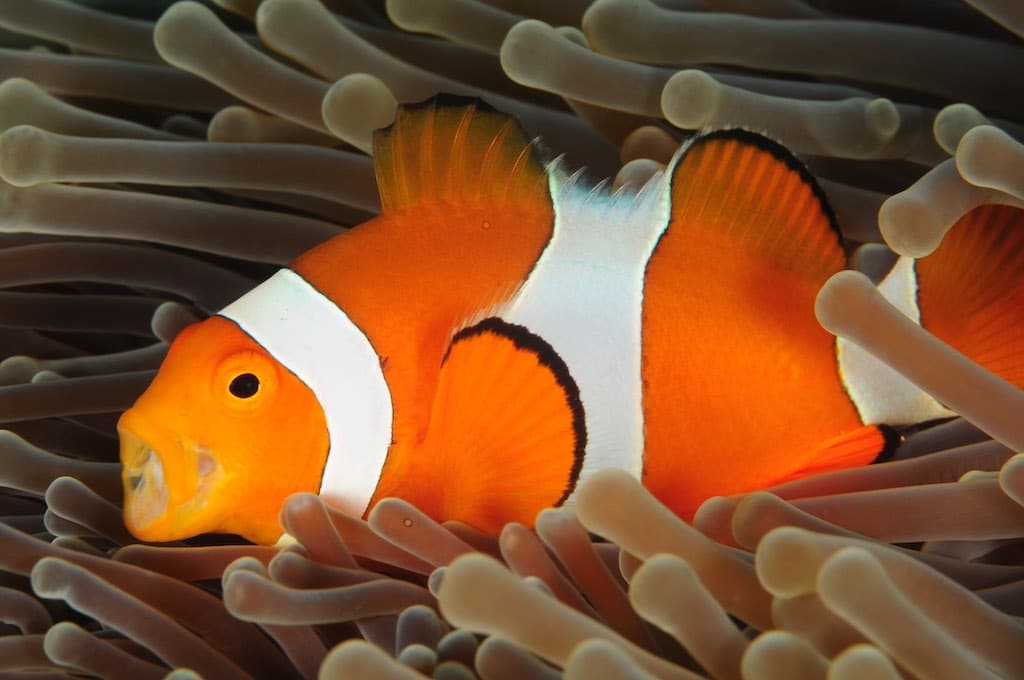
👉 Discover all the dive sites of Nusa Penida.
Ped Diving FAQ
What level do you need to dive Ped?
Ped suits all levels when conditions are calm, from discovery dives to experienced divers. The shallow plateau is beginner-friendly, while the deep wall is best enjoyed by Advanced divers.
Can you see Mola Mola at Ped?
Yes, especially between July and October during the cold season, along the deep wall. Ped is one of the more reliable — and quieter — sunfish sites in Nusa Penida.
Is there current at Ped?
Yes — Ped is a drift dive with a generally moderate current, sometimes stronger depending on the tides. It’s usually more accessible than Crystal Bay, but always dive it with a local guide.
Can you see turtles at Ped?
Yes — turtles are very common on Ped’s coral plateau, and most dives include at least one sighting.
Can you see sharks at Ped?
Yes — thresher sharks, reef sharks and, very occasionally, other pelagic species can be seen. Ped was even the site of an extraordinary great white shark encounter in March 2025.
How deep is Ped?
Dives generally take place between 5 and 40 meters, with an ideal zone between 18 and 25 meters.
Plan your trip to Nusa Penida
If Ped Dive Site has sparked your curiosity, it’s worth taking a deeper look at everything the island has to offer—both above and below the surface. To help you plan the perfect stay, explore our complete travel guide to Nusa Penida, covering how to get there, where to stay, the best beaches, viewpoints, and practical tips for getting around the island.
For divers, don’t miss our Nusa Penida diving guide, which explains seasons, water temperatures, currents, certifications, and what to expect when diving in these uniquely dynamic waters. You can also dive Ped and many other exceptional sites with Dune Penida Dive Center, a PADI 5★ center based on Nusa Penida, known for its experienced guides and strong focus on safety and local knowledge. You can also dive deeper into the incredible marine life of the region with our dedicated pages on manta rays, mola mola (ocean sunfish), sharks, and nudibranchs, all commonly encountered around Bali and Nusa Penida.
And if you’re choosing where to dive next, our in-depth guide to the best dive sites in Bali breaks down each site by level, conditions, and marine life—so you can build a dive plan that perfectly matches your experience, your comfort level, and your sense of adventure.
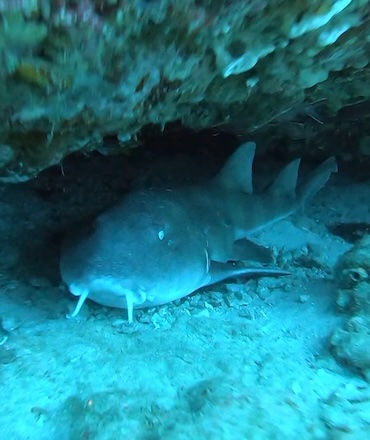
Sharks in Bali
Dive with sharks in Bali and Nusa Penida : discover reef shark hotspots, seasonal sightings, dive conditions and how to safely encounter these powerful ocean predators.
Best dive sites in Bali
20 best dive sites in Bali around Nusa Penida, Padang Bai and North Bali : discover manta rays, oceanic sunfish, sharks, drift dives and vibrant coral reefs.
Nusa Penida travel guide
Complete Nusa Penida Travel Guide : how to get there, where to stay, best beaches, temples, viewpoints and practical tips to plan your island adventure.
About the author
Blaise Jaeger opened Nusa Penida’s first PADI dive centre in 2017 and has dived the north-coast walls hundreds of times. A PADI Master Scuba Diver based on the island, he shares first-hand, safety-first guides to diving Nusa Penida.