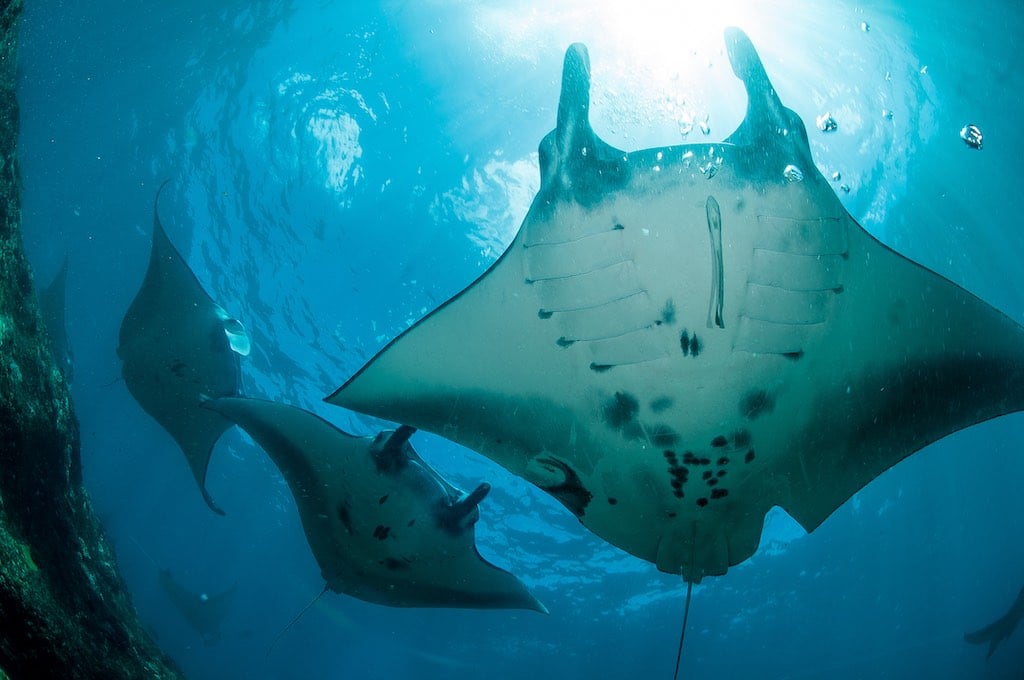
Manta rays in Bali are most reliably seen around Nusa Penida, one of the best places in the world to encounter these majestic creatures. Manta rays can be seen year-round, with a success rate of 90–95%. With wingspans of up to 4–5 meters, reef manta rays glide effortlessly through the water, often passing just above divers and just below snorkelers.
I dive at Manta Point every week and have observed hundreds of manta rays in Nusa Penida. Yet every encounter remains unique, whether it’s a single manta emerging from the blue or a group circling gracefully over a cleaning station.
👉 In this guide, you’ll learn where to see manta rays in Bali, the best time to go, and how to maximize your chances of an unforgettable encounter.
Manta rays in Bali — key facts
- 📏 Size: up to 4–5 meters
- 📍 Best location: Nusa Penida (Manta Point)
- 📅 Season: year-round
- 🤿 Activities: snorkeling & diving
- ⭐ Success rate: 90–95%
Planning your trip? Read our complete Nusa Penida travel guide
Where to see manta rays in Bali?
The best place to see manta rays in Bali is Nusa Penida, especially at Manta Point, located on the southwest coast of the island. This cleaning station offers the highest chance of encounters, often reaching 90–95%.
👉 Learn more about Manta Point, the most reliable manta ray dive site in Nusa Penida, including conditions, access and what to expect.
👉 For a detailed comparison between Manta Point and Manta Bay, see the full section below.
When is the best time to see manta rays in Bali?
Manta rays can be seen all year round in Nusa Penida, Bali. However, the best conditions are usually during the dry season (April to October), when the sea is calmer and visibility is better.
During the rainy season, mantas are still present, but ocean conditions can be more variable and some trips may be cancelled.
👉 In practice, you can plan a manta ray trip at any time of year, choosing days with good weather conditions.
Can you swim with manta rays in Nusa Penida?
Yes, you can swim with manta rays in Nusa Penida, both while snorkeling and diving. It is one of the most accessible places in the world to encounter mantas in their natural environment.
Snorkeling allows you to observe them from the surface, while diving offers a more stable and immersive experience near cleaning stations.
👉 For the best experience, always go with a professional guide and follow respectful wildlife guidelines.
Reef manta vs oceanic manta: what’s the difference?
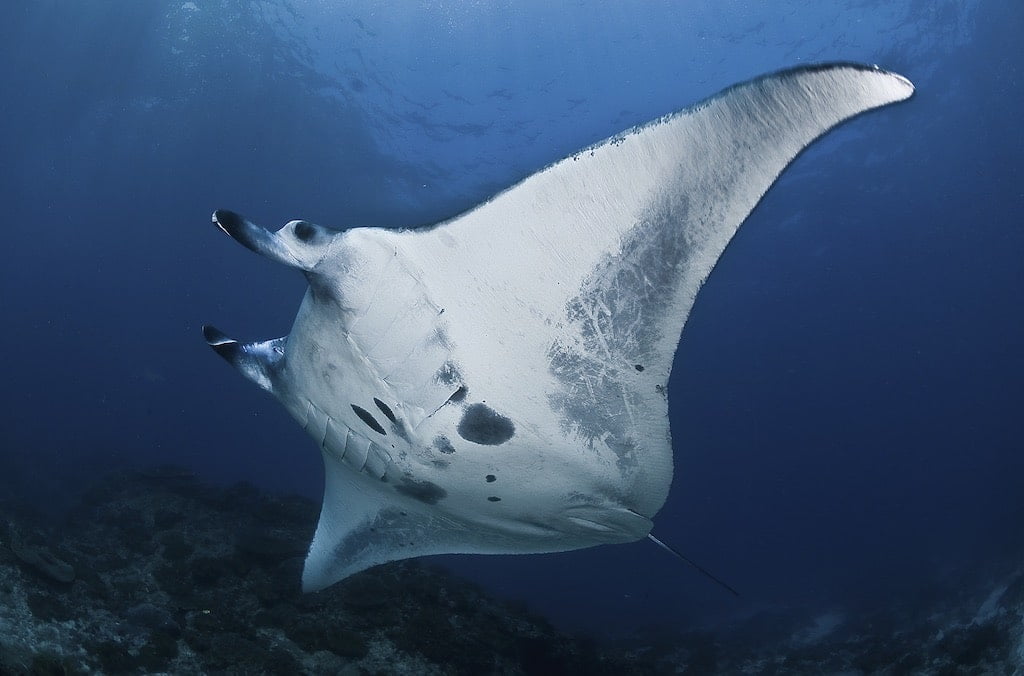
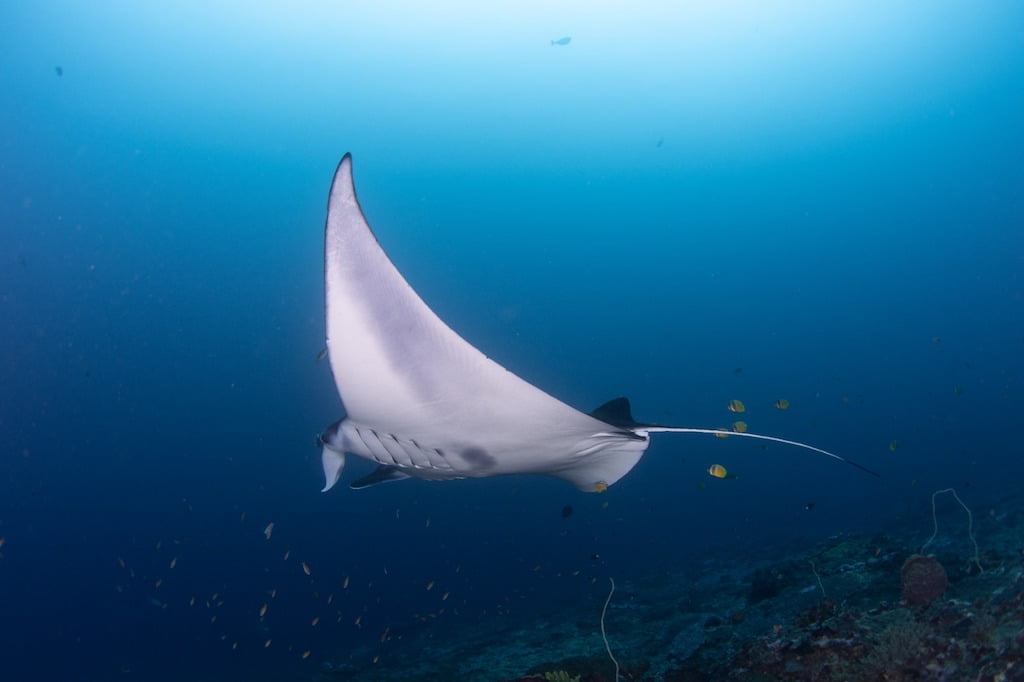
There are two distinct types of mantas: the oceanic manta ray or giant manta ray (birostris) and the reef manta ray (alfredi). The variety of manta ray that is typically spotted in Bali, particularly in Nusa Penida, is the reef manta ray. These magnificent creatures boast a wingspan that can span up to 5 meters, pectoral fins, horn-shaped cephalic fins, a large mouth that faces forward, and five pairs of gill slits on their ventral surface.
Typically, manta rays have dark backs with striking white underbellies, each marked with a unique pattern of black spots—like a fingerprint that allows researchers to identify individuals. In Nusa Penida, you may even encounter rare all-black mantas, known as melanistic mantas,.
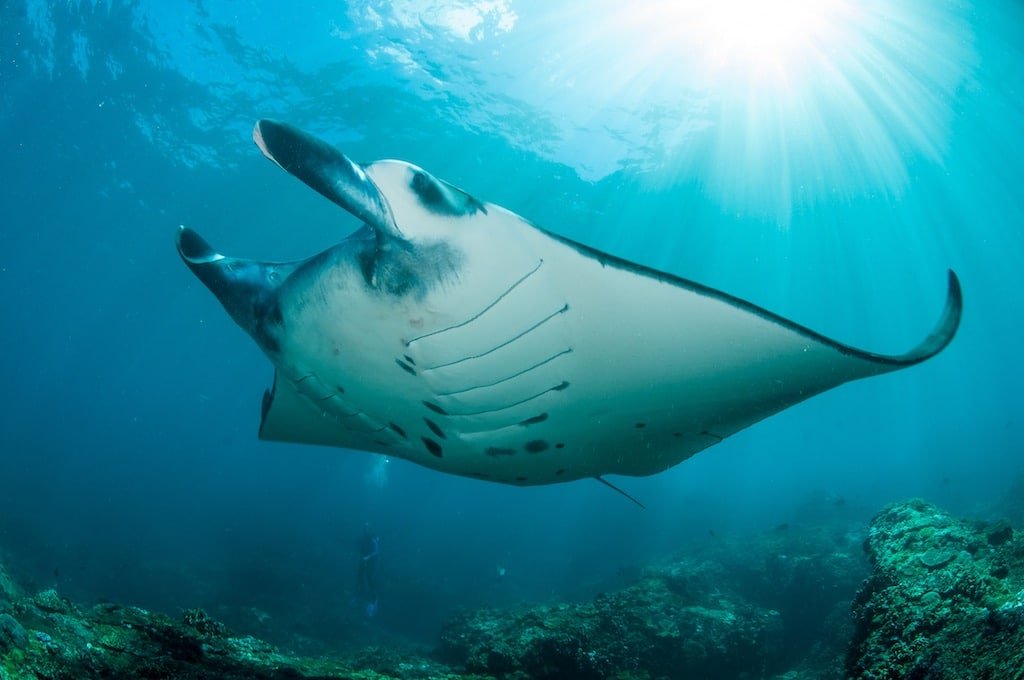
The island is also home to mobula rays, smaller relatives of mantas that are sometimes mistaken for juveniles. A quick way to tell them apart is by looking at their mouths—mobulas have theirs on the underside of the body—and their noticeably shorter tails.
Atlantic Manta Ray
In 2025, scientists confirmed a third manta species, the Atlantic manta ray (Mobula yarae). Found in the western Atlantic and Caribbean, it looks like a mix between the reef and oceanic mantas, with unique shoulder markings and lighter facial tones. Its discovery highlights how much we still have to learn about these gentle giants and the importance of protecting all manta populations worldwide.
Where do manta rays live?
Manta rays thrive in warm temperate, subtropical, and tropical waters around the world. The oceanic manta ray is a great traveler. It migrates across vast stretches of the open ocean. In contrast, the reef manta ray usually stays closer to coastal areas. In some places, like Nusa Penida, they can be seen year-round. They return daily to cleaning stations such as Manta Point to remove parasites. Although reef mantas remain near shore, they can dive very deep. They can indeed reach depths of up to 400 meters when venturing farther out.
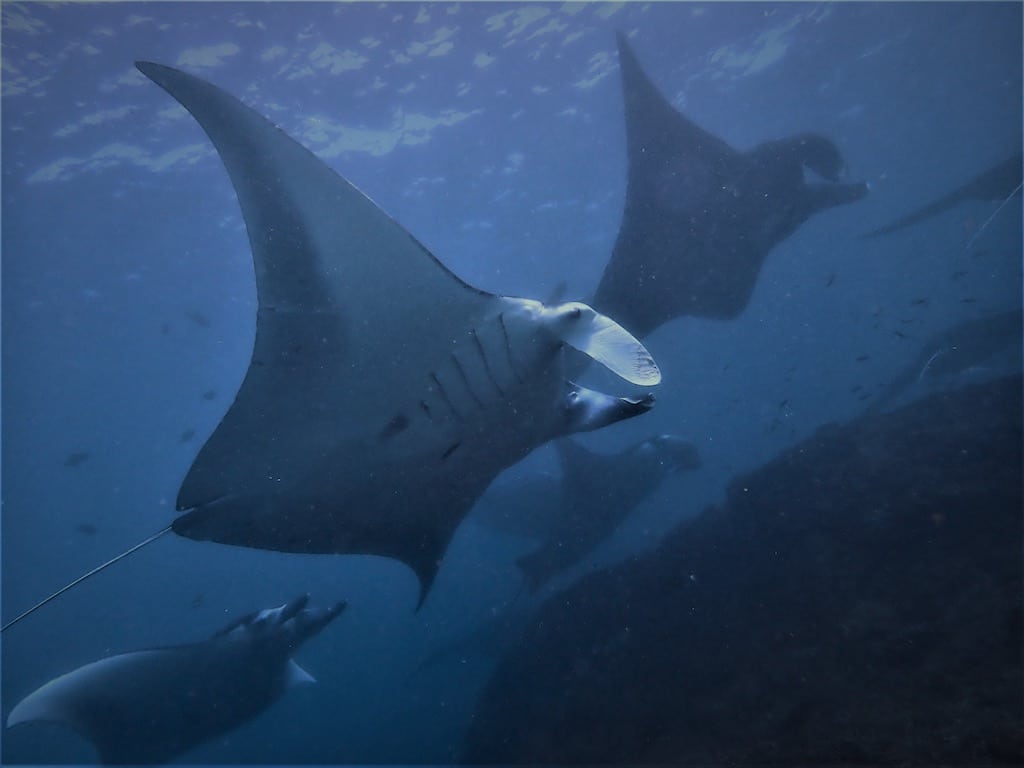
What is a manta ray cleaning station ?
A manta ray cleaning station is a special spot on the reef where manta rays gather to be cleaned by small fish that remove parasites from their skin, mouths, and gills. These stations are usually located around the tops of coral heads. The mantas glide in slow circles while the cleaner fish go to work, creating a fascinating display of symbiosis in action. At times, you may see just a single ray visiting. But they often arrive in groups—sometimes with dozens of individuals gathering at once.
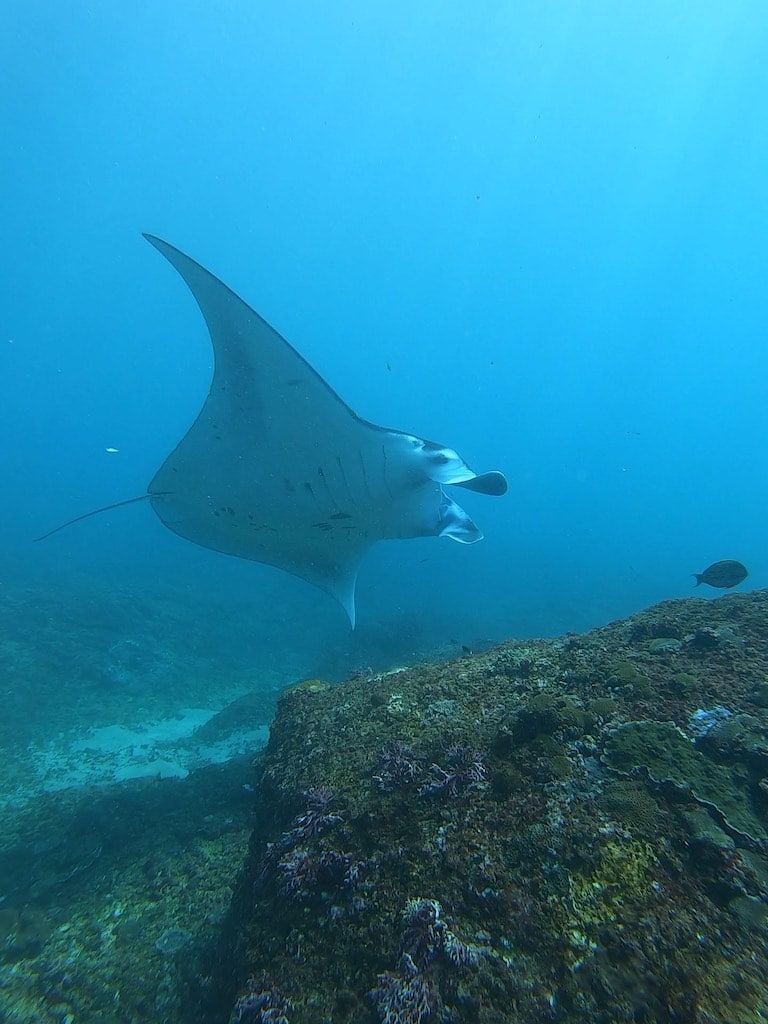
Can Manta Ray fly ?
Not exactly—but they sometimes appear to! On rare occasions, mantas launch themselves out of the water, either partially or completely, in a spectacular display known as breaching. Why they do this is still debated. Some scientists believe it helps them shake off parasites. While others think it may play a role in mating rituals or even serve as a form of communication. Whatever the reason, witnessing a manta ray soar out of the ocean is every bit as breathtaking as it sounds.
👉 Check out the videos of manta rays breaching and learn more about what experts think is behind this behavior here!
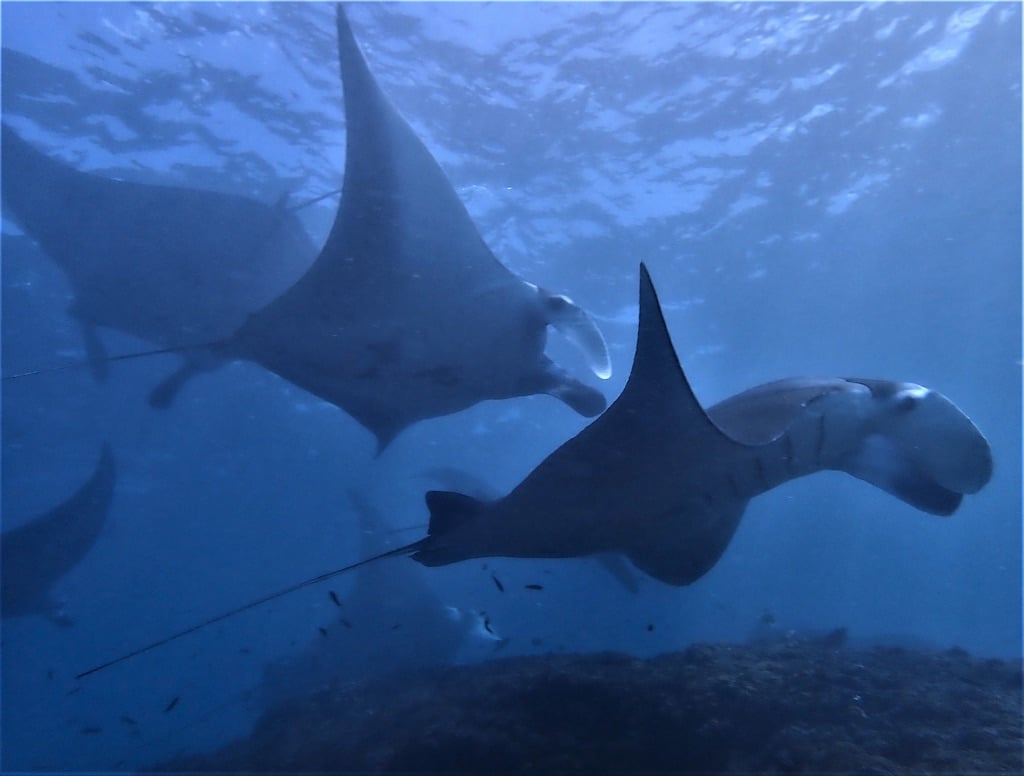
What does a manta ray eat ?
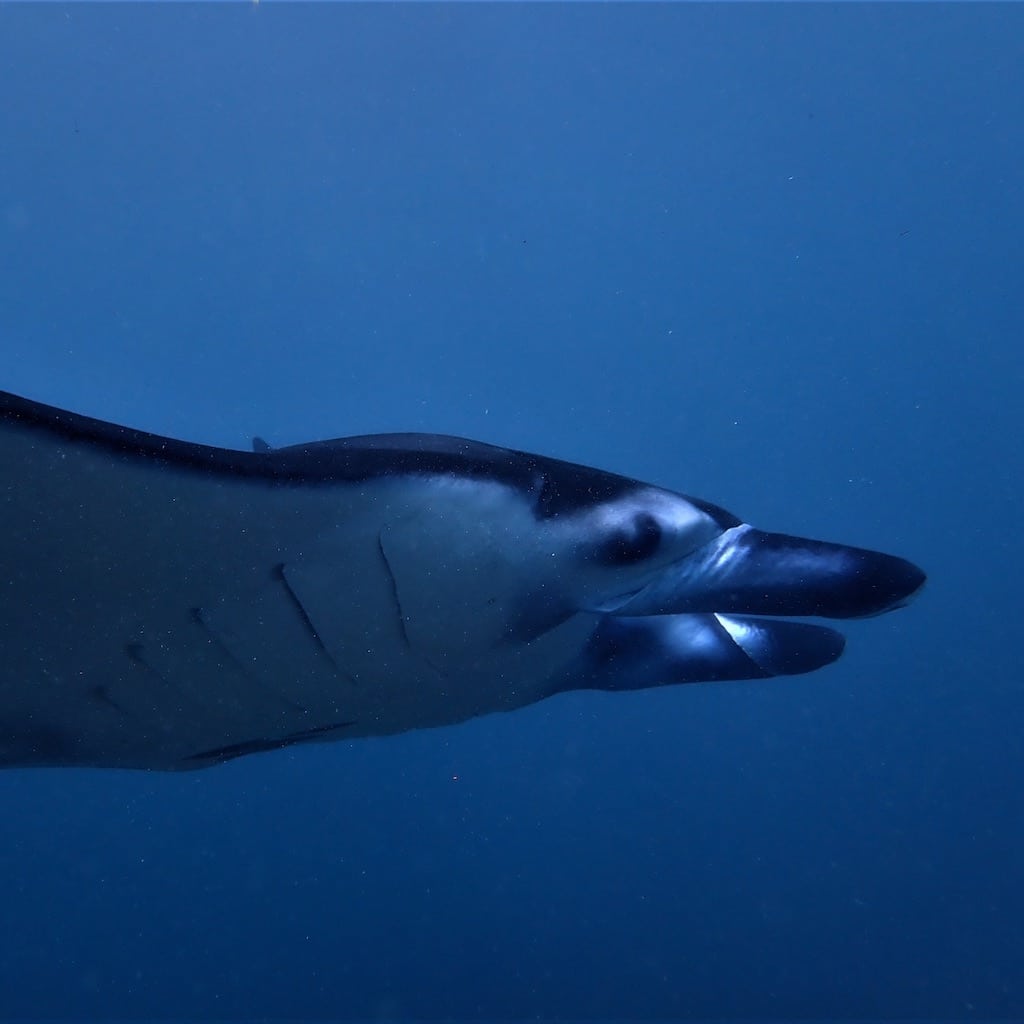
Manta rays are filter feeders that primarily consume plankton, including shrimp, krill, and planktonic crabs. They use their sense of sight and smell to locate food. Then, they swim slowly with their mouths open while unfurling their cephalic fins to funnel plankton into their mouths. Water passes through their gill rakers, which trap the plankton before the filtered water is expelled. When not feeding, manta rays roll up their cephalic fins into a spiral shape, reducing drag and improving hydrodynamic efficiency. On average, they can consume around 5–10% of their body weight in plankton daily, depending on food availability.
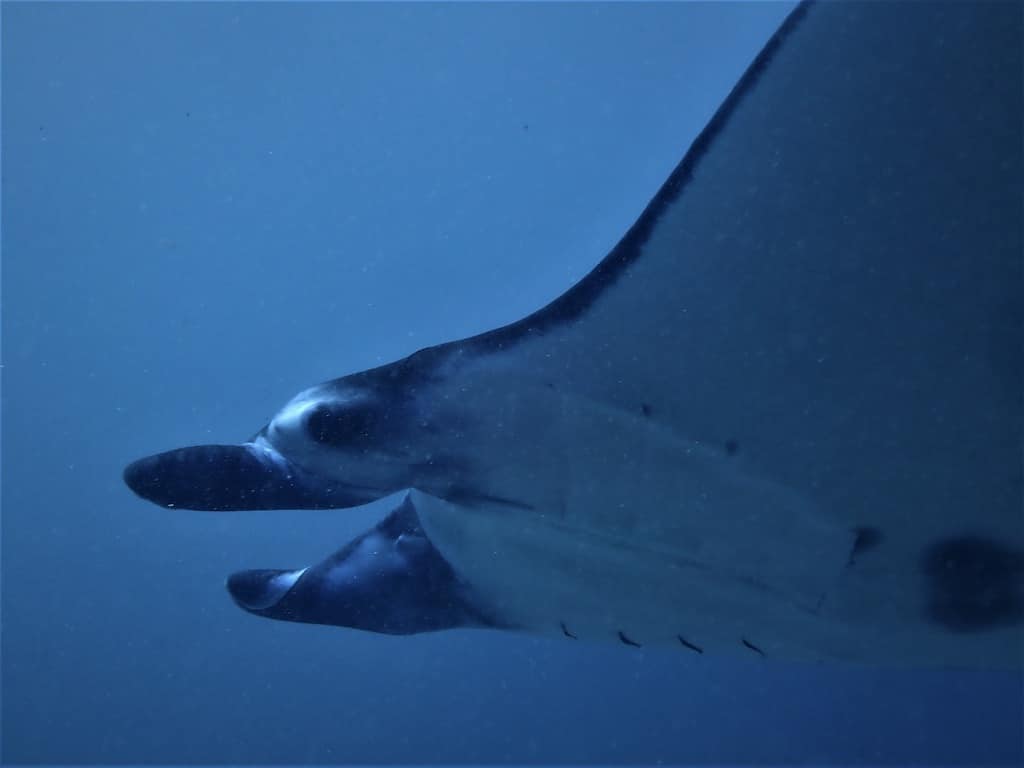
What about baby manta rays?
Manta rays are ovoviviparous, meaning the eggs develop and hatch inside the mother’s body before the pups are born. The gestation period lasts more than a year, and when born, the babies already measure between 1.3 and 1.5 meters across. Incredibly, they double in size within their first year of life. Mantas reproduce slowly, with females giving birth only once every five years on average. And they can live for up to 50 years. During the breeding season, they often leave coastal cleaning stations and head into the open ocean. So even places like Manta Point in Nusa Penida may sometimes feel unusually quiet.
💡 Did you know? Baby manta rays are born rolled up like little burritos, and within moments, they unfurl their wings and begin to swim gracefully on their own!
Are manta rays dangerous?
No, manta rays are not dangerous. While they may swim close out of curiosity, they generally avoid physical contact. As with any marine animal, it’s important not to touch them or attempt to do so—both for your safety and theirs.
Are manta rays endangered?
Reef manta rays have few natural predators, apart from large sharks, thanks to their impressive size and ability to reach speeds of up to 24 km/h. However, they are classified as vulnerable by the Convention on Migratory Species. Overfishing, pollution, and climate change pose the greatest threats to their survival. In 2014, Indonesia took a historic step by banning manta ray fishing and trade, creating the world’s largest manta sanctuary—an area covering 5.7 million km² of ocean.
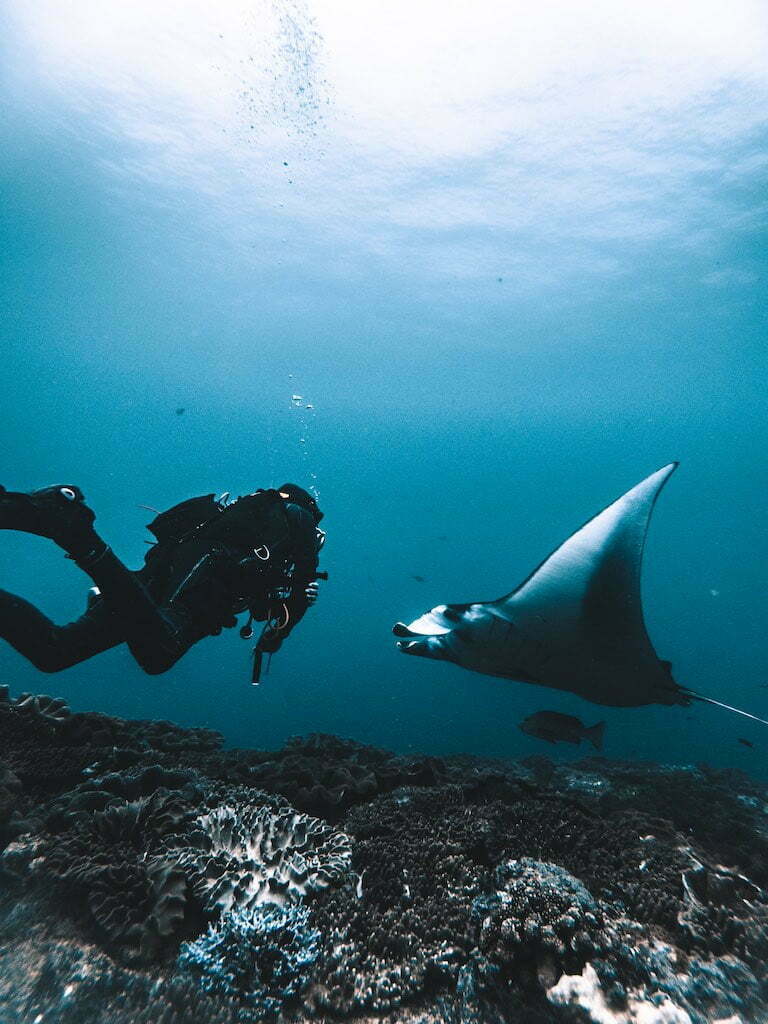
Best places to see manta rays in Nusa Penida
The best place to dive with manta rays in Bali is around Nusa Penida, where two main cleaning stations—collectively known as Manta Point—are located on the island’s southwest coast, about a 45-minute boat ride from Toyapakeh port. While Manta Point offers the highest chance of encounters, mantas can also occasionally be spotted at other dive sites around Nusa Penida.
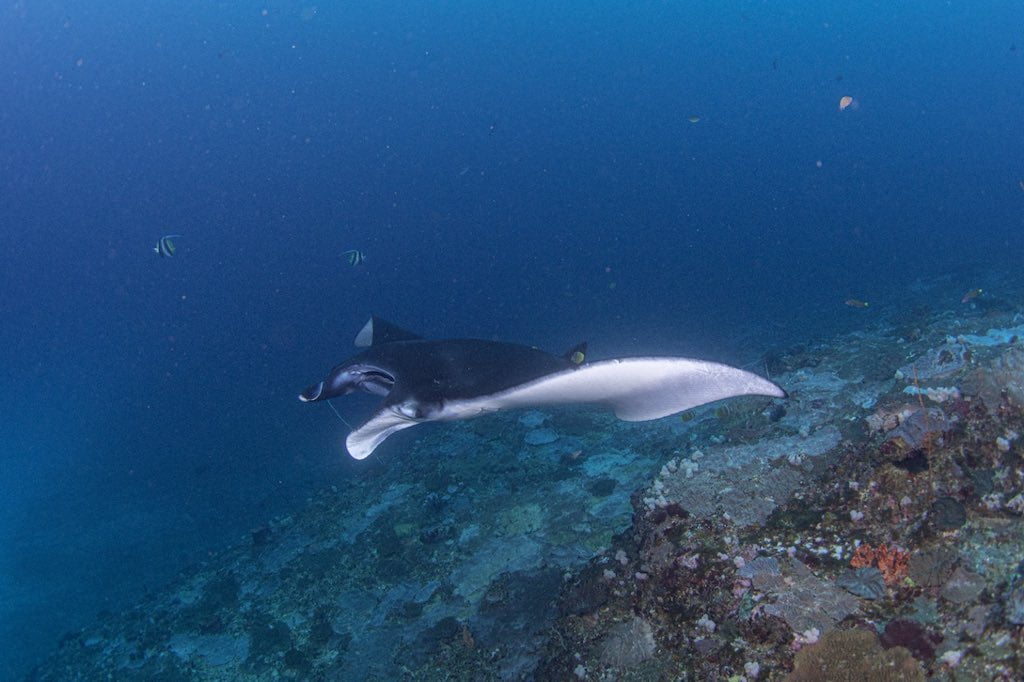
Manta Point is one of the best places in the world to see manta rays. Outside of the breeding season, divers enjoy an impressive 95% success rate of encounters with these majestic creatures. On calm days, you may even spot them from the top of the cliffs along Nusa Penida’s southwest coast. However, there is no beach access from these cliffs. So the only way to swim with mantas here is by boat.
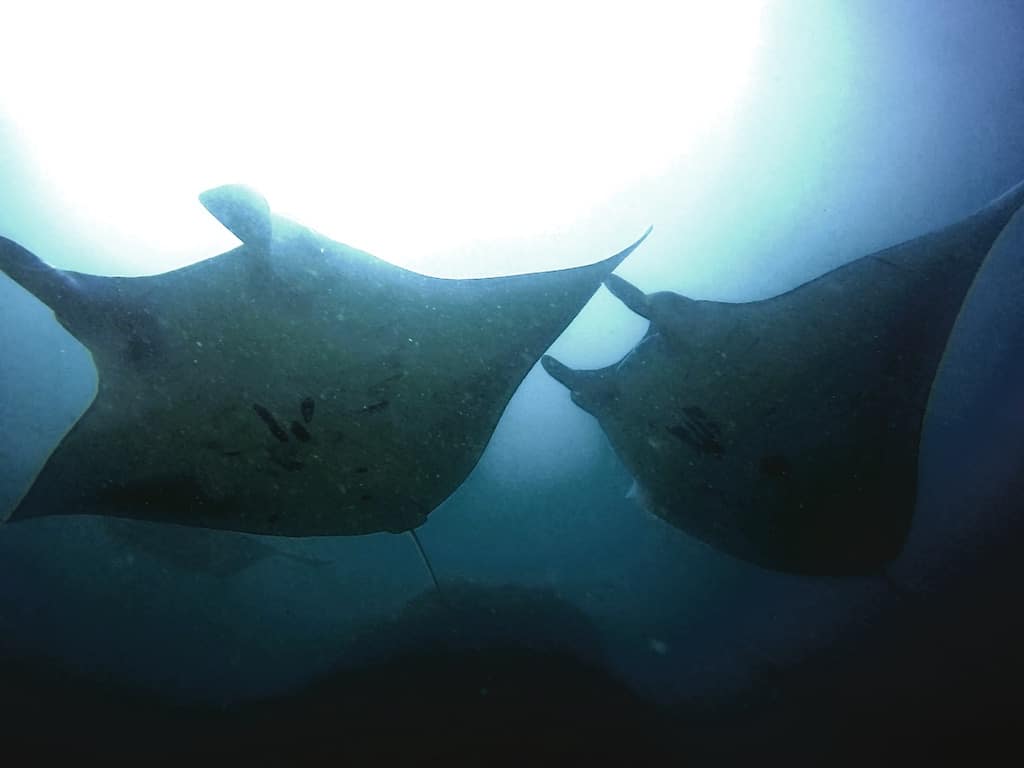
Some snorkeling tours stop at Manta Bay to shorten the trip and save fuel. However, the chances of seeing mantas here are lower, around 80%. In addition, many snorkeling boats chase the rays, which disturbs the experience. Furthermore, unlike Manta Point, the underwater scenery and marine life at Manta Bay are not very remarkable.
Plan your trip to Nusa Penida
If this article has sparked your curiosity, it’s worth taking a deeper look at everything the island has to offer—both above and below the surface. To help you plan the perfect stay, explore our complete travel guide to Nusa Penida, covering how to get there, where to stay, the best beaches, viewpoints, and practical tips for getting around the island.
For divers, don’t miss our Nusa Penida diving guide, which explains seasons, water temperatures, currents, certifications, and what to expect when diving in these uniquely dynamic waters. You can also dive Manta Point and many other exceptional sites with Dune Penida Dive Center, a PADI 5★ center based on Nusa Penida, known for its experienced guides and strong focus on safety and local knowledge. You can also dive deeper into the incredible marine life of the region with our dedicated pages on mola mola (ocean sunfish), sharks, and nudibranchs, all commonly encountered around Bali and Nusa Penida.
And if you’re choosing where to dive next, our in-depth guide to the best dive sites in Bali breaks down each site by level, conditions, and marine life—so you can build a dive plan that perfectly matches your experience, your comfort level, and your sense of adventure.
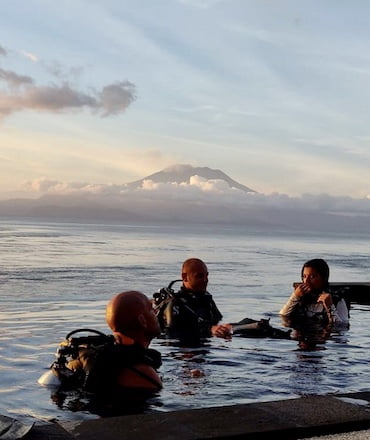
Nusa Penida Diving Guide
Complete Nusa Penida Diving Guide : best dive sites, manta rays, Mola Mola season, drift dives, conditions, PADI courses and practical travel advice.
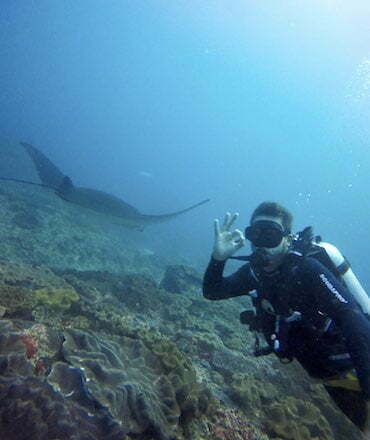
Manta Point dive site
Manta Point dive site in Nusa Penida : discover year-round manta ray encounters, cleaning stations, dive conditions, currents and unforgettable underwater moments.
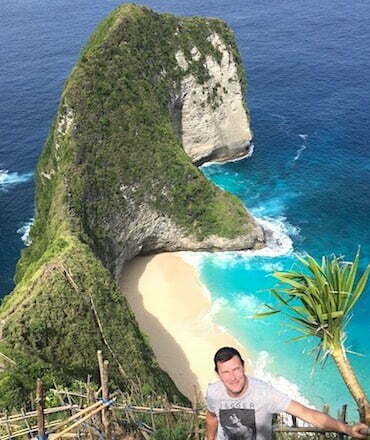
Nusa Penida Travel Guide
Plan your trip to Nusa Penida with our local expert guide: beaches, diving sites, hotels, transport tips, itineraries and seasonal advice.
FAQ – Manta Rays in Bali (Nusa Penida)
Where can you see manta rays in Bali?
At Nusa Penida, mainly at Manta Point and Manta Bay.
Can you see manta rays year-round in Bali?
Yes, manta rays are present year-round in Nusa Penida.
When is the best time to see manta rays in Bali?
Sightings are possible all year.
Can you swim with manta rays in Nusa Penida?
Yes, both snorkeling and diving are possible.
Are manta rays dangerous?
No, manta rays are harmless and feed on plankton.
What is the success rate at Manta Point?
Usually 90–95%, depending on conditions.
Manta Point vs Manta Bay: which is better?
Manta Point is more reliable; Manta Bay is closer but less predictable.
Do you need to be a good swimmer?
Basic swimming skills are recommended.
Can beginners see manta rays?
Yes, especially with guided snorkeling tours and discovery dives.
How big are manta rays in Bali?
Up to 4–5 meters wide.
Is it better to stay in Bali or Nusa Penida?
Staying in Nusa Penida offers easier access and better conditions.
How long does a manta ray tour last?
Usually half a day, with 10–30 minutes snorkeling in several spots or two 45-minute dives (Manta point + another spo).