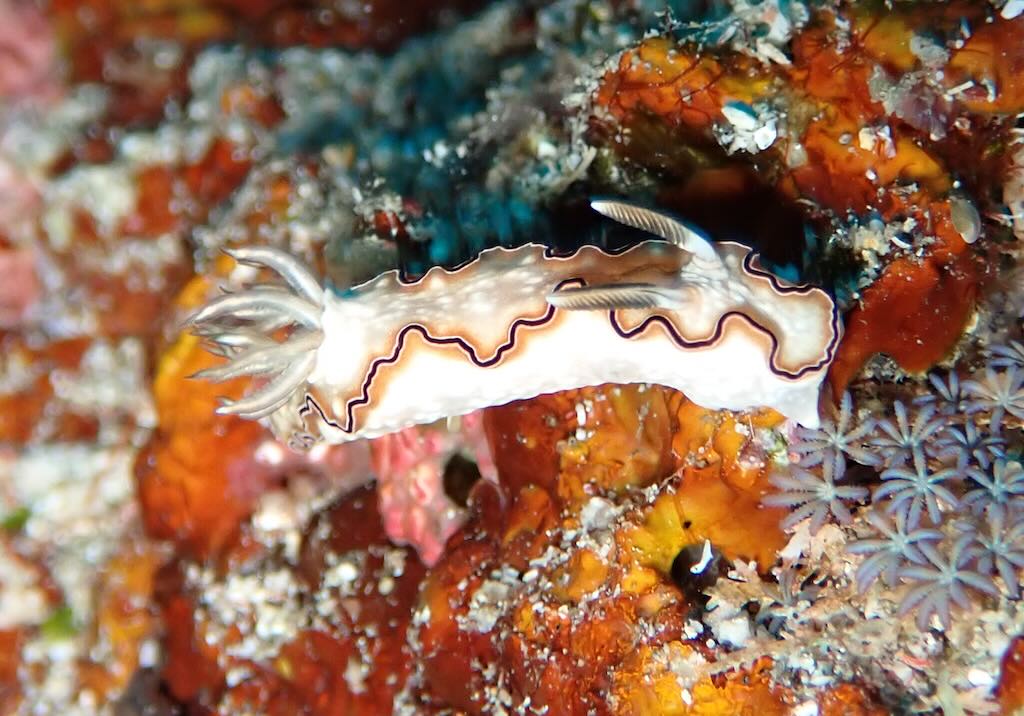
Nudibranchs are true marvels of the marine world and hold a special appeal for divers worldwide. Often called sea slugs, their name comes from “Nudus,” meaning naked, and “brankhia,” meaning gills. You’ll see many of them during your dives in Bali and Nusa Penida.
These fascinating little creatures are gastropod mollusks with the unique feature of lacking a shell. They display incredible colors in oceans worldwide. Currently, over 3,000 species have been identified, with Indonesia hosting many of them. You’ll find them on all the rich coral dive sites of Nusa Penida, and the keen eyes of your diving instructor will help you discover the most captivating species!
Understanding Nudibranchs
There are four main families of nudibranchs:
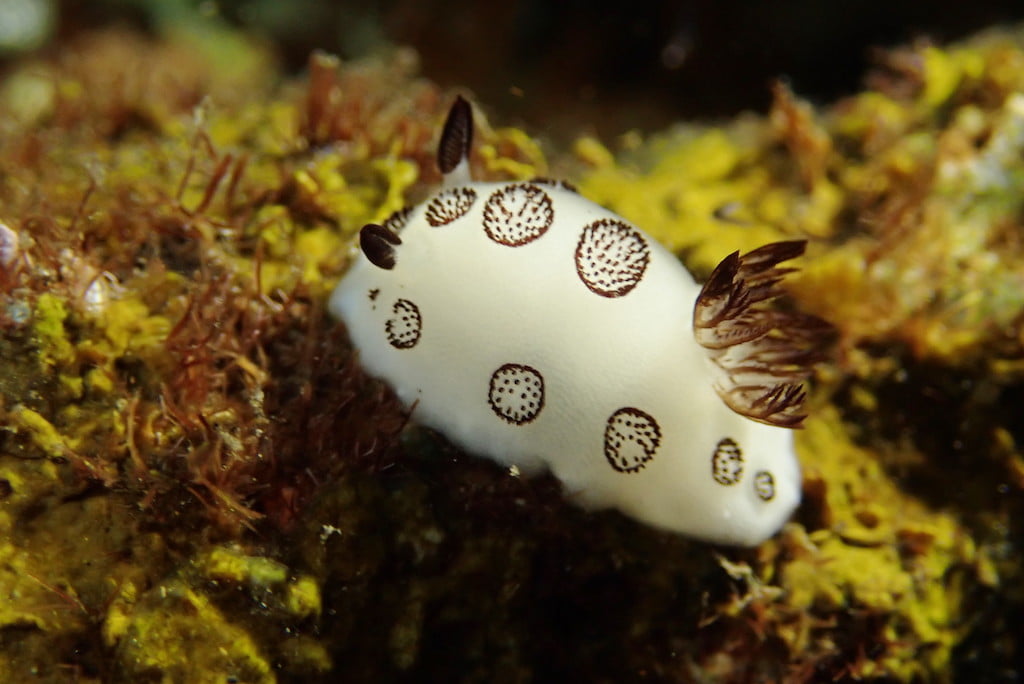
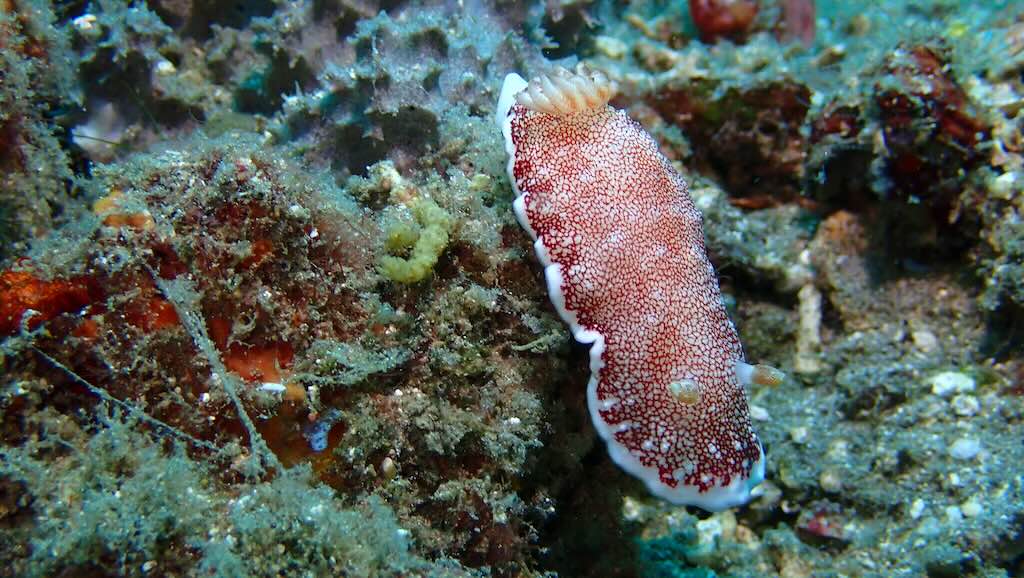
- Dorids have a relatively flat body, a retractable gill plume around the anus, and two rhinophores at the front of the body.
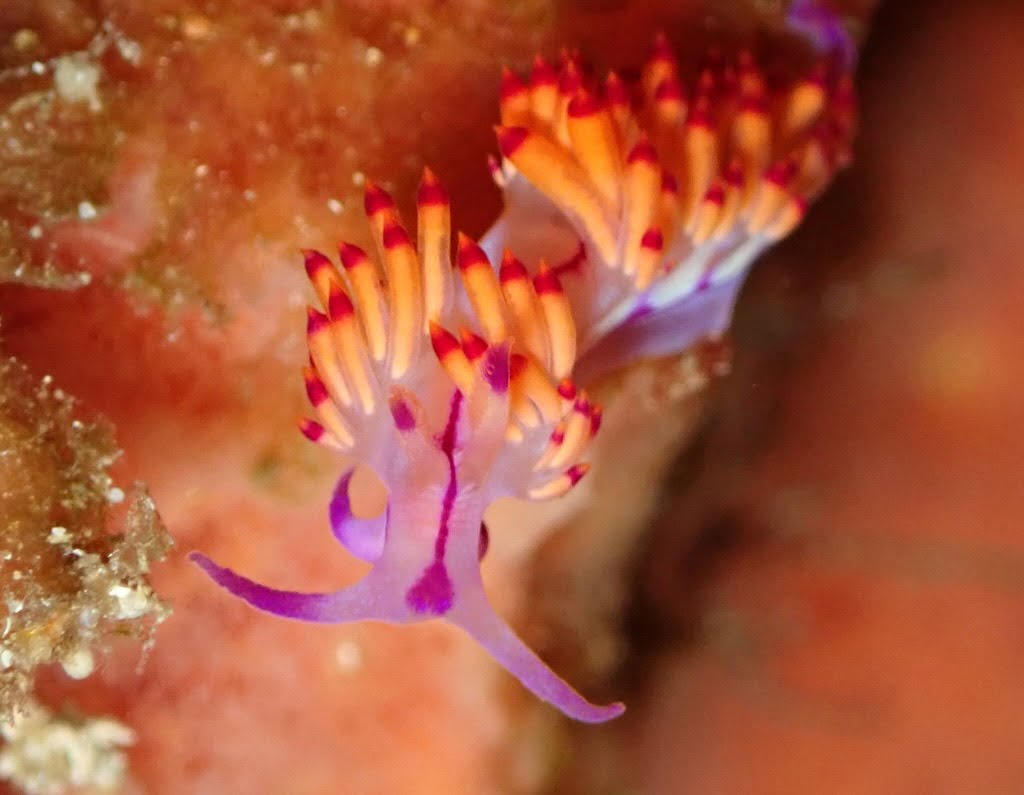
- Aeolids are more elongated, with rows of dorsal papillae, two rhinophores, and two well-developed labial tentacles.
- Dendronotids have an elongated body with a kind of mantle adorned with branchial appendages.
- Arminids have a wrinkled mantle surface with gills underneath and two retractable rhinophores.
Each species is identifiable by unique physical characteristics, especially their often vibrant forms and colors! Every individual is unique and amazing.
The Function of Nudibranchs’ Rhinophores
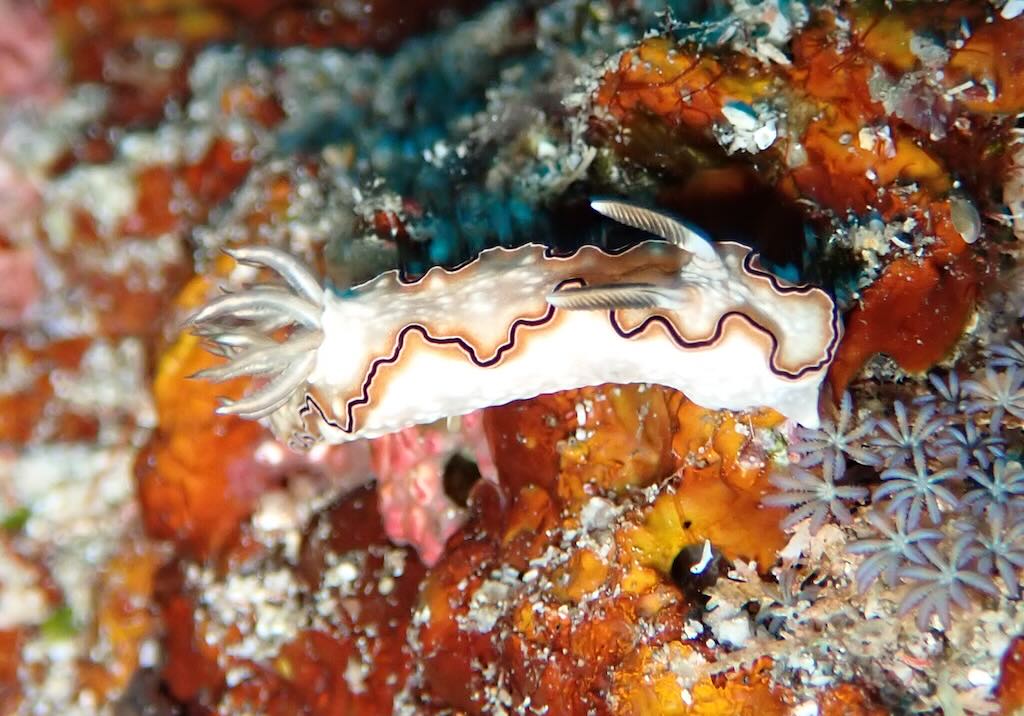
Rhinophores are antennae located at the front of the body. They are essential because their rudimentary eyes only allow them to distinguish between day and night. Thanks to these highly developed sensory organs, they can detect food, threats, and even find a mate.
A Unique Reproductive System
Nudibranchs have a relatively short lifespan, ranging from a few weeks to about a year. To ensure the continuation of their species, they are hermaphrodites, possessing both male and female reproductive systems. During mating, nudibranchs come into contact symmetrically to exchange male gametes to fertilize female gametes. Nudibranch egg ribbons form an impressive spiral-shaped, colorful ribbon that we often have the chance to observe.
One species, Goniobranchus tinctorius, even has the unique ability to shed its penis after mating and regrow it within 24 hours.
It is crucial to protect our oceans to provide them with the best possible habitat. Project AWARE courses are available to help you play an essential role in the respect and sustainable development of our oceans!
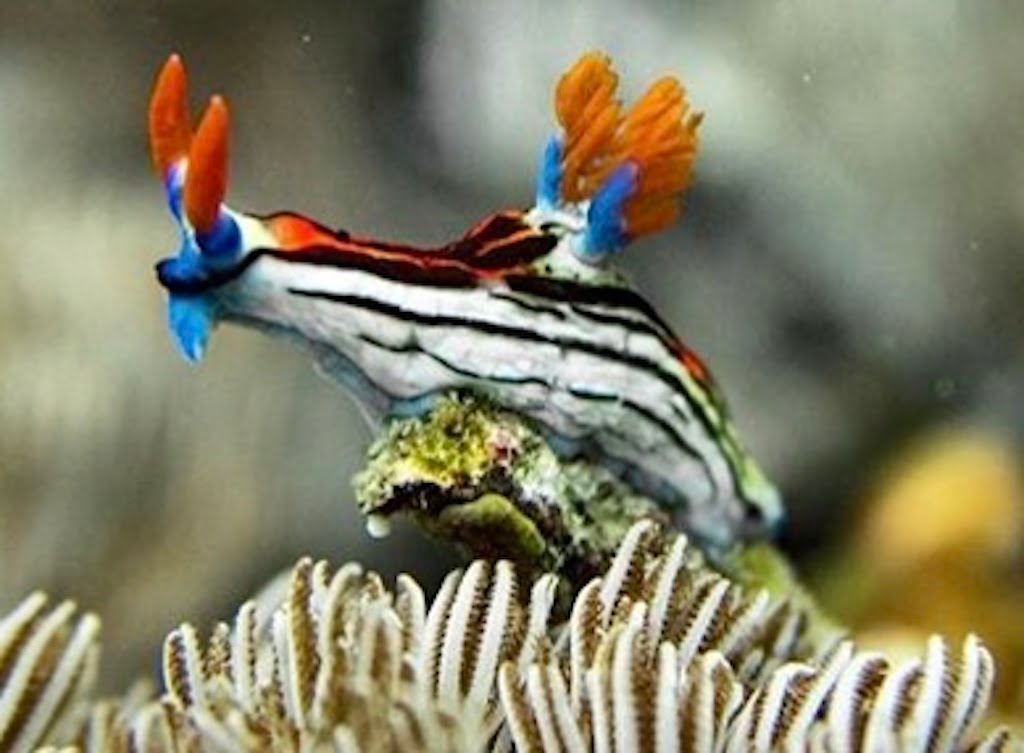
Effective Feeding
Nudibranchs feed by crawling. Using powerful tentacles under their bodies, they scrape food as they move. Different species have their preferred foods, generally including sponges, algae, bryozoans, various corals, and anemones, and sometimes fish eggs. The color of some species can vary depending on their diet.
Useful for their survival, nudibranchs can accumulate toxins by consuming toxic species, particularly hydroids, to store and use as defense later.
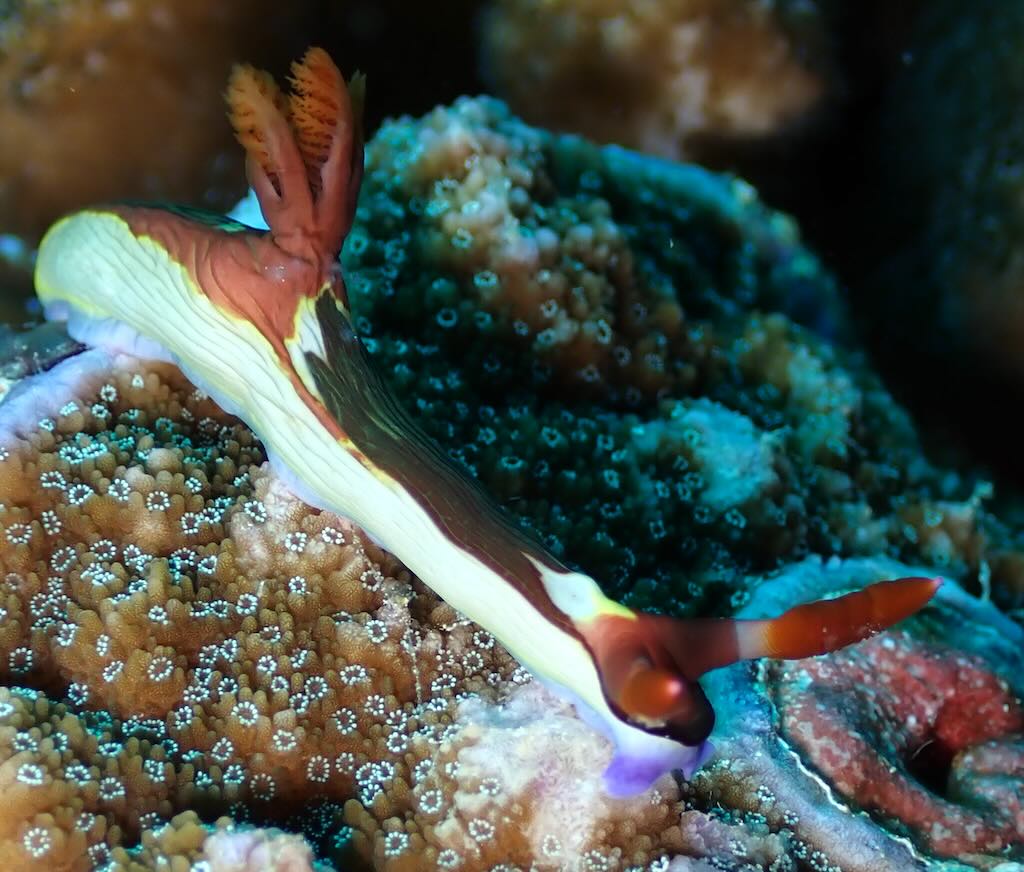
Elaborate Defense Mechanisms
Other species prefer to blend into their surroundings through mimicry and only move at night. Thus, by taking advantage of a night dive with Warnakali, you can observe an astonishing array of species. In case of a predator attack, the nudibranch can release its toxins, position its body defensively, or contract to swim away a few meters. Most species are benthic, meaning they move along the bottom and remain attached to corals. Rare specimens, like Glaucus atlanticus, are pelagic, meaning they move in open water and at the surface.
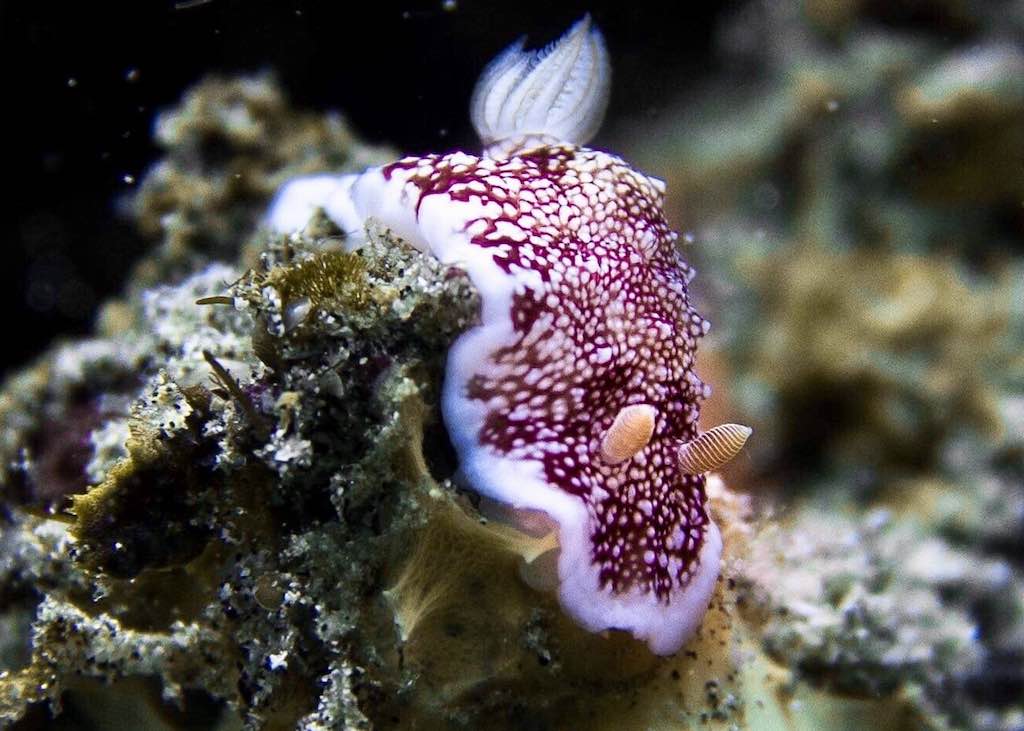
Fascinating Nudibranch Species
Species like Chromodoris, Nembrotha, and Flavellina are commonly observed, as well as Goginobranchus, Halgerda, and Thecacera pacifica.
Whether you’re a novice or experienced diver, nudibranchs will continue to fascinate you. Present at all dive sites in Nusa Penida and at any depth, you’ll have the opportunity to encounter them during your dives, from your initial dive, your Open Water certification, or leisure diving. Your instructor will particularly enjoy introducing you to these fascinating species.
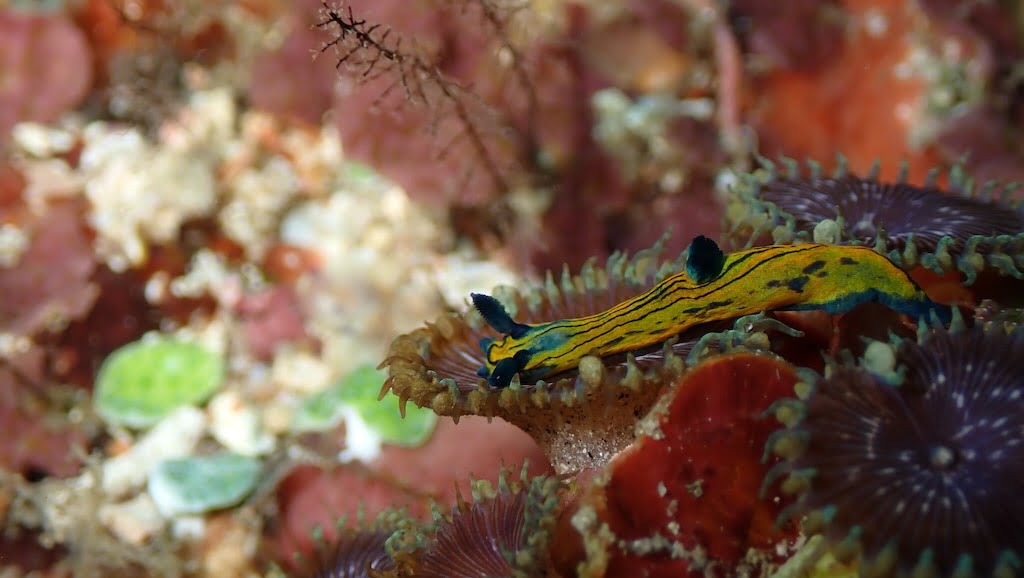
Agathe’s Story
While most divers focus on mantas, mola mola, and other impressive passing marine creatures, a few steadfast enthusiasts keep their gaze on the reef, searching for tiny slugs. I’m one of the latter, constantly on the lookout for the famous nudibranchs.
Much more attractive and colorful than their terrestrial counterparts, these little creatures are ubiquitous in Balinese waters, especially in the more preserved Nusa Penida compared to Bali. If you dive without spotting a “nudi,” it’s likely because you were looking up or had fog in your mask. They are abundant in the warm, clear waters of Penida. Of course, there are the most recognizable ones, like the yellow, black, and blue dorids, often on a piece of reef where the color contrast helps us spot them.
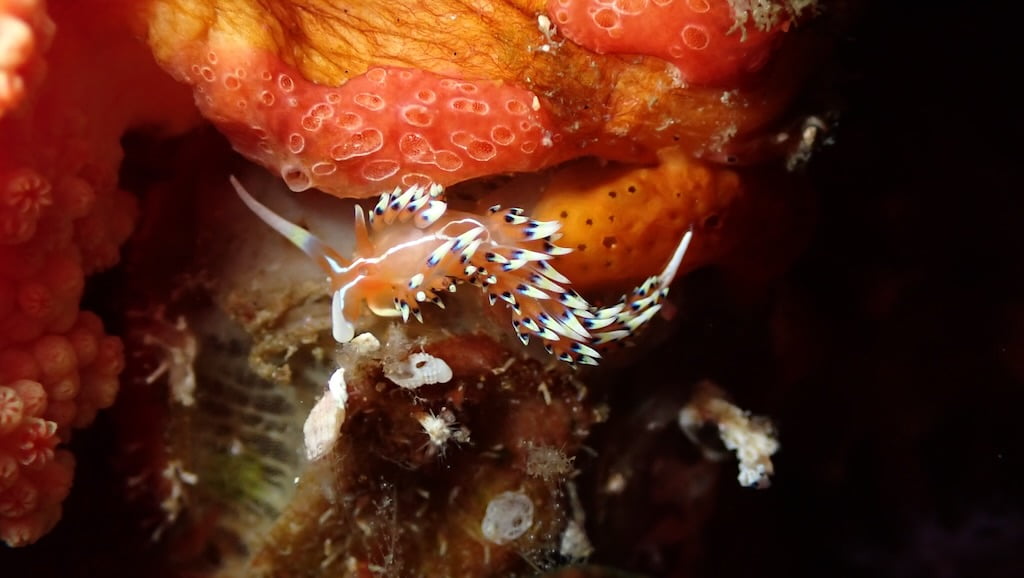
Colorful Creatures
But there are also many species with varied shapes and colors, more hidden in similarly colored environments. Each species has its feeding habits, so you can find them in different parts of the reef if you keep an eye out. It’s like a treasure hunt, and you’ll inevitably see some, so take your time to look carefully. Personally, I’ve seen some stunning ones around Nusa Penida. It’s true that their small size requires you to move more slowly, but the spectacle is worth it. You might even come across a mating pair or a spiral of eggs, always colorful and varied.
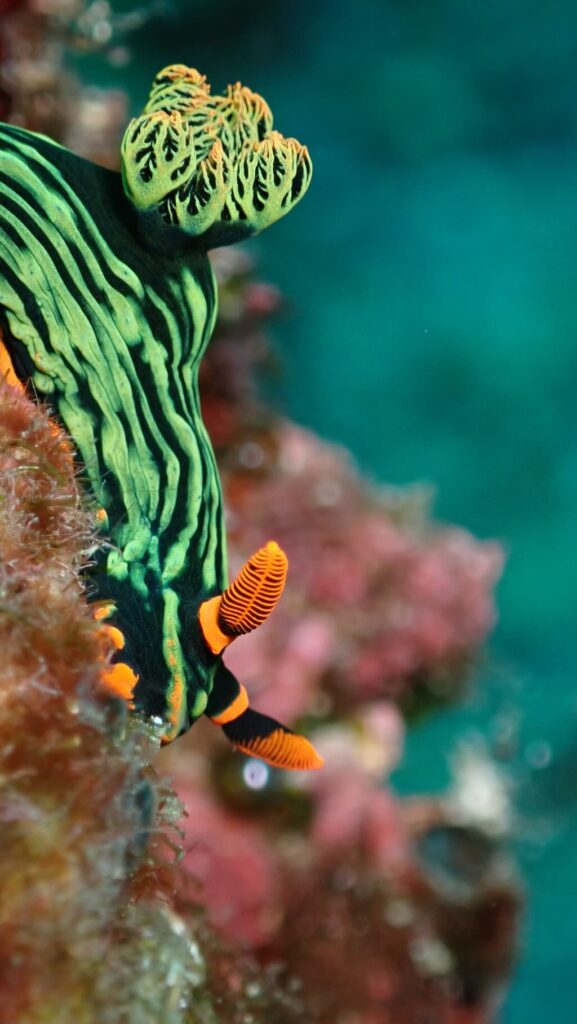
Red and White Nudibranch in Nusa Penida, Bali
So, if like me, you love these little creatures, I recommend a trip to Nusa Penida; you won’t be disappointed. And if your instructor also loves them, you’ve got the perfect combination to see them at every corner of the reef!
Know More about Nudibranchs
For more nudibranch photos, check out my friend Roy’s Instagram account. He’s developed a passion for nudibranchs since getting a camera suitable for macro photography!
Plan your trip to Nusa Penida
If this article has sparked your curiosity, it’s worth taking a deeper look at everything the island has to offer—both above and below the surface. To help you plan the perfect stay, explore our complete travel guide to Nusa Penida, covering how to get there, where to stay, the best beaches, viewpoints, and practical tips for getting around the island.
For divers, don’t miss our Nusa Penida diving guide, which explains seasons, water temperatures, currents, certifications, and what to expect when diving in these uniquely dynamic waters. You can also dive Manta Point and many other exceptional sites with Dune Penida Dive Center, a PADI 5★ center based on Nusa Penida, known for its experienced guides and strong focus on safety and local knowledge. You can also dive deeper into the incredible marine life of the region with our dedicated pages on manta rays, sharks and mola mola (ocean sunfish), all commonly encountered around Bali and Nusa Penida.
And if you’re choosing where to dive next, our in-depth guide to the best dive sites in Bali breaks down each site by level, conditions, and marine life—so you can build a dive plan that perfectly matches your experience, your comfort level, and your sense of adventure.
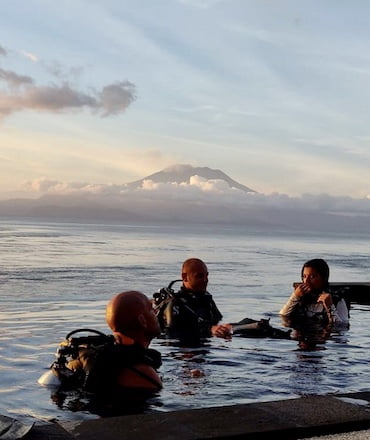
Nusa Penida Diving Guide
Complete Nusa Penida Diving Guide : best dive sites, manta rays, Mola Mola season, drift dives, conditions, PADI courses and practical travel advice.
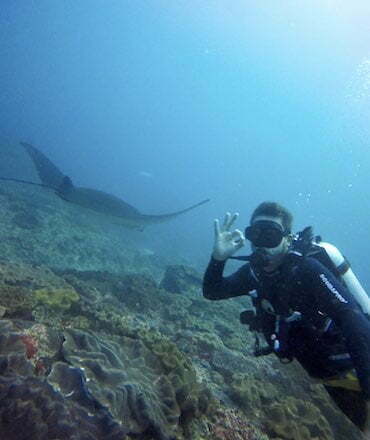
Best dive sites in Bali
20 best dive sites in Bali around Nusa Penida, Padang Bai and North Bali : discover manta rays, oceanic sunfish, sharks, drift dives and vibrant coral reefs.
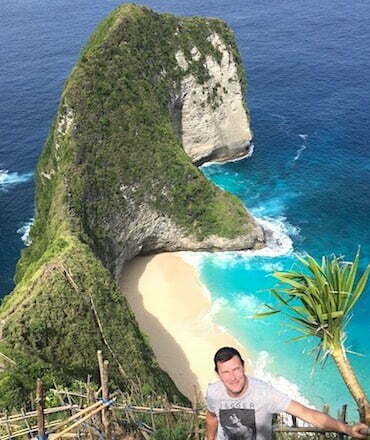
Nusa Penida travel guide
Complete Nusa Penida Travel Guide : how to get there, where to stay, best beaches, temples, viewpoints and practical tips to plan your island adventure.